
For shower tile, epoxy grout is the ultimate choice for its unmatched waterproof and stain-proof qualities. However, for a balance of high performance and DIY-friendly application, modern pre-mixed grouts like high-performance acrylic or urethane are excellent alternatives. Choosing the right grout is critical to prevent water damage, mold, and costly repairs in a high-moisture environment like a shower.
Understanding Grout Types: Epoxy vs. Cement-Based vs. Acrylic
Choosing the best grout for your shower begins with understanding the three main families: epoxy, cement-based, and acrylic. Each has a distinct composition and performance profile, especially in wet environments. Making the right choice is the difference between a durable, low-maintenance shower and one that’s prone to stains, mold, and water damage.
Epoxy grout is made from resins and a hardener, creating a non-porous, plastic-like finish. Unlike other types, it is inherently waterproof and stain-proof, making it a top-tier choice for showers. As noted by experts at Mapei, epoxy grouts are the most water- and stain-resistant of all grouts. Because they are not porous, they do not require a sealer, which simplifies long-term maintenance.
Cement-based grout is the traditional and most common type, made from a cementitious powder mixed with water. It comes in two primary forms: sanded and unsanded. Sanded grout, which contains fine sand particles, is used for wider grout joints (typically greater than 1/8-inch) to provide strength and prevent shrinkage. Unsanded grout has a smoother texture and is used for narrower joints (less than 1/8-inch) and with delicate tiles like polished marble or glass that could be scratched by the sand. According to a guide by The Home Depot, cementitious grouts are porous and must be sealed to protect against moisture and stains, especially in a shower.
Acrylic or urethane grouts are often sold as pre-mixed, ready-to-use products. These advanced formulas offer a great compromise between the durability of epoxy and the ease of use of cement grout. They provide excellent stain resistance, color consistency, and flexibility, and most do not require sealing. Lowe’s highlights acrylic grout as a great option for wet areas like showers because it is designed to be mildew-resistant and retain its color well.
To help you decide, here is a breakdown of the key differences:
| Grout Type | Best For | Pros | Cons | Sealing Required? |
|---|---|---|---|---|
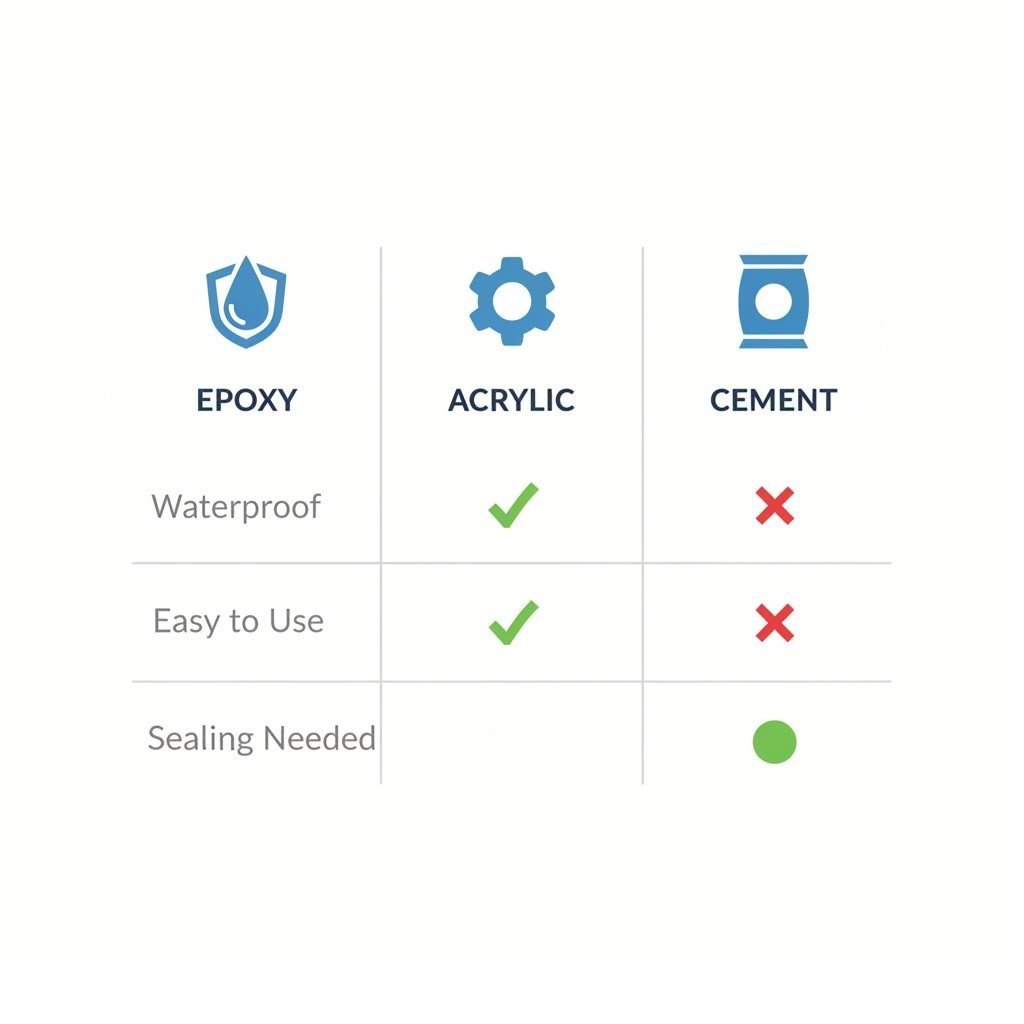
| Epoxy | Maximum durability in any shower | Waterproof, stain-proof, chemical resistant, no cracking | Expensive, difficult to apply, fast setting time | No |
| Acrylic/Urethane (Pre-mixed) | DIYers wanting high performance with easy application | Stain-resistant, color consistent, flexible, no mixing | Higher cost than cement, longer curing time | No |
| Sanded Cement | Wider grout joints (1/8″ to 1/2″) on floors | Affordable, strong, resists shrinkage in wide joints | Porous, stains easily, can scratch delicate tile | Yes |
| Unsanded Cement | Narrow joints (under 1/8″) and vertical walls | Affordable, smooth finish, good for vertical surfaces | Porous, can shrink and crack in wider joints | Yes |
Top Recommended Grout Products for Showers
When you walk into a home improvement store, the wall of grout options can be overwhelming. However, professionals and experienced DIYers consistently turn to a few standout products known for their performance in showers. Brands like Laticrete and Mapei are industry leaders, offering products that deliver durability and a professional finish.
Here are some of the top recommended grout products specifically suited for shower installations:
- Laticrete Spectralock 1: This product is frequently cited as a game-changer for shower projects. It is a pre-mixed, single-component grout that offers the high performance of an epoxy—stain-proof and color-uniform—without the difficult mixing process. It’s an ideal choice for beginners who want epoxy-like results. While it costs more than powdered grouts, its ease of use and durability make it a worthwhile investment for a critical area like a shower.
- Mapei Flexcolor CQ: Another top contender in the pre-mixed category, Flexcolor CQ is a urethane-based grout that is ready to use right out of the tub. It’s known for its excellent color consistency and resistance to stains and chemicals. It also forms a hard, durable surface that resists water and mildew. DIYers appreciate that it eliminates mixing errors, ensuring a uniform color and finish throughout the project.
- ARDEX WA 100% Solids Epoxy Grout: For those who prioritize maximum, uncompromising performance, a traditional two-part epoxy like this one from ARDEX is the gold standard. As detailed by Tile ProSource, this type of grout creates a fully waterproof and highly chemical-resistant barrier, making it perfect for shower floors and walls that face daily abuse. While the application is more demanding, the resulting longevity is unparalleled.
Each of these products offers a pathway to a long-lasting, great-looking shower. The best choice depends on your comfort level with the installation process and your budget. For most people, a high-quality pre-mixed grout like Spectralock 1 or Flexcolor CQ provides the perfect blend of performance and user-friendliness.
Key Decision: Pre-mixed vs. Powdered Grout
One of the most practical decisions you’ll face is whether to buy a pre-mixed grout or a traditional powdered grout that you mix yourself. This choice significantly impacts the cost, convenience, and even the final outcome of your project, especially for a first-time tiler.
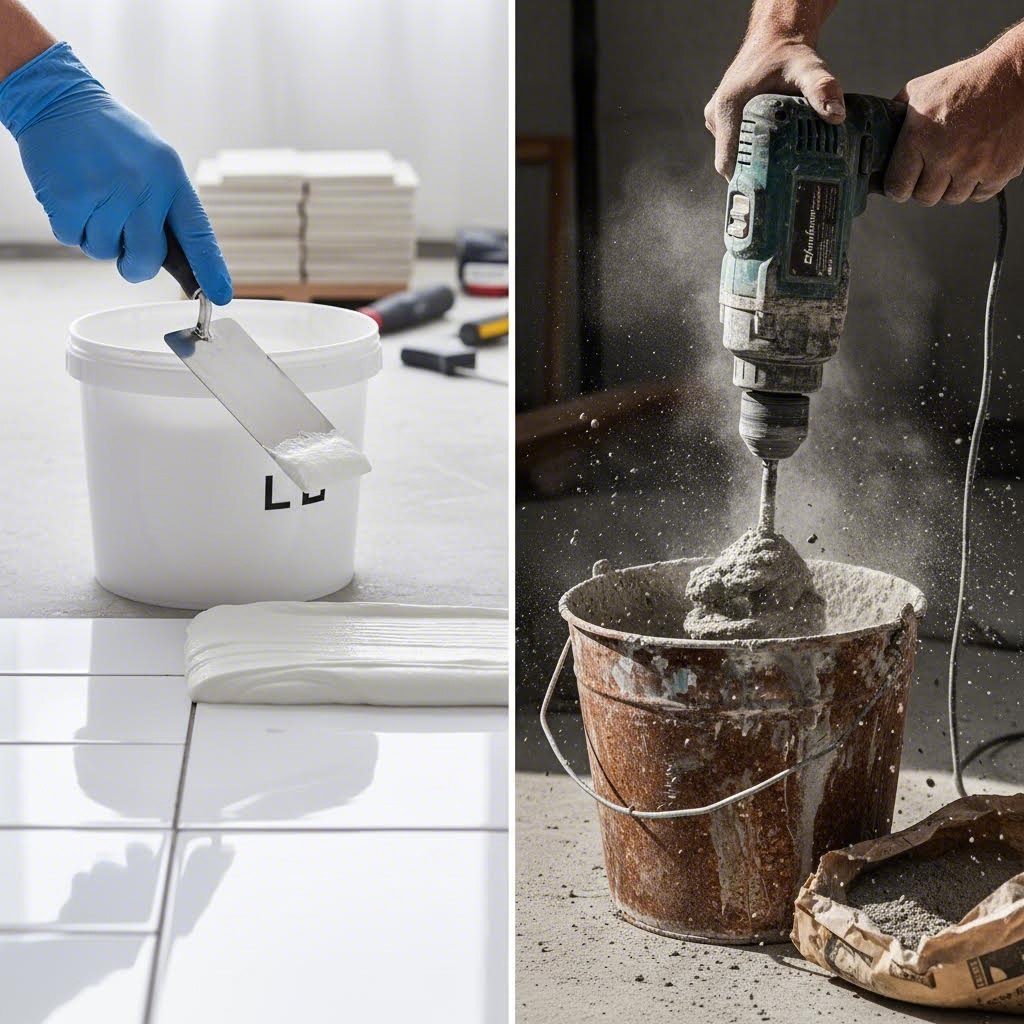
Pre-mixed grout, like Mapei Flexcolor CQ or Laticrete Spectralock 1, comes ready to use in a bucket. The primary advantage is convenience and consistency. There’s no guesswork in adding water, which eliminates the risk of a bad mix that could weaken the grout or cause color variations. This makes it an excellent choice for beginners, as it removes a major potential point of failure. The trade-off is a higher upfront cost and often a more limited working time before the product begins to cure in the bucket.
Powdered grout is the classic, economical choice. You purchase it in a bag and mix it with water (or a liquid additive) according to the manufacturer’s instructions. This option is significantly more affordable, especially for large projects. It also gives you more control over the amount you mix at one time, reducing waste. However, achieving the perfect, lump-free, peanut-butter-like consistency can be challenging. Too much water will result in weak, crack-prone grout, while too little makes it difficult to apply.
Here’s a direct comparison to help you decide:
| Feature | Pre-mixed Grout | Powdered Grout |
|---|---|---|
| Ease of Use | Excellent for beginners; no mixing required. | Requires precise mixing; higher learning curve. |
| Cost | Higher per square foot. | More economical, especially for large areas. |
| Consistency | Perfectly consistent color and texture from the factory. | Color can vary if mixing ratios change between batches. |
| Working Time | Limited once the container is opened. | Can be mixed in small batches as needed. |
For most DIY shower projects, the extra cost of a high-quality pre-mixed grout is a wise investment. It minimizes the risk of common mistakes and helps ensure a durable, waterproof finish in an area where performance is critical.
Installation Essentials: Grout vs. Caulk and Sealing
A successful and long-lasting shower tile job goes beyond just spreading grout. Two critical details that are often overlooked by beginners are the proper use of caulk and understanding when (and when not) to seal the grout.
A common question is whether to use grout or silicone caulk in the corners of a shower. The answer is both. Grout is a rigid material designed to fill the spaces *between* tiles on a flat plane. It is not flexible. All buildings shift and settle, and corners and changes of plane (where walls meet the floor or other walls) experience the most movement. If you fill these joints with rigid grout, it will inevitably crack, breaking the waterproof seal. This is where 100% silicone caulk is essential. Caulk remains flexible, accommodating movement without cracking. The rule is simple: use grout for joints on the same plane, and use color-matching silicone caulk for all corners and changes of plane.
The topic of sealing is another point of confusion, but modern grouts make it simple. The need to seal depends entirely on the type of grout you choose. According to information from This Old Grout, sealing is essential for traditional cement-based grouts to protect against moisture and stains. If you use a sanded or unsanded cement grout, you must apply a penetrating sealer after it has fully cured, and reapply it every year or two. However, epoxy and high-performance acrylic/urethane grouts are non-porous and do not require sealing. This is a significant advantage, as it reduces long-term maintenance and ensures the grout remains stain- and water-resistant for its entire lifespan.
To ensure a successful installation, follow this final checklist:
- Choose the Right Grout: Select an epoxy or high-performance pre-mixed acrylic grout for the best performance in a shower.
- Use Caulk in Corners: Fill all changes of plane with 100% silicone caulk, not grout.
- Follow Instructions: Adhere strictly to the manufacturer’s directions for application, cleanup, and curing time.
- Seal Only if Necessary: Only seal traditional cement-based grouts; epoxy and acrylics do not need it.
Frequently Asked Questions
1. Is sanded or unsanded grout better for showers?
Both can be used in showers, but the choice depends on your tile joint width. For joints wider than 1/8 inch, sanded grout is necessary for strength and to prevent cracking. For joints narrower than 1/8 inch, or when using scratch-prone tiles like glass or polished stone, you must use unsanded grout. Unsanded grout also adheres better to vertical surfaces like shower walls, making it a good choice for those applications if the joints are narrow.
2. Should I use grout or silicone in the shower?
You need to use both. Use grout for the spaces between tiles on the walls and floor. Use 100% silicone caulk for any change of plane—where walls meet each other and where the walls meet the shower floor or tub. These areas experience movement, and the flexible caulk will prevent cracking that would occur with rigid grout, ensuring a durable, waterproof seal.