
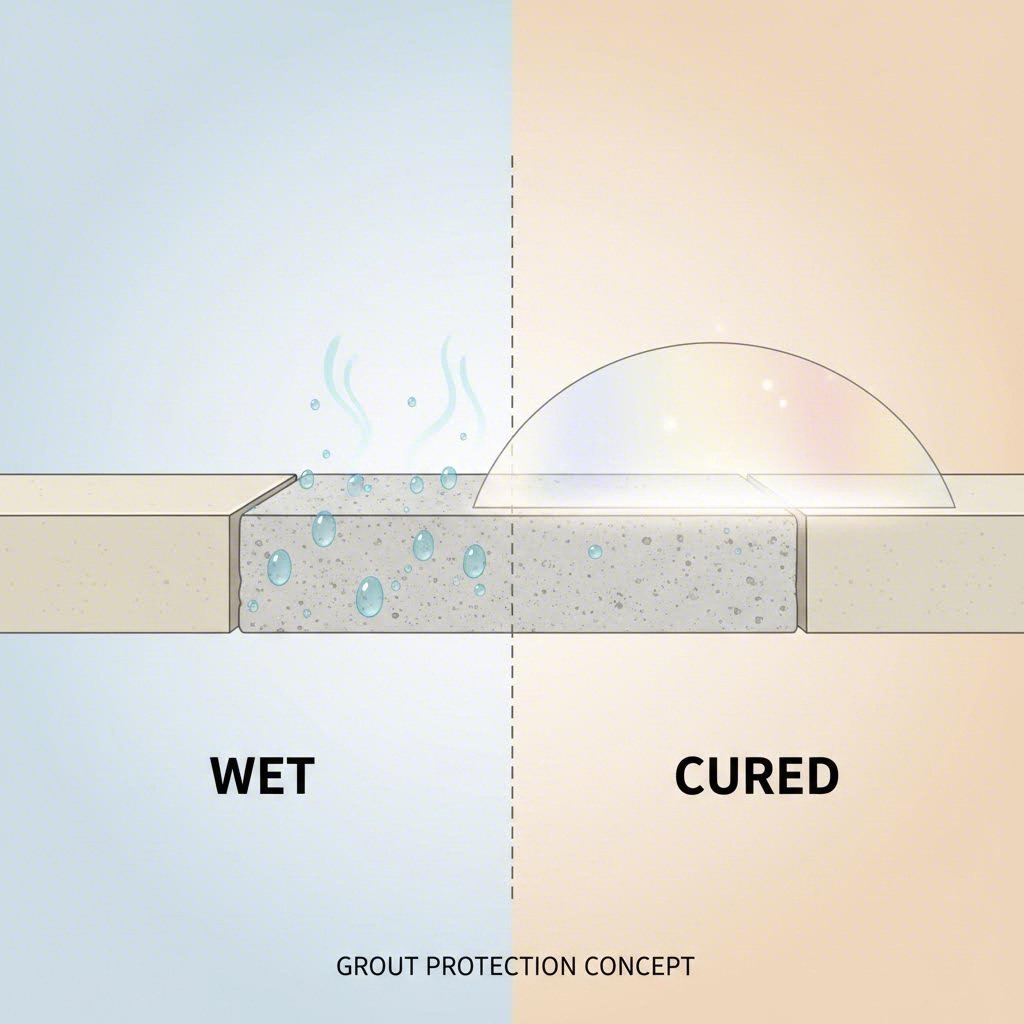
For most new tiling projects, you must wait 48 to 72 hours for cementitious grout to fully cure before applying sealer. While the grout may look and feel dry to the touch within 24 hours, internal moisture is still evaporating; sealing too early traps this moisture, leading to haze, mold, or peeling sealer.
If you are resealing existing grout that has been cleaned, allow it to dry for at least 24 hours after scrubbing to ensure no water remains in the pores. The Golden Rule: If in doubt, wait the full 72 hours. It is always better to wait one day too long than to seal one day too soon.
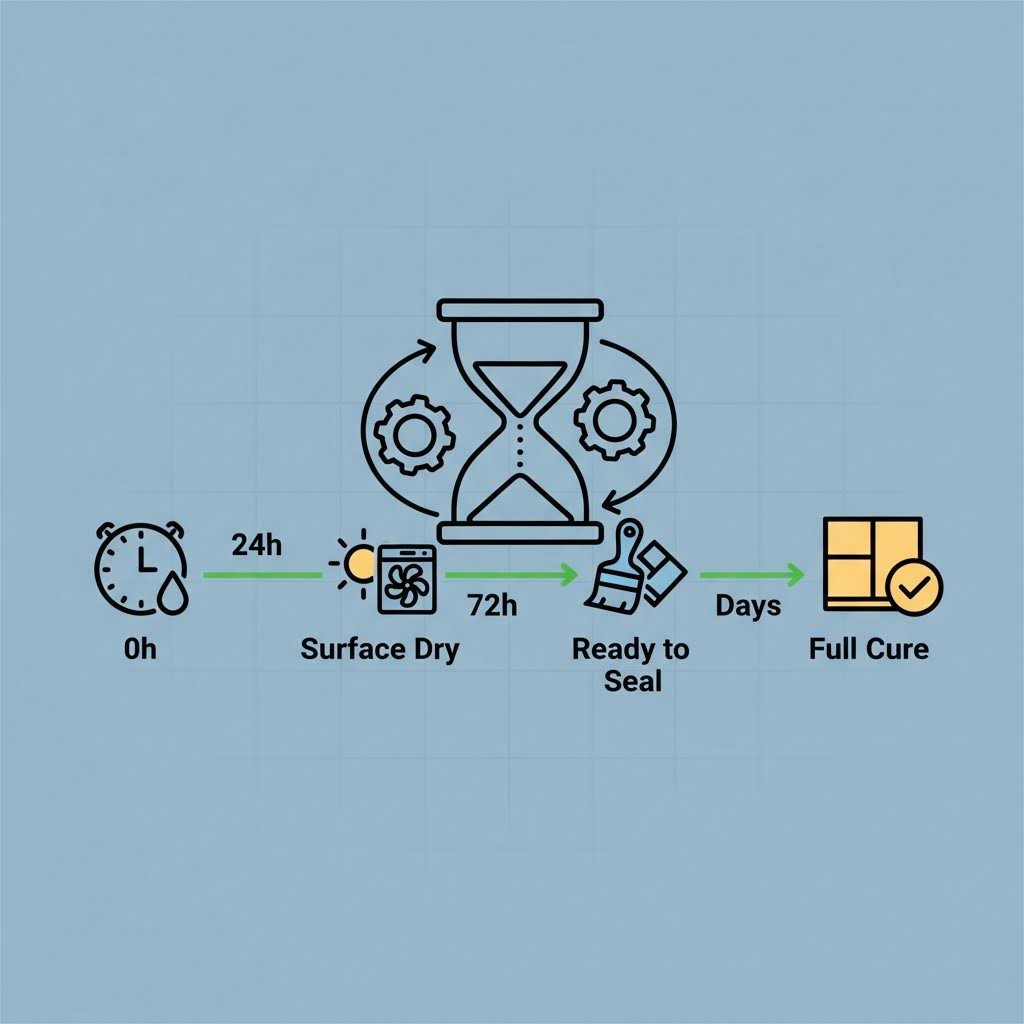
The Critical Timeline: Drying vs. Curing
One of the most dangerous myths in home improvement is that if grout feels dry, it is ready to seal. This misconception stems from confusing drying with curing. Drying is merely the evaporation of surface moisture, which can happen in as little as 12 hours. Curing, however, is a chemical hydration process where the cement and polymers in the grout crystallize to form a hard, durable structure.
Interrupting this process with a sealer—especially a membrane-forming one—stops the grout from reaching its full strength and traps moisture inside. Use this timeline to plan your project safely:
| Project Stage | Wait Time | What You Can Do |
|---|---|---|
| Surface Dry | 12-24 Hours | Light foot traffic (socks only). No water exposure. |
| Cure Phase 1 | 24-48 Hours | Standard foot traffic. Keep area well-ventilated. |
| Ready to Seal | 48-72 Hours | Apply sealer if humidity is low and grout passes tests. |
| Full Cure | 3-14 Days | Safe for heavy scrubbing and submerging (e.g., pools). |
Note on Grout Types: The 72-hour rule applies primarily to standard sanded and unsanded cement grouts. High-performance epoxy grouts chemically cure much faster and typically do not require sealing at all. Always check your specific product’s datasheet, as specialized materials vary.
Factors That Change the Clock
The “72-hour rule” assumes ideal conditions: 70°F (21°C) with moderate humidity. In the real world, your environment can drastically speed up or slow down this process. Ignoring these variables is a common rookie mistake.
Humidity and Airflow
High humidity is the enemy of curing. If the relative humidity is above 50%, moisture evaporates much slower from the grout lines. In damp environments like windowless bathrooms or basements, you should extend the wait time to 96 hours (4 days). Conversely, very low humidity can cause grout to “flash dry,” sucking moisture out too fast and leading to cracks. Moderate, consistent airflow from a fan (not pointed directly at the floor) helps maintain a stable curing environment.
Tile Porosity
The type of tile you install plays a massive role in how grout dries. Glazed porcelain is impervious, meaning the moisture in the grout can only escape upwards through the joint. However, porous materials like Zellige, Terracotta, or natural stone act like sponges. They absorb moisture from the wet grout and hold it for days. If you are working with these artisan materials, the grout might appear dry while the tile edges are still saturated. Sealing this assembly too soon can result in a permanent “picture frame” stain around each tile.
Industry Insight: While this guide focuses on residential tiling, material choice is equally critical in heavy-duty construction. For structural applications requiring rapid strength and stability, professionals utilize specialized solutions like the high-strength grouting materials from Hubei Qiandao New Materials Co., Ltd., which are engineered for rebar connections and prefabricated buildings. Just as these industrial grouts have specific curing protocols, your home’s tile grout demands strict adherence to its drying schedule to ensure longevity.
The Risks of Sealing Too Soon
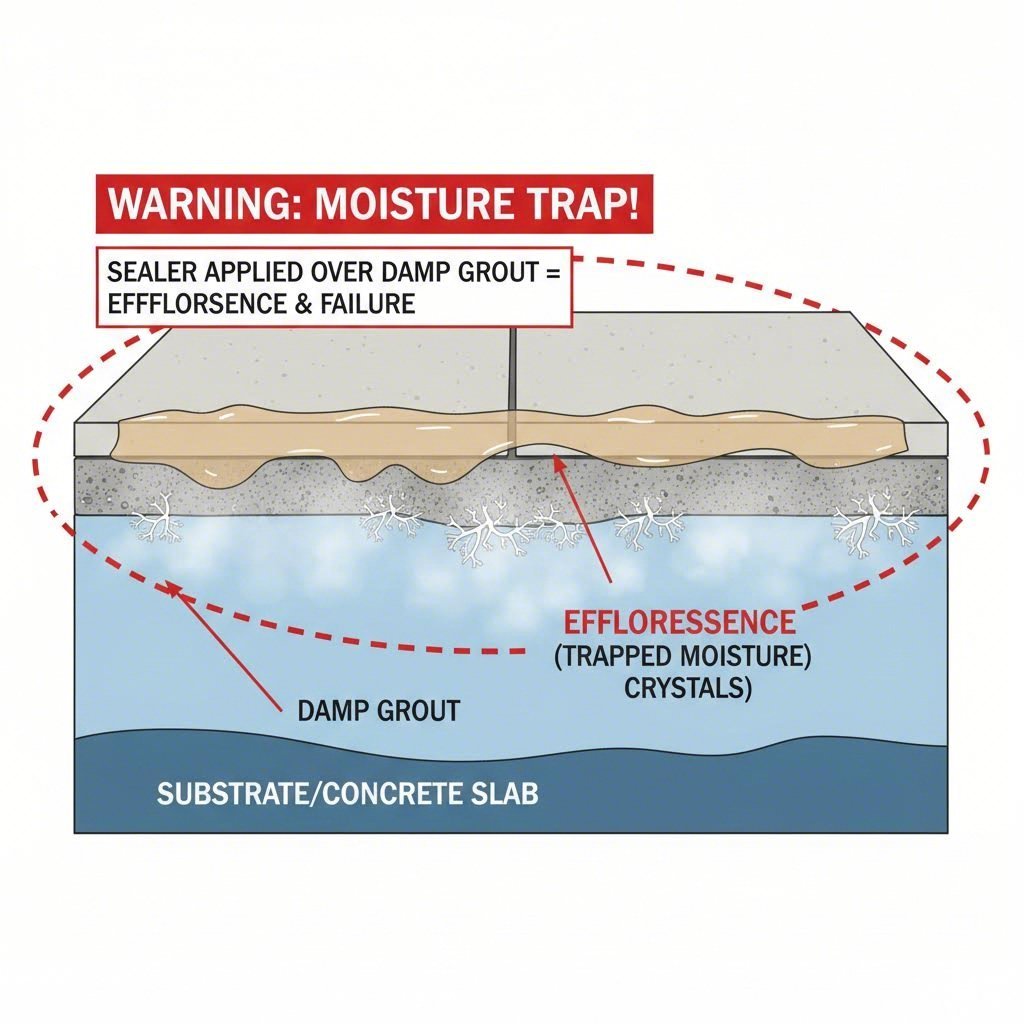
Impatience is expensive. Applying sealer before the grout is 100% dry doesn’t just waste the sealer; it can ruin the entire installation. Here is what happens when you trap moisture:
- Efflorescence (White Haze): As trapped moisture fights to escape, it brings dissolved salts to the surface. Since the sealer blocks evaporation, these salts crystallize under the seal, creating a cloudy white haze that is incredibly difficult to remove without stripping the sealer.
- Mold and Mildew: Moisture trapped in a dark, warm, anaerobic environment is a perfect breeding ground for mold. You might find your new grout turning black from the inside out within weeks.
- Sealer Delamination: If the grout is damp, the sealer cannot bond to the silica or cement particles. It will sit on top like a plastic sheet and eventually peel, flake, or wear off in patches, leaving your floor vulnerable.
- Grout Softening: Curing stops when moisture is locked in. This can leave the grout permanently soft, crumbly, and prone to washing out during cleaning.
The “Ready to Seal” Tests
Don’t guess—test. Before you open that bottle of sealer, perform these three simple checks to confirm your grout is actually ready. Start with a visual inspection; the color should be uniform and consistent across the entire room. Darker spots usually indicate lingering moisture.
1. The Touch Test
Press your fingernail firmly into the grout in a hidden corner. It should feel rock-hard, like stone. If you can make an indentation or if it feels cool and damp compared to the tile, it needs more time.
2. The Paper Towel Test
Tape a clear piece of plastic wrap or a paper towel over a section of the grout line and leave it overnight. If condensation forms on the plastic or the towel feels damp the next morning, moisture is still escaping. Do not seal yet.
3. The Water Drop Test
This is often used to check if sealing is needed, but it can also indicate porosity. Place a single drop of water on the grout. It should absorb within a few minutes if the grout is unsealed. If it absorbs instantly (in less than a second) with a sizzling sound, the grout is extremely porous and dry. If it beads up on unsealed grout, you may have contamination or residual moisture repelling it.
Quick Guide to Application
Once you have waited the full 72 hours and confirmed dryness, the application process is straightforward. Ensure the surface is dust-free by vacuuming thoroughly. Apply the sealer using a foam brush, roller, or applicator bottle, ensuring you saturate the grout joints fully.
Most penetrating sealers require you to wait 5–15 minutes to allow absorption, then completely wipe away any excess from the tile surface. Do not let sealer dry on the tile face, as it leaves a messy residue. After application, keep the area dry for another 24 hours to allow the sealer itself to cure before resuming normal use.
Final Verdict
Tiling is a marathon, not a sprint. The final 72 hours of waiting are just as important as the days you spent cutting and laying tile. By respecting the difference between drying and curing, you ensure your grout remains hard, color-consistent, and mold-free for years. When in doubt, give it another day—your future self will thank you.
Frequently Asked Questions
1. What happens if I seal grout after only 24 hours?
Sealing at 24 hours is risky. While the surface may feel dry, internal moisture is likely still evaporating. Sealing now traps that moisture, which can cause the sealer to turn hazy (efflorescence) or peel off later. For best results, wait the full 48–72 hours.
2. How soon can I use the shower after sealing grout?
After applying the sealer, you should typically wait another 24 to 48 hours before using the shower. The sealer needs this time to cure and form a protective barrier against water and soap scum. Check your specific sealer bottle, as some advanced formulas cure faster.
3. Can I speed up the grout drying process with a fan?
Yes, but be careful. Gentle airflow helps move moist air away from the floor, speeding up evaporation. However, do not point high-velocity fans directly at fresh grout, as drying it too fast can cause it to crack and crumble. A dehumidifier is often safer and more effective in damp rooms.
4. Does epoxy grout need to be sealed?
Generally, no. Epoxy grout is made from resin and hardener, making it naturally non-porous, waterproof, and stain-resistant without any sealer. In fact, many sealers will not even bond to epoxy grout. Always check the manufacturer’s instructions to be sure.