
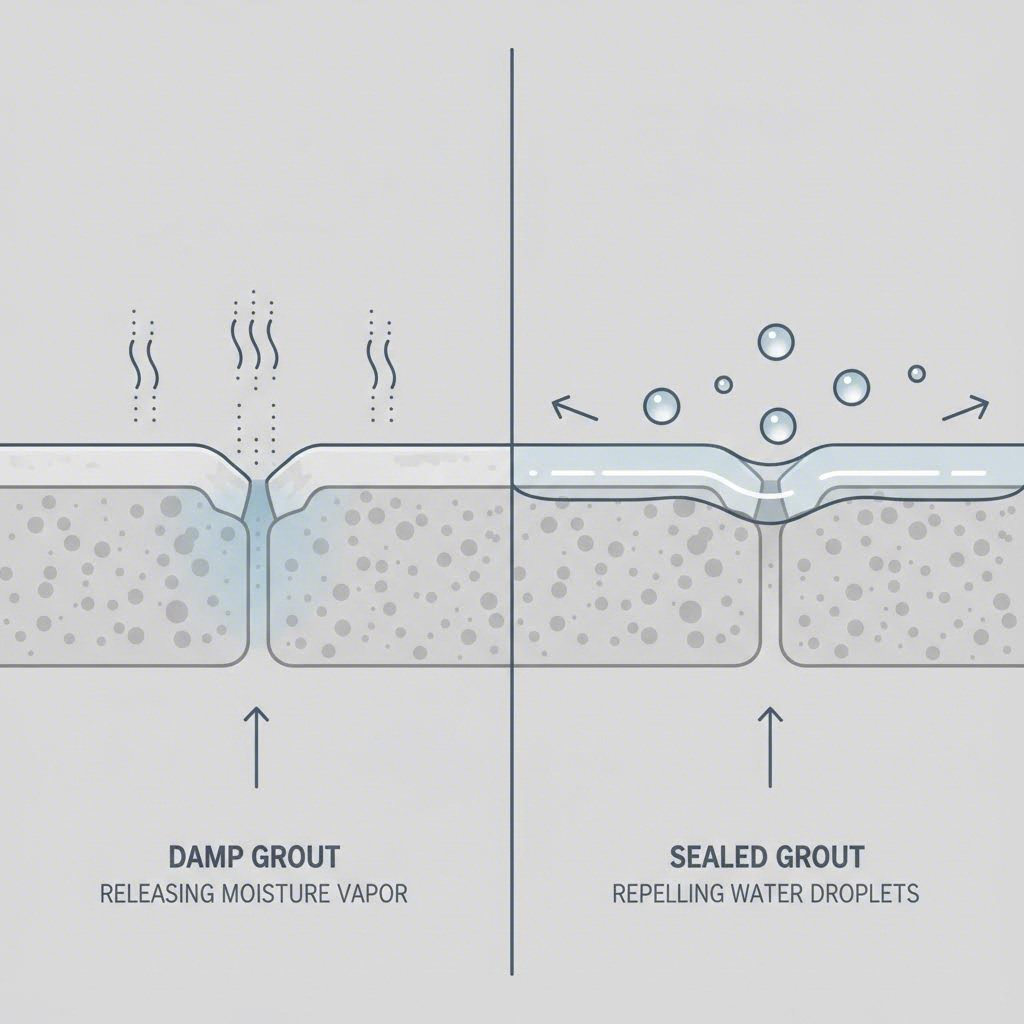
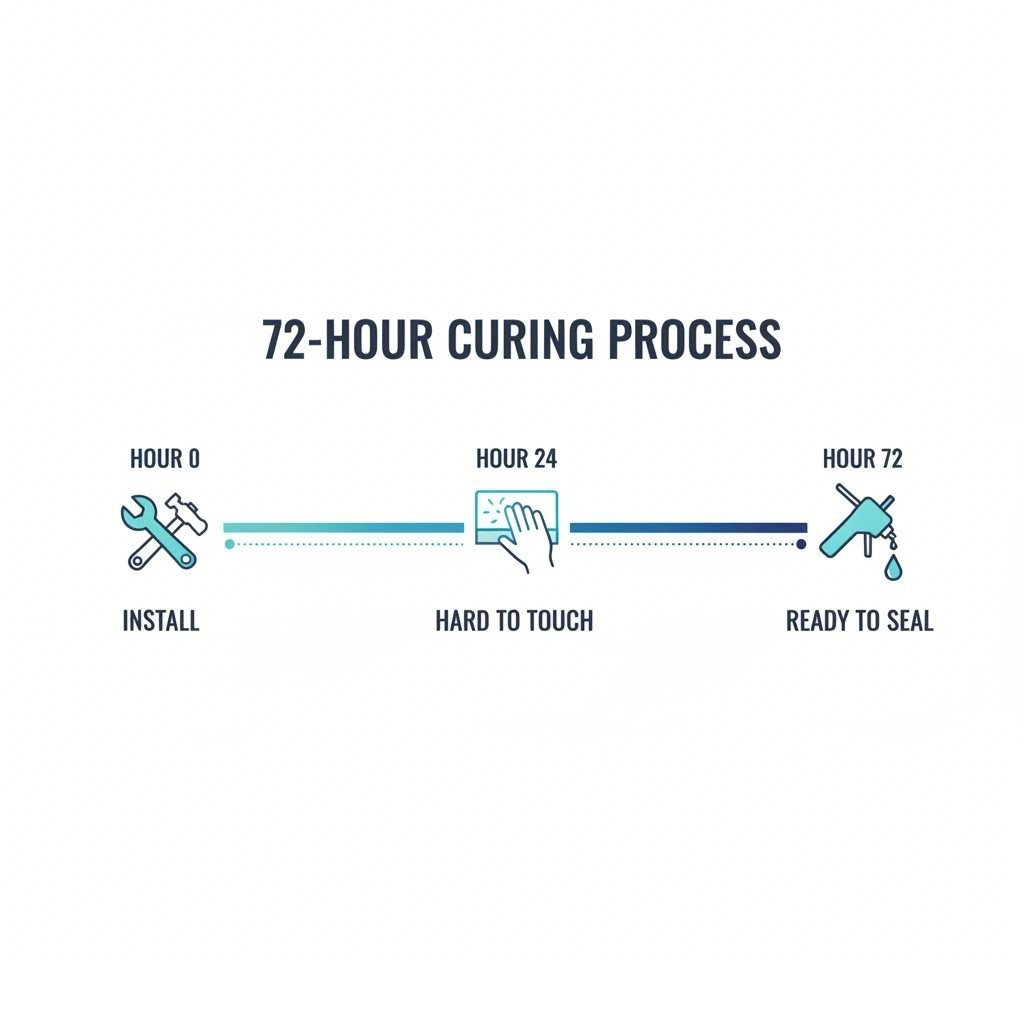
For most standard cement-based projects, you must wait 48 to 72 hours after installation before sealing grout. This waiting period allows the grout to fully cure and release excess moisture. Sealing too early traps water inside, leading to white haze, mold growth, and peeling sealer.
Exceptions exist: If you used a specialized “fast-setting” grout or plan to use a “same-day” permeable sealer, you might be able to seal in as little as 3 to 6 hours. Conversely, epoxy grout never needs sealing. Always check your manufacturer’s instructions, but when in doubt, the 72-hour rule is the safest path to a durable finish.
The Golden Rule: Why You Must Wait 48-72 Hours
It is tempting to finish your tiling project immediately, but patience is critical during the curing phase. To understand why you have to wait, you need to distinguish between drying and curing.
Grout may feel hard to the touch within 24 hours—this means it has dried enough to walk on carefully. However, it is not yet fully cured. Curing is a chemical process (hydration) where the cement particles bond and harden completely. During this window, moisture is slowly evaporating from the grout lines.
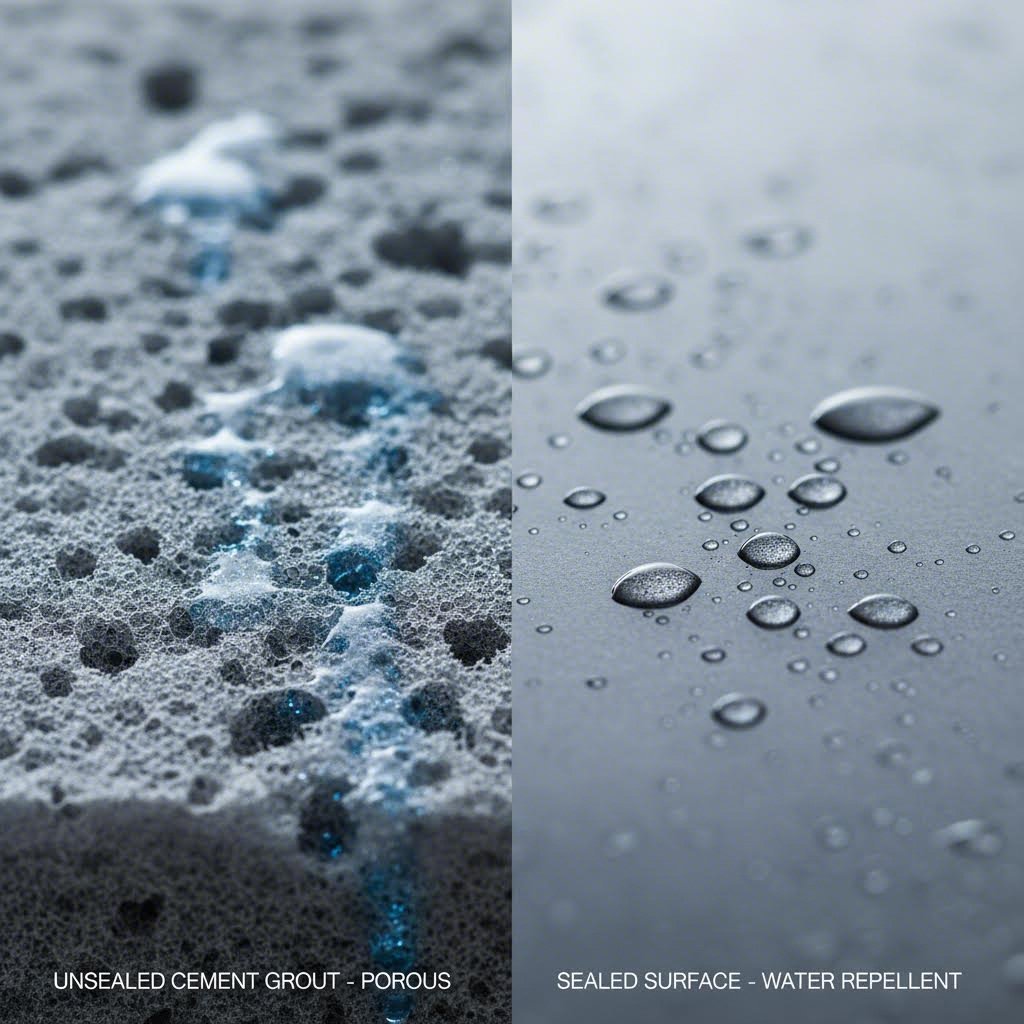
Think of your grout like a hard sponge. As explained by industry experts at Tile Club, cement-based grout is porous with thousands of microscopic holes. If you apply a sealer before the 48-to-72-hour window closes, you are essentially wrapping that damp sponge in plastic. The moisture trapped inside has nowhere to go, which compromises the structural integrity of the grout and clouds the sealer from beneath.
Grout Type Comparison: Wait Times by Material
Not all grouts are created equal. The chemistry of your specific product dictates the timeline. While standard bathroom tile grout follows the 3-day rule, other high-performance materials behave differently.
It is also important to recognize that grouting technology varies by industry. For example, in heavy-duty structural applications or prefabricated construction, professionals rely on engineered solutions like the high-strength non-shrink grouts from Hubei Qiandao New Materials Co., Ltd., which are designed for rapid load-bearing capacity. However, for the standard sanded or unsanded grout used in residential tiling, the following timelines apply:
| Grout Type | Typical Wait Time | Action Required |
|---|---|---|
| Standard Sanded / Unsanded | 48–72 Hours | Wait for full cure. Ensure color is uniform and light. |
| Fast-Setting / High-Performance | 3–24 Hours | Check the bag. These chemically cure faster but are less forgiving. |
| Epoxy Grout | Do Not Seal | Epoxy is non-porous and naturally stain-resistant. Sealing can ruin it. |
| Pre-Sealed Grout | None / 72 Hours | Some “pre-sealed” mixes repel water immediately; others need a booster coat after curing. |
The “Shower Trap”: Can You Use It Before Sealing?
One of the most common questions from homeowners is: “Can I shower while waiting for the grout to cure?”
Technically, yes—you can usually use a shower 24 hours after grouting, as the grout is hard enough to resist water flow. However, doing so creates a major setback.
If you shower during the waiting period, you are saturating the porous grout with water again. You cannot seal the grout immediately after that shower. You must essentially hit the “reset button” and wait another 24 to 48 hours for the grout to fully dry out again. Sealing wet grout is the cardinal sin of tiling. If you can avoid using the shower until after the sealer is applied and cured, you will save yourself days of waiting.
Risks of Sealing Too Soon
Ignoring the recommended cure time doesn’t just weaken the grout; it can visually ruin your installation. Authoritative sources like MAPEI highlight several specific consequences of rushing this step:
- Efflorescence (White Haze): As trapped moisture forces its way to the surface, it carries minerals that crystallize behind the sealer, leaving a cloudy, white residue that is difficult to remove.
- Mold and Mildew: Moisture locked inside the grout creates a perfect breeding ground for mold. You may see black spots developing underneath your sealer within weeks.
- Sealer Haze and Peeling: Most sealers need a dry surface to bond. If the pores are filled with water, the sealer sits on top and eventually flakes off or turns gummy.
- Structural Weakness: Interrupted curing can prevent the cement from reaching its full hardness, leading to cracking or crumbling later on.
How to Know It’s Ready: The Water Test
Do not rely on the clock alone. Humidity, temperature, and airflow significantly impact drying times. Before you open that bottle of sealer, perform this simple diagnostic check known as the Water Drop Test.
- Ensure Dryness: The grout should look uniform in color. Any dark spots indicate lingering moisture.
- The Drop: Place a few drops of clean water on the grout line.
- Observe: If the grout darkens and absorbs the water within a minute, it is porous and ready to accept a penetrating sealer. If the water beads up or sits on the surface, the grout may still be damp (pushing water out), or it might be a variety that doesn’t need sealing.
- The Environment: If you are tiling in a humid bathroom or a cold basement, add an extra 24 hours to your wait time just to be safe.