
What are the admixtures in concrete? They are specialized chemical or mineral ingredients added to a concrete batch before or during mixing to modify its fresh or hardened properties. By altering the cement hydration process, these additives enhance workability, control setting times, reduce water requirements, and significantly improve the structural durability of the final pour.
What Are Concrete Admixtures and How Do They Work?
In modern construction, creating the perfect concrete mix requires more than just cement, water, and aggregates. Concrete admixtures are specialized liquids or powders introduced in small quantities—typically based on a percentage of the cement weight—to fundamentally alter the physical and chemical behavior of the mix. Whether dealing with congested rebar, extreme weather conditions, or demanding structural requirements, these additives provide engineers and contractors with precise control over the material’s performance.
The primary mechanism of action for most admixtures involves interacting directly with the cement hydration process. When water meets cement, a chemical reaction begins, causing the particles to bind. Admixtures act chemically or physically to modify this reaction. For example, polycarboxylate ether (PCE) based superplasticizers work through adsorption onto the cement grain. They disperse the particles via electrostatic repulsion and steric hindrance, which dramatically improves the flow and workability of the fresh concrete without requiring additional water.
Understanding these additives requires distinguishing between the two primary categories: chemical and mineral admixtures. Chemical admixtures are manufactured compounds designed to trigger specific reactions, such as accelerating the set time or entraining air. In contrast, mineral admixtures—often referred to as supplementary cementitious materials (SCMs)—are typically industrial by-products that bulk up the mix and improve long-term strength through pozzolanic activity.
Adding these components at the correct time is critical. While mineral admixtures are usually batched at the plant with the dry materials, chemical liquid admixtures are often added directly to the mixing water or introduced at the job site to rescue a load or adjust to immediate environmental conditions. Proper dosage and compatibility testing are essential to prevent adverse reactions.
| Characteristic | Chemical Admixtures | Mineral Admixtures (SCMs) |
|---|---|---|
| Origin | Manufactured chemical compounds and polymers (e.g., PCEs, salts). | Industrial by-products or natural materials (e.g., fly ash, silica fume). |
| Primary Function | Modify early-age properties like setting time, workability, and air content. | Enhance long-term strength, reduce permeability, and lower hydration heat. |
| Dosage Volume | Low (typically less than 5% by weight of cement). | High (often replacing 10% to 50% of the portland cement). |
| Addition Timing | Added to mixing water or directly into the fresh batch on-site. | Batched with dry ingredients at the concrete plant. |
The 7 ASTM Categories of Chemical Admixtures
To ensure consistency and safety in structural engineering, chemical admixtures are strictly regulated by industry standards. In the United States, the ASTM C494 standard specification is the definitive framework, classifying chemical admixtures into seven distinct types (A through G) based on their specific performance characteristics.
Type A: Water-Reducing Admixtures are designed to lower the water content of a mix by 5% to 12% without compromising its consistence or slump. By reducing the water-to-cement ratio, these chemicals significantly increase the compressive strength and decrease the permeability of the hardened concrete, making them foundational for most structural pours.
Type B: Retarding Admixtures slow down the initial setting rate of the concrete. This delay is particularly crucial during hot weather concreting, where high temperatures can cause the mix to cure too rapidly, leading to cold joints or finishing difficulties. Retarders give crews the extended workability time needed for large or complex placements.
Type C: Accelerating Admixtures perform the exact opposite function of retarders. By speeding up the hydration process, they reduce the initial set time and promote early strength development. Accelerators are indispensable in cold weather conditions, preventing the concrete from freezing before it cures and allowing for faster removal of formwork.
The remaining categories combine these primary effects or amplify their power for high-performance applications:
- Type D (Water-Reducing and Retarding): Combines the strength benefits of water reduction with the extended workability of a retarder.
- Type E (Water-Reducing and Accelerating): Provides high early strength while maintaining a lower water content, ideal for rapid repairs.
- Type F (Water-Reducing, High Range): Also known as superplasticizers, these powerful polymers permit a massive reduction in water content (often over 12%) while creating a highly fluid, self-consolidating mix.
- Type G (Water-Reducing, High Range, and Retarding): Delivers the extreme flowability of a superplasticizer while delaying the set time to accommodate difficult placements, such as pumping to congested rebar in high-rise construction.
Mineral Admixtures: Enhancing Strength and Sustainability
While chemical additives manipulate the immediate behavior of fresh concrete, mineral admixtures fundamentally upgrade the microscopic structure of the hardened material. Also known as supplementary cementitious materials (SCMs), these finely divided solids are added in large quantities to complement or partially replace traditional portland cement.
The effectiveness of mineral admixtures relies on hydraulic and pozzolanic activity. When portland cement hydrates, it produces calcium hydroxide as a byproduct—a relatively weak and soluble compound. Pozzolanic mineral admixtures react with this calcium hydroxide in the presence of moisture to form additional calcium silicate hydrate (C-S-H) gel, which is the primary strength-giving binder in concrete. This secondary reaction creates a denser, less permeable matrix.
Fly ash, a byproduct of coal-fired power plants, is the most widely used mineral admixture. It improves the workability of fresh concrete due to its spherical particle shape and significantly lowers the heat of hydration. This heat reduction is vital for mass concrete pours, such as dams or thick foundation mats, where excessive internal temperatures could cause severe thermal cracking.
For projects requiring exceptional durability, engineers turn to silica fume or ground granulated blast-furnace slag (GGBFS). Silica fume consists of ultrafine particles that pack tightly between cement grains, producing high-strength concrete with extreme resistance to chloride penetration and chemical attack. However, silica fume can make the fresh mix sticky, often necessitating the paired use of high-range water reducers to maintain proper flow.
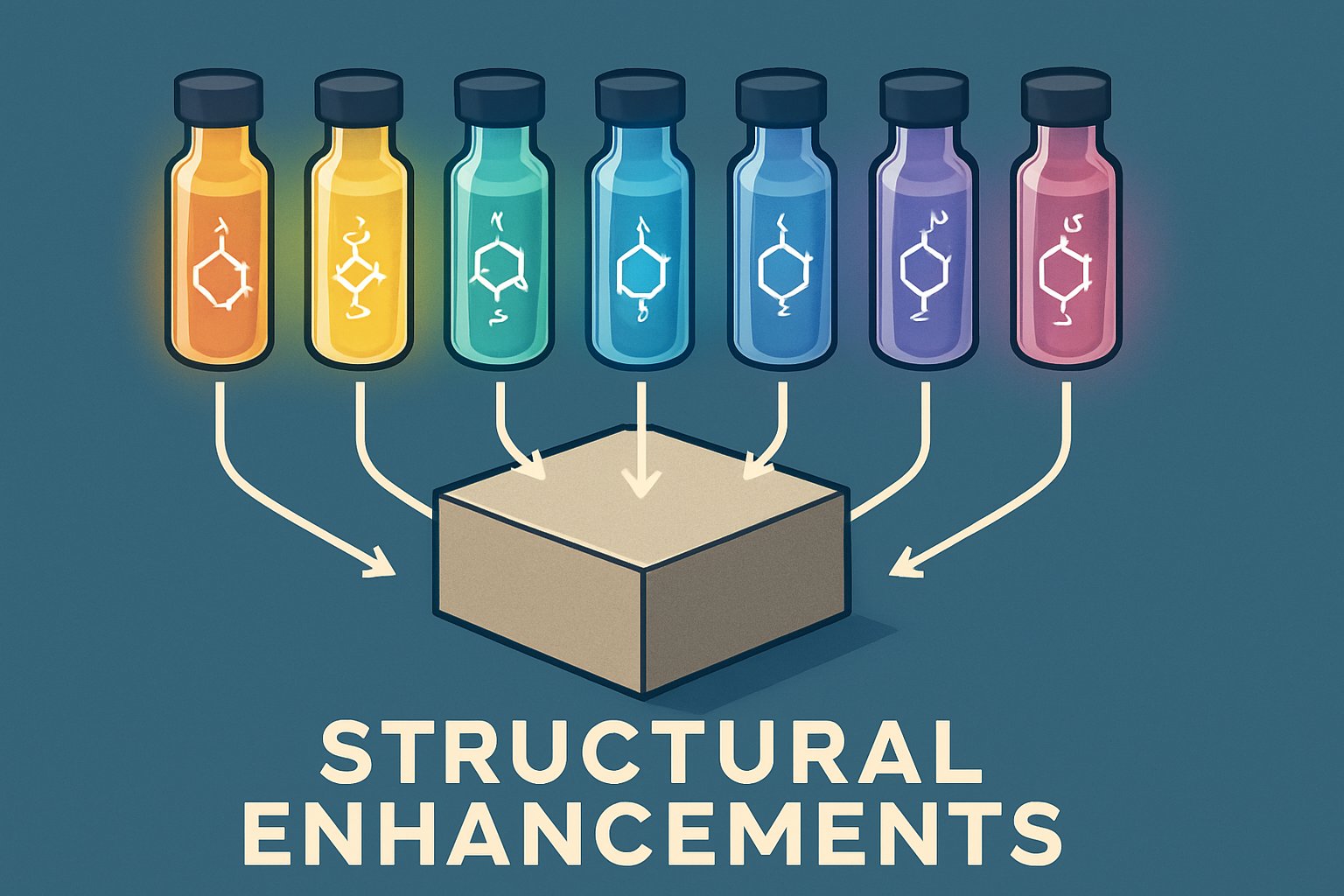
Specialty Admixtures for Extreme Conditions
Beyond the standard classifications, specialized admixtures are engineered to solve specific environmental challenges and prevent catastrophic structural failures. These targeted solutions protect concrete from freezing temperatures, chemical corrosion, and volume changes during the curing process.
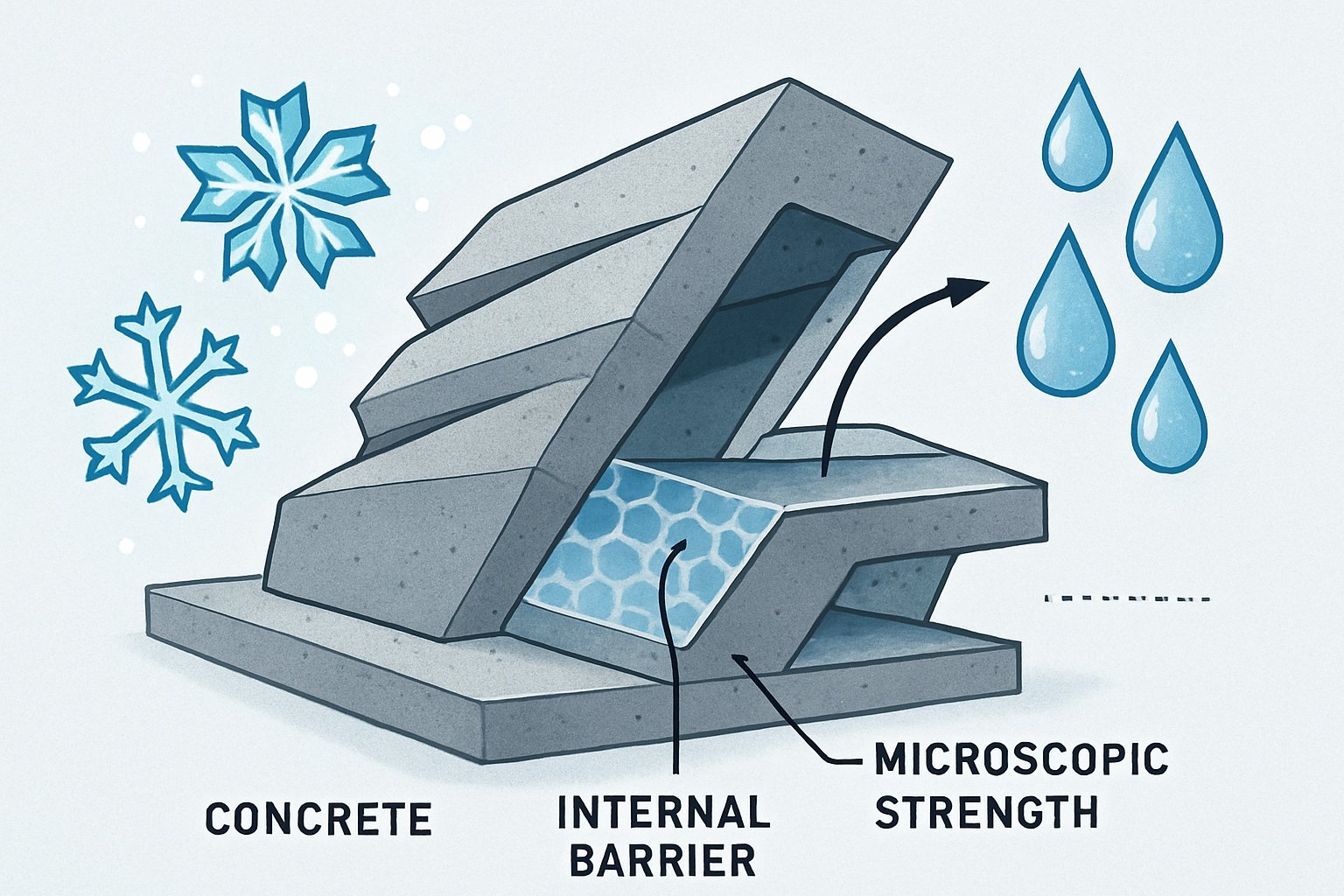
Air-entraining agents, governed by the ASTM C260 standard, are perhaps the most critical specialty admixture for cold climates. These chemicals stabilize microscopic air bubbles uniformly throughout the concrete paste. When moisture inside the hardened concrete freezes and expands, these tiny voids act as pressure relief valves, preventing the internal stress from cracking or spalling the surface. While essential for freeze-thaw durability, improper dosage can negatively impact the concrete’s overall compressive strength.
Shrinkage-reducing admixtures (SRAs) address the inevitable volume reduction that occurs as concrete dries. As water evaporates from the capillary pores, surface tension creates internal pulling forces that lead to drying shrinkage cracks. According to resources from The Concrete Network, SRAs work by lowering the surface tension of the pore water, thereby minimizing the internal stresses and significantly reducing the risk of cracking in large slabs or water-retaining structures.
Corrosion-inhibiting admixtures are vital for reinforced concrete exposed to deicing salts or marine environments. These chemicals, governed by ASTM C1582, function by creating a protective passivation layer around the embedded steel rebar. By delaying the onset of chloride-induced corrosion and slowing its progression, these inhibitors dramatically extend the service life of bridges, parking garages, and coastal infrastructure.
Environmental Impact and Construction Benefits
The integration of advanced admixtures has transformed concrete from a traditional, carbon-heavy material into a more sustainable and highly efficient construction medium. As the industry faces increasing pressure to reduce its environmental footprint, admixtures play a central role in optimizing mix designs for both ecological and economic benefits.
The most significant environmental advantage comes from the reduction of embodied carbon. Cement production is a major contributor to global CO2 emissions. By utilizing high-range water reducers and mineral SCMs, engineers can achieve the required structural strength while using substantially less portland cement. Replacing a portion of the cement with industrial byproducts like fly ash or slag not only lowers the carbon footprint but also diverts millions of tons of waste from landfills.
Water conservation is another major benefit. Chemical water reducers allow contractors to achieve highly workable, flowing concrete without adding excess mixing water. This optimization is crucial in regions facing water scarcity, allowing large-scale construction projects to minimize their local environmental impact while maintaining strict quality standards.
From an economic perspective, the upfront cost of premium admixtures is easily offset by long-term savings. Accelerated setting times reduce labor costs and allow for faster project turnaround. Enhanced durability means fewer repairs and a longer lifespan for the structure. Ultimately, the strategic use of these additives is a cornerstone of modern green building practices, helping projects achieve LEED certification while ensuring structural excellence.
Maximizing Concrete Performance Through Chemistry
The science of concrete has evolved far beyond a simple mixture of cement, aggregate, and water. Today, understanding what the admixtures in concrete are and how to leverage them is fundamental to successful structural engineering. From standard water reducers that increase compressive strength to specialty corrosion inhibitors that protect vital infrastructure, these precise chemical and mineral interventions dictate the material’s ultimate performance.
Selecting the right admixture requires careful consideration of the project’s specific demands, environmental conditions, and the complex interactions between different additives. When properly specified and dosed, admixtures empower contractors to overcome logistical challenges, reduce environmental impact, and build structures that stand the test of time.
Frequently Asked Questions
1. What are concrete admixtures?
Concrete admixtures are specialized chemical or mineral ingredients added to a concrete mix either before or during the mixing process. They are used to alter the properties of the fresh or hardened concrete, such as improving workability, adjusting setting times, reducing water content, or increasing long-term durability and strength.
2. What are the 7 types of concrete admixtures?
According to the ASTM C494 standard, the seven primary types of chemical admixtures are: Type A (Water-reducing), Type B (Retarding), Type C (Accelerating), Type D (Water-reducing and retarding), Type E (Water-reducing and accelerating), Type F (Water-reducing, high range/superplasticizers), and Type G (Water-reducing, high range, and retarding).
3. How do concrete admixtures work?
Chemical admixtures typically work by altering the physical or chemical processes of cement hydration. For instance, water-reducing polymers adsorb onto cement particles, creating electrostatic repulsion that disperses the grains and improves flow. Mineral admixtures work through pozzolanic activity, reacting with hydration byproducts to create a denser, stronger microscopic structure.
4. What is the difference between chemical and mineral admixtures?
Chemical admixtures are manufactured liquid or powder compounds added in very small doses to modify early-age properties like setting time and immediate workability. Mineral admixtures, such as fly ash or silica fume, are natural or industrial bulk materials added in large quantities to partially replace cement, primarily enhancing the concrete’s long-term strength and reducing permeability.