
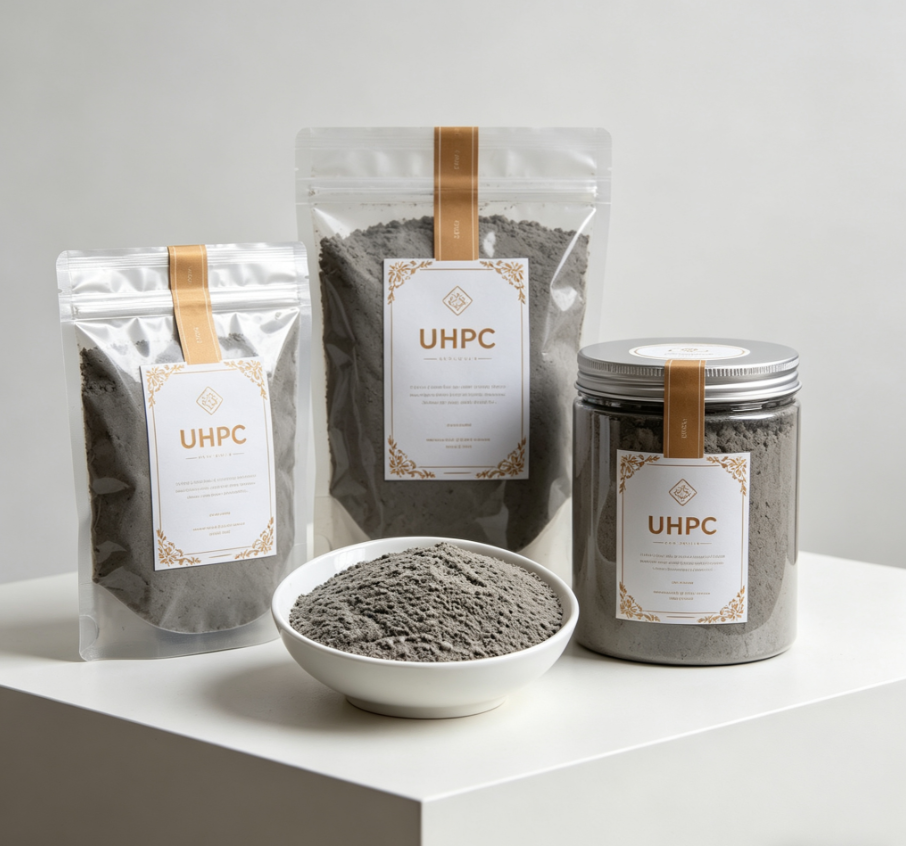
In the construction industry, selecting the right cement is not merely a matter of strength; it is a matter of compatibility with your environment and the intended lifespan of your structure. While Ordinary Portland Cement (OPC) is often the default choice for rapid construction, Portland Pozzolana Cement (PPC) is increasingly becoming the preferred material for projects that prioritize durability, sustainability, and long-term cost-effectiveness.
If you are a project owner, architect, or engineer, understanding exactly when to specify PPC can save thousands in future maintenance costs. This guide outlines the specific scenarios where PPC outperforms its counterparts, supported by material science and empirical data.
1. When Durability Is Your Primary Metric
You should choose PPC when your project is designed to last a century rather than just a few decades. The chemical structure of PPC makes it inherently more durable than OPC in several key areas.
The Pozzolanic Reaction
PPC contains pozzolanic materials (typically 15% to 35% fly ash). When cement hydrates, it produces Calcium Hydroxide, which is the “weak link” in concrete because it is soluble and prone to leaching.
- The Process: The fly ash in PPC reacts with this Calcium Hydroxide to create additional Calcium Silicate Hydrate (C-S-H)—the primary glue that gives concrete its strength.
- The Result: This reaction turns a byproduct into a structural asset, filling microscopic pores and creating a denser, more cohesive matrix.
2. When Building in Chemically Aggressive Environments
If your construction site is located in a coastal region, near a sewer system, or in “hot” (sulfate-rich) soil, you must use PPC to prevent premature structural decay.
Resistance to Sulfate Attack
Sulfates found in groundwater react with the Tricalcium Aluminate ($C_3A$) in cement to form ettringite, which causes internal expansion and cracking.
- The Fact: PPC inherently has lower $C_3A$ content. Furthermore, its denser matrix prevents the ingress of sulfates.
- Your Benefit: Using PPC in foundations or underground structures in saline or marshy soils protects the concrete from “spalling” (the surface breaking away).
Chloride Resistance and Rebar Protection
For bridges or marine piers, the greatest threat is chloride-induced corrosion of the steel reinforcement.
- The Science: Because PPC has lower permeability, it takes significantly longer for chloride ions to reach the internal steel.
- The Data: Research indicates that PPC concrete can extend the time to corrosion initiation by 1.5 to 2 times compared to OPC-based concrete in marine splash zones.
3. When Executing Mass Concrete Pours
You should use PPC for massive structural elements such as dam walls, thick raft foundations, or large bridge piers to manage the Heat of Hydration.
- The Problem: OPC generates high heat quickly. In a thick pour, the core can become dangerously hot while the surface cools, leading to thermal stress and deep structural cracks.
- The Solution: PPC has a much slower rate of heat evolution. It allows the temperature to stabilize more gradually, significantly reducing the risk of thermal cracking.
4. When Surface Finish and Workability Matter
For finishing work—such as plastering, masonry, or decorative flooring—PPC is almost always the superior choice.
- Workability: The fly ash particles in PPC are spherical (the “ball-bearing effect”). This makes the wet mix more “creamy” and easier to spread with a trowel.
- Reduced Bleeding: PPC is less prone to “bleeding” (water rising to the surface). This is critical for preventing surface dusting, where the top layer of concrete becomes powdery and weak after drying.
- Smoothness: Because PPC is finer than standard OPC, it results in a much smoother, tighter surface finish, which is ideal for exterior plastering that must resist rainwater penetration.
5. Comparative Use-Case Table
| Project Type | Should You Use PPC? | Why? |
| Residential Foundations | Yes | Prevents shrinkage cracks and resists groundwater chemicals. |
| Coastal Structures | Yes | Superior resistance to chloride and salt air. |
| Sewage Systems | Yes | High resistance to mild acid and sulfate attack. |
| High-Rise Columns | Conditional | Only if the project timeline allows for slower strength gain. |
| External Plastering | Yes | Better workability and fewer hairline cracks. |
| Pre-stressed Concrete | No | Requires the high early strength of OPC 53 Grade. |
6. Economic and Environmental Considerations
In today’s regulatory environment, you must also consider the “Green” aspect of your build.
- Sustainability: PPC uses industrial fly ash, reducing the $CO_2$ footprint per bag of cement by approximately 20% to 30%.
- Cost Efficiency: PPC is generally 5% to 10% cheaper than OPC because it replaces expensive clinker with recycled pozzolans.
FAQ: Frequently Asked Questions
Q: Can I use PPC for structural slabs and beams?
A: Yes. PPC eventually reaches the same ultimate strength as OPC. The only difference is that it takes slightly longer to get there. You must ensure your contractor keeps the formwork in place for a few extra days (typically 3–5 days longer than OPC) and follows a strict curing schedule.
Q: Why does PPC require longer curing?
A: Because the pozzolanic reaction (the fly ash reacting with cement byproducts) is slower than the primary cement hydration. For PPC to reach its full potential, it must remain moist for at least 14 to 21 days.
Q: Is PPC “weaker” cement?
A: No. After 28 to 90 days, the compressive strength of PPC is often higher and more consistent than that of OPC. The “weakness” is only in the first 7 days.
Conclusion: The Final Verdict
You should use PPC when your project’s goal is long-term performance over short-term speed. It is the ideal material for residential homes, hydraulic structures, marine environments, and masonry work. By specifying PPC, you are choosing a material that is not only more affordable and environmentally responsible but also scientifically engineered to resist the silent killers of concrete: chlorides, sulfates, and thermal stress.
However, if you are on a “fast-track” project that requires you to strip forms every 24 hours, you should stick to OPC. For almost everything else, PPC is the superior engineering choice.
Call to Action (CAT)
Protect Your Investment with the Right Cement.
Choosing the wrong cement for your environment can lead to structural repairs within just a decade. Our materials team can provide a Durability Assessment for your specific site conditions to ensure you are specifying the correct grade of PPC for your needs.
[Download our Cement Selection Matrix] | [Request a Technical Mix Design Audit]
[Contact Our Engineering Team Today] | Build for the future. Build with PPC.