
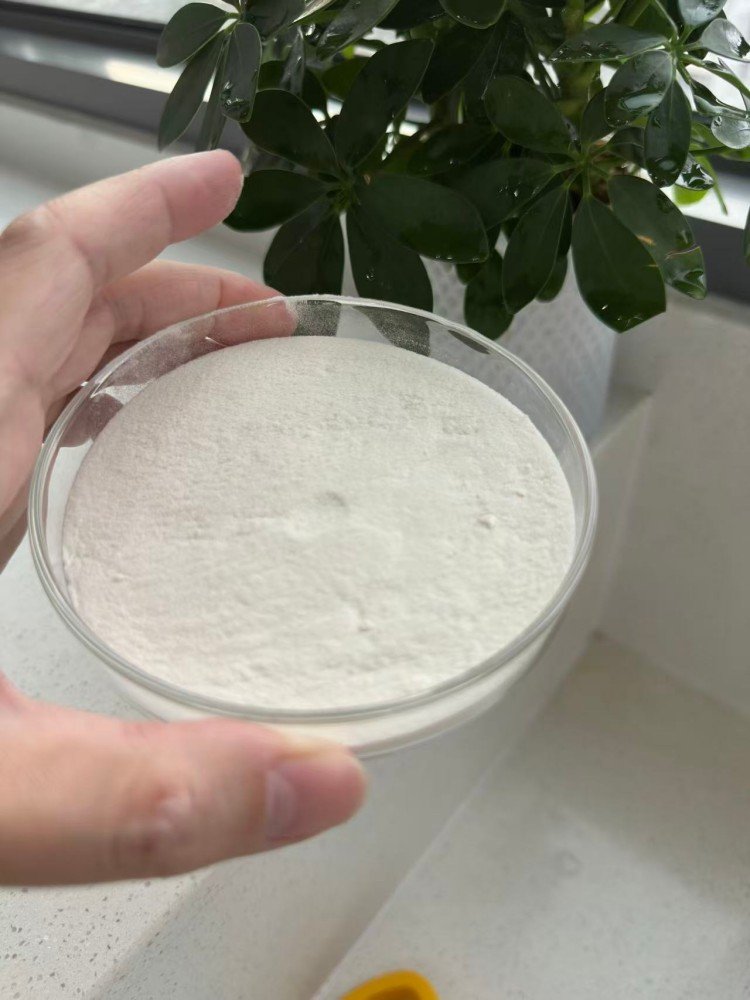
In the world of civil engineering and high-performance construction, Portland Pozzolana Cement (PPC) is often celebrated as the “smarter” alternative to standard cement. However, to specify it correctly in your projects, you must look past the marketing and understand the four fundamental scientific assumptions that govern its behavior.
If you are a structural engineer, a project manager, or a property owner, these assumptions are the “rules of engagement” for using PPC. If any of these four pillars are misunderstood, you risk structural delays, surface defects, or compromised load-bearing capacities.
In this guide, you will explore the four critical assumptions of PPC, the chemical facts that support them, and how to manage these variables on your job site.
1. Assumption 1: The Pozzolanic Reaction Is Secondary and Time-Dependent
The first and most critical assumption you must make when using PPC is that strength is a marathon, not a sprint. ### The Chemical Fact Unlike Ordinary Portland Cement (OPC), which relies almost entirely on the hydration of calcium silicates, PPC introduces a second stage of chemistry.
- Primary Reaction: Cement + Water = Calcium Silicate Hydrate (C-S-H) + Calcium Hydroxide (CH).
- Secondary Reaction: Fly Ash (Pozzolan) + CH + Water = More C-S-H.
What This Means for You
You are assuming that the byproduct of the first reaction (Calcium Hydroxide) will be consumed to create more “glue” (C-S-H). However, this secondary reaction is slow.
- The Reality: You must assume that at 3 days and 7 days, your concrete will be significantly weaker than an equivalent OPC mix.
- The Application: You cannot remove vertical formwork or load a structural beam with the same speed as you would with OPC. You are trading early speed for long-term density.
2. Assumption 2: Pore Refinement leads to Total Impermeability
The second assumption is that PPC will eventually create a structure that is virtually “waterproof” compared to standard mixes. This is known in materials science as Pore Refinement.
The Science of Density
In standard concrete, microscopic “capillary pores” are left behind as excess water evaporates. These are the highways that allow chlorides and sulfates to attack your rebar.
- The Assumption: You assume that the secondary C-S-H gel produced by the fly ash will grow inside these pores, physically plugging them.
- The Fact: Research in chloride permeability (ASTM C1202) shows that PPC concrete can reduce ion penetration by up to 40% to 50% compared to OPC after 90 days.
The Benefit for Your Site
By assuming this pore refinement will occur, you can confidently specify PPC for basements, water tanks, and coastal structures. You are essentially building a “self-sealing” structure at a microscopic level.
3. Assumption 3: The Heat of Hydration Is Low and Manageable
The third assumption is that PPC will remain “cool” during the setting process. This is the primary reason you should use it for mass concrete pours.
Managing Thermal Stress
When you pour a large foundation or a thick column, the chemical reaction generates heat.
- The Assumption: You assume that the lower clinker content in PPC will prevent the core of your concrete from reaching “critical” temperatures (typically above 65°C).
- The Fact: PPC evolves roughly 20% to 30% less heat during the first 72 hours than OPC 53 Grade.
- The Consequence: By making this assumption, you reduce the need for expensive cooling systems (like ice-water mixing or internal cooling pipes) in your mass concrete designs. It minimizes the risk of thermal cracking—cracks that occur when the inside of the slab is hot and expanding while the surface is cooling and shrinking.
4. Assumption 4: Curing Is a Mandatory, Non-Negotiable Process
The most dangerous assumption you can make is that PPC will reach its design strength with “standard” care. The fourth pillar of PPC engineering is the assumption of Extended Curing.
The Necessity of Moisture
Because the pozzolanic reaction is a slow, long-term process, it requires the presence of water for much longer than standard cement.
- The Requirement: You must assume that a 7-day cure is insufficient.
- The Technical Fact: For the fly ash to fully react and achieve the promised pore refinement, the concrete must remain saturated for 14 to 21 days.
- The Risk: If you ignore this assumption and allow the concrete to dry out after a week, the secondary reaction stops. You will be left with a surface that “dusts” (produces powder) and a core that may never reach its full 28-day MPa rating.
Comparative Analysis: The “Assumptions” Table
| Feature | Your Assumption with OPC | Your Assumption with PPC |
|---|---|---|
| Strength Gain | Rapid; 70% strength in 7 days. | Slow; Significant gain after 28 days. |
| Curing Need | Moderate (7 days). | High (14 – 21 days). |
| Permeability | Moderate (Open capillary pores). | Low (Refined, disconnected pores). |
| Cracking Risk | High (Thermal and Shrinkage). | Low (Cooler reaction). |
| Environmental | High Carbon Footprint. | Eco-Friendly (Uses recycled fly ash). |
Export to Sheets
FAQ: Frequently Asked Questions
Q: Does PPC’s slow setting time mean it is “weaker”? A: No. In fact, after 90 days, PPC is often stronger and more durable than OPC. The assumption is simply that it takes longer to achieve that strength. It is a marathon runner, not a sprinter.
Q: Can I use PPC for high-rise buildings? A: Yes, it is widely used for the slabs and walls of high-rises to reduce cracking. However, for the primary columns where you need to remove forms in 24 hours, OPC is still the preferred choice.
Q: Why is curing more critical for PPC? A: Because the “Pozzolanic Reaction” only happens in the presence of Calcium Hydroxide and water. If the water evaporates too early, the fly ash remains as “filler” rather than becoming “glue.”
Conclusion: Engineering with Confidence
To use PPC effectively, you must respect its four core assumptions: Slower strength gain, superior long-term density, lower heat, and the need for rigorous curing. When you align your construction schedule with these scientific realities, you aren’t just pouring concrete; you are creating a high-performance, chemical-resistant structure that will outlast traditional OPC builds. PPC is the material of choice for the durable, sustainable future of infrastructure—provided you follow the rules of its chemistry.
Call to Action (CAT)
Is Your Curing Schedule Ready for PPC?
Don’t let the benefits of PPC go to waste through poor site management. If you are switching from OPC to PPC for your next project, ensure your team understands the shift in curing and formwork requirements.
[Download our PPC Curing & Formwork Timeline] | [Request a Technical Strength Projection for Your Project]
[Contact Our Engineering Consultancy] | Build for the next century. Understand your materials.