
If you are evaluating materials for a high-stakes infrastructure project, a specialized architectural facade, or a critical bridge repair, you have likely encountered the term Ultra-High Performance Concrete (UHPC). You have also likely noticed the significant gap between the cost of standard concrete and this advanced composite.
The question “How much does it cost?” is rarely answered with a single number. To understand the pricing of UHPC, you must look beyond the price per cubic meter and analyze the Life-Cycle Cost (LCC), material reduction, and long-term maintenance savings.
In this guide, you will find a transparent breakdown of the current market prices for UHPC, the variables that drive those costs, and the economic justification for its selection in modern engineering.
1. The Raw Numbers: Unit Cost vs. Traditional Concrete
To put it bluntly: UHPC is significantly more expensive than Normal Strength Concrete (NSC) on a volume-for-volume basis.
- Standard Concrete (NSC): Typically ranges from $120 to $200 per cubic yard ($150–$260 per cubic meter).
- Ultra-High Performance Concrete (UHPC): Generally ranges from $2,000 to $3,500 per cubic yard ($2,600–$4,600 per cubic meter).
Why the Massive Disparity?
You aren’t just paying for “stronger cement.” You are paying for a high-tech material matrix.
- Specialized Cementitious Materials: UHPC requires ultra-fine powders like silica fume and quartz flour, which are significantly more expensive than standard aggregates.
- The Fiber Factor: Most UHPC mixes contain 2% to 3% steel micro-fibers by volume. These high-strength, precision-engineered fibers alone can account for 40% to 50% of the total material cost.
- Chemical Admixtures: To achieve a water-to-cement ratio below 0.20 while maintaining flow, massive doses of advanced superplasticizers (HRWR) are required.
2. The “Hidden” Cost Drivers: Beyond the Material
When you budget for UHPC, the price of the “bagged” material is only one part of the equation. You must also account for:
Specialized Mixing and Equipment
You cannot mix UHPC in a standard rotating drum truck and expect it to reach 150 MPa.
- High-Shear Mixers: Because of the density of the powders, you need high-energy mixers to break up clumps and ensure the fibers are dispersed. Renting or purchasing these specialized pan mixers adds to the project overhead.
- Precision Labor: Working with UHPC requires trained technicians. The timing of the fiber addition and the management of the “pot life” are critical.
Quality Control and Testing
Standard testing cylinders often fail or give false readings with UHPC because the material is stronger than the testing machine’s capacity. You will need:
- End Grinding: Cylinders must be ground perfectly flat to avoid eccentric loading.
- Advanced Labs: Third-party testing for UHPC often carries a premium because of the specialized equipment required to crush samples at 20,000+ psi.
3. The Value Engineering: Where UHPC Becomes “Cheaper”
If you only look at the price per cubic meter, you might dismiss UHPC as unaffordable. However, when you apply Value Engineering (VE), the narrative shifts in your favor.
Material Reduction (Thin-Section Design)
Because UHPC is roughly 4 to 5 times stronger than NSC, you do not need as much of it.
- The Fact: You can often replace a bulky 12-inch thick traditional beam with a slim 4-inch or 5-inch UHPC beam.
- The Result: While the price per yard is 15x higher, you might be using 60% to 70% less material volume, which partially offsets the initial investment.
Reduced Foundations and Logistics
Lighter structural elements mean:
- Smaller Foundations: Less weight means your piles and footings can be downsized.
- Lower Shipping Costs: If you are using precast UHPC, you can fit more elements on a single truck, reducing transportation and crane rental costs.
4. Life-Cycle Cost Analysis (LCCA): The 100-Year Perspective
This is the most critical factor for municipal and long-term owners. You must ask: “What will this structure cost over 75 or 100 years?”
| Cost Factor | Normal Concrete (NSC) | UHPC |
| Initial Construction | $ | $$$ |
| Maintenance (Year 15–50) | High (Overlays, Sealants, Rebar Repairs) | Near Zero |
| Replacement Cycle | 40 – 50 Years | 100 – 150 Years |
| User Delay Costs | High (Periodic Closures) | Minimal |
The Economic Fact: In bridge deck joints—the most common application of UHPC—using the material to “link” precast girders eliminates the #1 cause of bridge failure (joint leakage). By spending $100,000 more on UHPC today, you can save millions in future rehabilitation and traffic detour costs.
FAQ: Your Questions Answered
Q: Can I reduce the cost by using local sand or aggregates?
A: Yes. Many “non-proprietary” mixes are being developed by universities and government agencies that utilize local sands. This can reduce the cost by 20% to 40%, though it requires more rigorous on-site testing to ensure performance.
Q: Are synthetic (plastic) fibers cheaper than steel micro-fibers?
A: Yes, synthetic fibers are cheaper, but they do not provide the same tensile strength or ductility as steel. If your design relies on the “strain-hardening” properties of UHPC, you generally cannot substitute steel for synthetic.
Q: Why is UHPC more common in bridge joints than in full buildings?
A: Because the volume required for joints is small, making the high cost manageable. In full building structures, the cost is currently only justified for “signature” architecture or extreme-load columns where space-saving (slimmer columns) is the priority.
5. Summary: When Is the Cost Justified for You?
You should specify UHPC, despite the cost, when your project meets any of these criteria:
- Extreme Durability: You are building in a marine or high-salt environment where standard concrete would fail within 20 years.
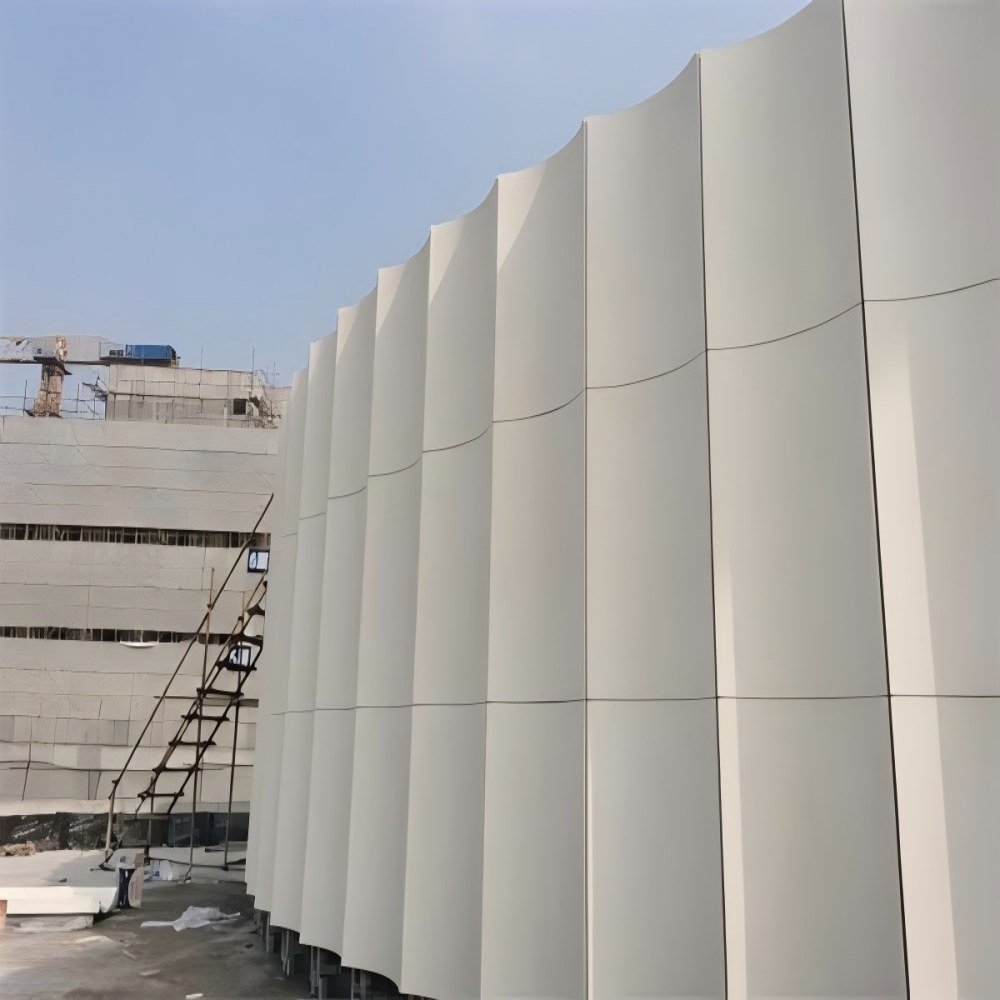
- Complex Aesthetics: You require ultra-thin, elegant shapes that traditional concrete cannot support.
- Accelerated Bridge Construction (ABC): You need to minimize road closure times by using high-strength joints that cure quickly.
- Seismic Resilience: You need high energy absorption (ductility) to protect lives during an earthquake.
Conclusion: Investing in Resilience
Ultra-High Performance Concrete is not a commodity; it is a high-performance technology. While the upfront price is significant, the Total Cost of Ownership often proves that UHPC is the most economical choice for infrastructure intended to last a century. As the market matures and local production increases, the price gap is expected to narrow, but the value of “zero-maintenance” infrastructure is already clear today.
Call to Action (CAT)
Is UHPC the Right Financial Move for Your Project?
Don’t let the initial quote discourage you without a full economic analysis. Our team specializes in Life-Cycle Cost Analysis (LCCA) and can help you determine the material savings and maintenance-free ROI for your specific design.
[Request a Customized Cost-Benefit Analysis] | [Download our UHPC Budgeting Guide]
[Contact Our Materials Engineering Specialists] | Because the most expensive material is the one you have to replace twice.