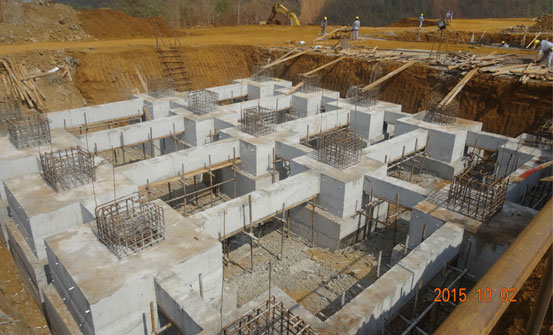
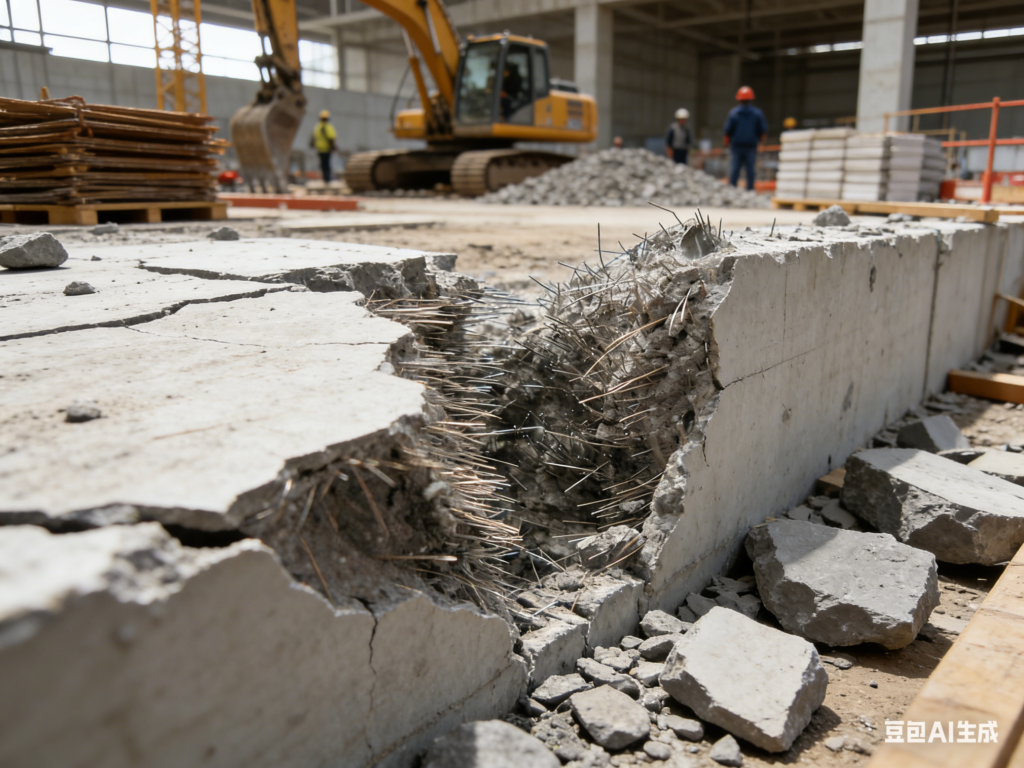
Introduction
In modern civil engineering and infrastructure development, the demand for concrete structures with higher durability, ultimate tensile strength, and superior crack control is increasing rapidly. Standard concrete matrices often fail to meet the strict performance criteria required for extreme environments, leading to premature aging, shrinking, and macro-cracking.
To bridge this gap, copper coated steel fiber (also known as copper-coated micro steel fiber) has emerged as a game-changing metal fiber reinforcement additive. This advanced reinforcement material is widely utilized in Ultra-High Performance Concrete (UHPC), RPC (Reactive Powder Concrete), and specialized mortar formulations to enhance high-load structural capacity and prevent structural deformation.
1. What is Copper Coated Steel Fiber?
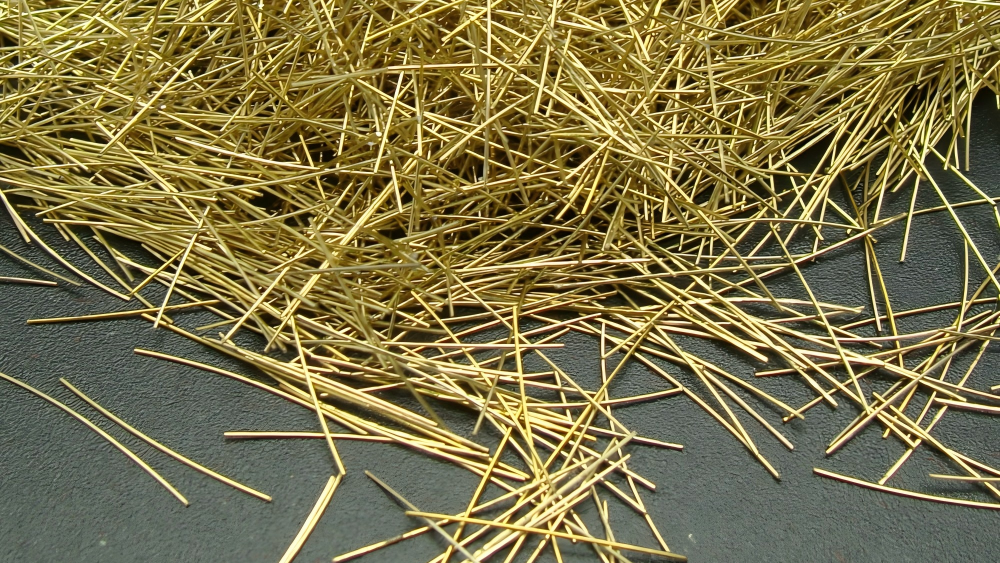
Copper coated steel fiber is a premium, high-strength monofilament straight fiber manufactured from cold-drawn high-carbon steel wire. During the sophisticated manufacturing process, the steel wire is precisely drawn to micro-diameters and coated with an ultra-thin, pure copper or brass layer.
This micro steel fiber is characterized by its golden appearance, loose form factor, and exceptional mechanical attributes. Unlike hooked end or macro steel fibers, which are commonly used in standard concrete floors, copper-coated micro steel fibers possess incredibly high aspect ratios, allowing billions of single fibers to disperse uniformly within a dense cementitious matrix without clumping or balling.
2. Technical Specifications & Material Dimensions
To achieve optimal particle packing and matrix interaction in your concrete mix design, selecting the precise fiber dimensions is critical. We manufacture loose steel fibers fully compliant with global standards like ASTM A820 and EN14889.
| Parameter | Specification Details |
| Material Composition | High Carbon Steel Wire / Premium Alloy Steel |
| Surface Treatment | Pure Copper Coated / Brass Coated Corrosion Shield |
| Fiber Profile | Monofilament Straight Fiber / Loose Form |
| Fiber Diameter | 0.2mm, 0.22mm |
| Fiber Length | 6mm, 13mm, 20mm, |
| Tensile Strength Grade | High Tensile / Ultra High Strength (2000 MPa to 2800 MPa) |
| Quality Compliance | ISO Certified, CE Certified, ASTM A820, EN14889 Standards |
3. Key Benefits and Performance Advantages
Integrating copper-coated micro metal fiber reinforcement into your high-fluidity concrete mix provides major durability and structural performance dimensions:
- Ultimate Tensile & Flexural Strength: The incorporation of ultra-high strength micro steel fibers significantly improves the energy absorption, flexural strength, and compressive strength (reaching 100Mpa to 250Mpa+ / over 20,000-30000 psi) of UHPC structures.
- Elite Micro & Macro Crack Control: These fibers act as internal micro-anchors within the dense matrix. They effectively intercept and control micro-cracks caused by autogenous shrinkage, drying shrinkage, and thermal stress before they expand into dangerous macro cracks.
- Excellent Matrix Adhesion & Bonding: The chemical interaction of the premium copper coating with the cement binder optimizes interface bonding and adhesion, preventing fiber pull-out during sudden impact loading or continuous load transfer.
- High Corrosion & Chemical Resistance: The copper layer serves as a protective shield during the initial concrete curing stage. When embedded in low-permeability concrete like UHPC, it restricts moisture, chloride, and sulfate penetration, ensuring a long service life.
- Optimal Workability & Fluidity: Engineered as individually dispersed loose steel fibers, they promote great self-compacting, pourable, pumpable, and sprayable capabilities, making them highly compatible with superplasticizers (HRWR) and fine admixtures like silica fume.
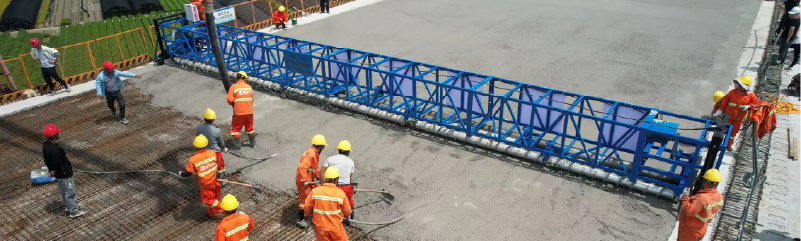
4. Primary Application Scenarios
Due to its outstanding mechanical reinforcement capabilities, copper coated steel fiber is highly demanded across civil engineering, infrastructure, and commercial sectors:
🏢 UHPC, RPC & Precast Concrete Elements
It is the cornerstone additive for high-density, thin-wall, and lightweight precast panels, facade cladding, precast beams, and prefabricated modular building construction.
🌉 Bridge Infrastructure & Rehabilitation
Widely adopted for bridge deck reinforcement, bridge overlays, bridge joints, structural strengthening, retrofitting, and connection joints between prefabricated bridge girders.
🚇 Tunnels, Underground & Shotcrete Mining
Provides exceptional rock support and slope stabilization in underground metro lines and tunneling via wet or dry sprayed concrete (shotcrete) applications.
🌊 Marine & Coastal Engineering
Ideal for harbor foundations, ports, offshore platforms, coastal seawater-resistant marine structures, and infrastructure subjected to aggressive tidal actions.
🏭 Heavy-Duty Industrial Flooring
Used in industrial flooring, warehouse floors, factory floors, airport runways, and highway pavements to enhance wear-resistant, impact protection, and freeze-thaw resistance.
5. Recommended Fiber Dosage & Mixing Instructions
- Fiber Dosage: Depending on the structural recipe and compressive strength demands, the typical volume fraction ranges from 1 percent fiber to 4 percent fiber loading by volume (equivalent to approximately $40\text{kg/m}^3$ to $160\text{kg/m}^3$).
- Mixing Formulation: For optimal packing, blend the loose steel fibers during the dry mix stage with cementitious binders, quartz sand, and silica fume prior to adding water and high-range water reducers (superplasticizers). Mix thoroughly until a uniform, high-fluidity dispersion is achieved.
❓ Frequently Asked Questions (Google Schema / FAQ Section)
Q1: Why choose copper coated straight micro steel fiber instead of hooked end steel fiber for UHPC?
A: Copper coated micro steel fibers have a much finer diameter (0.2mm-0.35mm) and straight monofilament shape. This allows billions of fibers to distribute evenly throughout the dense matrix of Ultra-High Performance Concrete (UHPC). Macro fibers like hooked end steel fibers are larger and much better suited for thick industrial concrete flooring or standard slab-on-grade applications rather than thin-section, ultra-high strength engineering components.
Q2: Does the copper coating prevent rusting of the fibers inside the concrete?
A: Yes. The pure copper or brass coating offers immediate corrosion resistance during the crucial concrete mixing and curing stages, while boosting high adhesion and interface bonding strength within the cement matrix. Once cured inside high-durability concrete (such as UHPC), the dense matrix yields ultra-low permeability, which inherently cuts off internal oxygen, moisture, and chloride penetration, keeping the steel wire protected over a long service life.
Q3: What is the ideal fiber content for infrastructure repair and bridge deck overlays?
A: For structural repairs, patch repairs, bridge deck reinforcement overlays, or tunnel shotcrete applications, a fiber loading volume fraction of 1 percent to 2 percent fiber is generally recommended. This specific range perfectly balances excellent crack resistance, impact energy absorption, and the necessary fluidity or pumpability required for field construction equipment.