
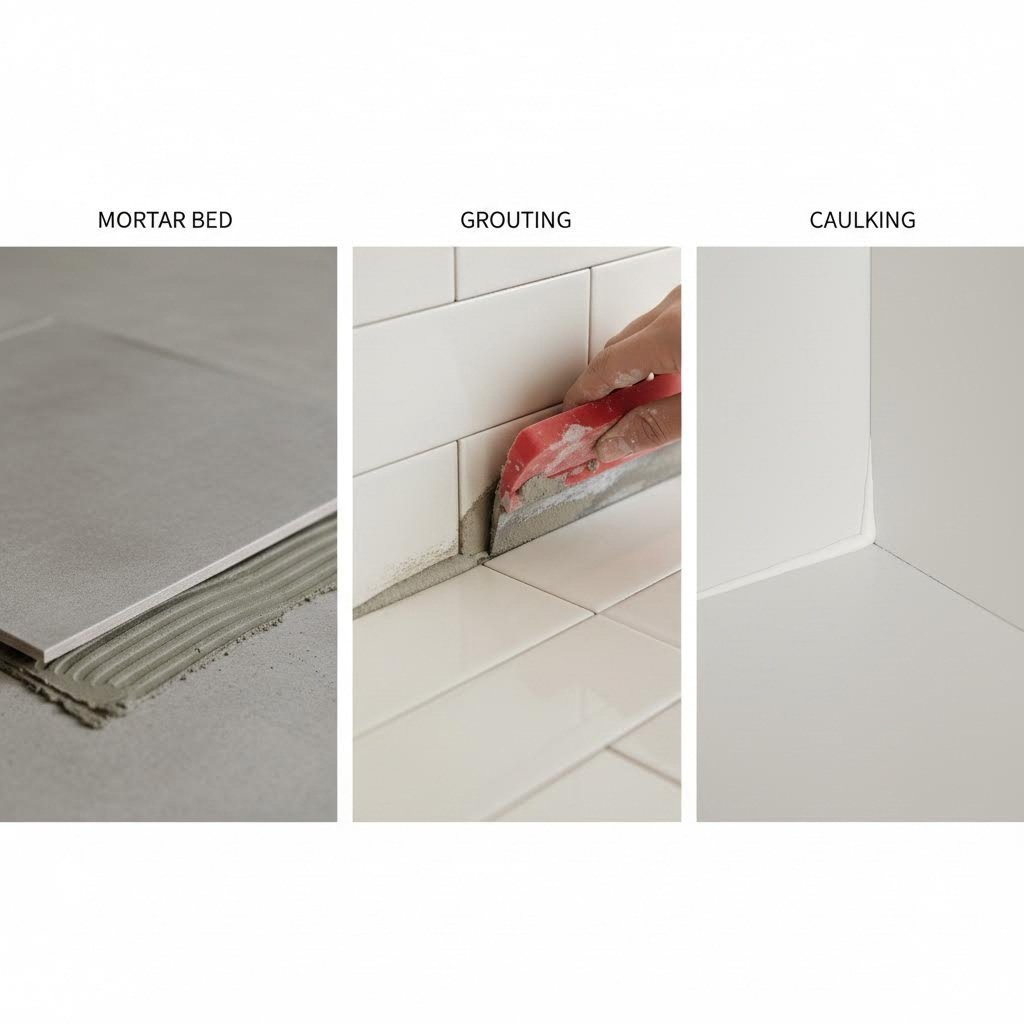
The material used to fill the spaces between tiles is primarily called grout. It locks the tiles in place, seals out moisture, and provides a finished aesthetic. However, for corners and areas where walls meet floors, you must use flexible caulk instead of grout to prevent cracking. When choosing grout, the general rule is to use sanded grout for joints wider than 1/8 inch and unsanded grout for narrower joints or delicate tiles like glass.
The Big Three: Grout vs. Mortar vs. Caulk
One of the most common mistakes in DIY tiling projects is confusing the materials used during installation. While they may look similar in the bucket, grout, mortar, and caulk serve three distinct structural purposes. Using the wrong one can lead to cracked tiles, water damage, or a complete project failure.
- Grout (The Filler): This is the visible material that goes between the tiles after they are set. Its primary job is to fill the joints, keep debris out, and stabilize the tile surface. It comes in various colors to match or contrast with your design.
- Mortar/Thinset (The Adhesive): This material goes underneath the tiles. It is a cement-based adhesive used to bond the tile to the subfloor or wall. Once the tile is laid, you should never see the mortar again. According to Flooring Inc, thinset is designed for adhesion, while grout is designed for filling gaps.
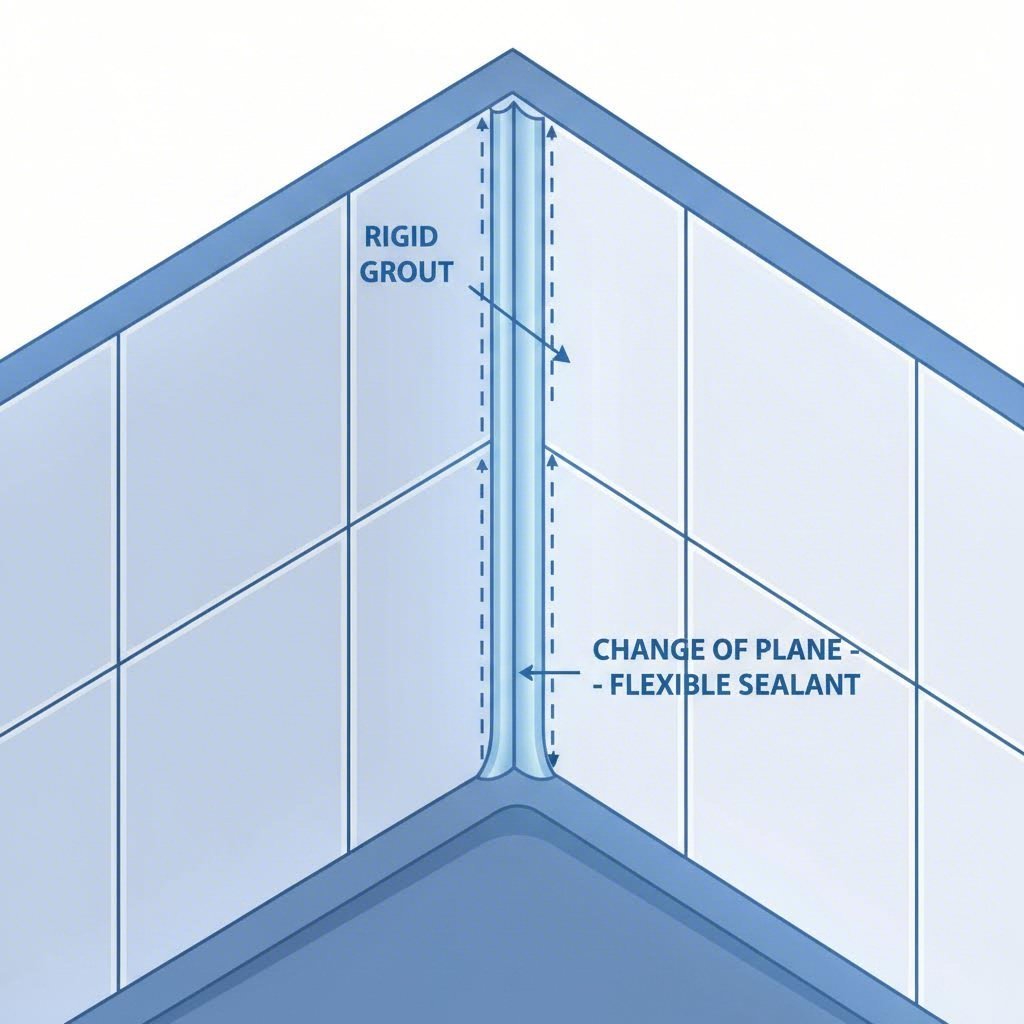
- Caulk (The Sealant): This is a flexible, waterproof sealer used primarily at “changes of plane,” such as corners or where a tub meets a tiled wall. Unlike rigid grout, caulk can expand and contract without cracking.
| Material | Primary Function | Application Location | Flexibility |
|---|---|---|---|
| Grout | Fills gaps, locks tiles | Between tiles on flat surfaces | Rigid (Low) |
| Mortar | Adheres tile to surface | Underneath tiles | Rigid (None) |
| Caulk | Seals joints, prevents leaks | Corners, transitions, edges | Flexible (High) |
Types of Grout: Which One Do You Need?
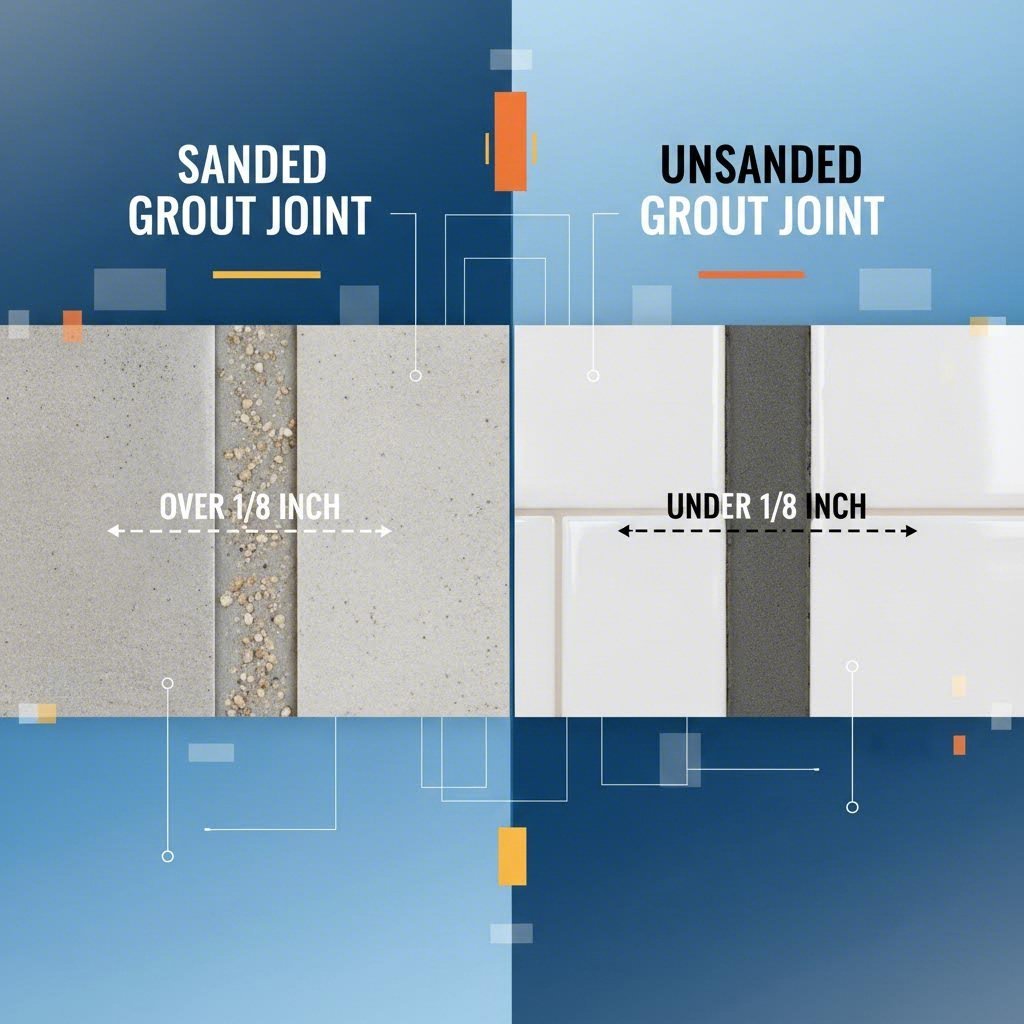
Once you have confirmed you need grout, the next step is selecting the right type. The choice depends heavily on the width of your grout joints and the type of tile you are installing. Using the wrong type can result in scratched tiles or crumbling joints.
1. Sanded Grout (For Wide Joints)
As the name implies, sanded grout contains fine sand particles. This added aggregate acts as a binder, preventing the grout from shrinking and cracking as it cures. It is the standard choice for most durable flooring projects.
- Best for: Joints wider than 1/8 inch (approx. 3mm).
- Use cases: High-traffic floors, ceramic tile, and stone.
- Warning: The abrasive sand can scratch delicate surfaces like glass, polished marble, or metal tile.
2. Unsanded Grout (For Narrow Joints)
Unsanded grout has a smoother texture and relies on polymers rather than sand for strength. It is stickier than sanded grout, making it easier to work with on vertical wall applications.
- Best for: Joints narrower than 1/8 inch (approx. 3mm).
- Use cases: Rectified porcelain, bathroom walls, and easily scratched materials like glass or polished stone.
- Expert Tip: The Home Depot notes that using unsanded grout in wide joints is a recipe for disaster, as it will likely crack due to lack of structural support.
3. Epoxy and High-Performance Grouts
For areas demanding extreme durability, such as showers or commercial spaces, epoxy grout is the superior choice. Made from epoxy resins and a filler powder, it is waterproof, stain-resistant, and does not require sealing. However, it sets quickly and is more difficult to install than cement-based grouts.
For specialized industrial applications, professional-grade solutions are often required. Companies like Hubei Qiandao New Materials Co., Ltd. engineer high-strength, non-shrink structural grouts specifically for demanding environments like rebar connections and prefabricated buildings, offering a level of performance that goes beyond standard DIY materials.
Critical Exception: When to Use Caulk Instead
The golden rule of tiling is to never grout a corner. In construction terms, this is known as a “change of plane”—any area where two different surfaces meet, such as two walls in a shower corner or the floor meeting the bathtub.
Houses settle and shift over time. If you fill these corners with rigid grout, the movement will inevitably cause the grout to crack and fall out, creating an entry point for water. Sir Grout advises using high-quality silicone or acrylic caulk in these areas. Caulk is flexible and can absorb this movement, maintaining a waterproof seal that protects your walls from rot and mold.
Most major grout manufacturers sell color-matched caulk (often called “sanded caulk” or “unsanded caulk”) that perfectly blends with your grout lines, ensuring your safety measures don’t ruin the aesthetic.
Design & Performance: Color and Sealing
The color of the material between your tiles can dramatically change the room’s appearance. Matching the grout color to the tile creates a seamless, monolithic look that makes small rooms feel larger. Contrasting colors (like dark grout on white subway tile) highlight the pattern and geometry of the layout.
Maintenance is the final consideration. Standard cement-based grouts are porous and absorb liquids, leading to stains and bacterial growth. Unless you are using epoxy or a pre-sealed formulation, you must apply a penetrating sealer after the grout cures. According to Lowe’s, sealing should be repeated annually in wet areas to maintain protection.
Conclusion
Success in tiling comes down to putting the right material in the right gap. Remember the core rules: use mortar to stick it down, grout to fill the flat spaces, and caulk to seal the corners. By matching your grout type to your joint width—sanded for wide, unsanded for narrow—you ensure a professional finish that will stand the test of time.
Frequently Asked Questions
1. What is the stuff you put in between tiles called?
The primary material used to fill gaps between tiles is called grout. It is typically a cement or epoxy-based mixture available in sanded and unsanded varieties depending on the joint width.
2. Should I use caulk or grout in the shower corners?
Always use caulk for shower corners. Grout is too rigid and will crack as walls settle/move, leading to water leaks. Flexible silicone caulk allows for movement while maintaining a waterproof seal.
3. Can I use the same grout for floor and wall tiles?
Yes, but it depends on the joint size. Floors often have wider joints requiring sanded grout for durability, while walls often use narrower joints requiring unsanded grout. Always check the joint width measurement before applying.