
Grouting material fills gaps and joins things in building work. Cement or epoxy resins are often used as the base. Most jobs use cement-based grouts, which are about 55% of the market. Epoxy grouts are getting more common. The main parts are the base, water, sand, aggregates, hardeners, mineral fillers, color pigments, and performance polymers. Each part affects how the grout works. If you know what these parts do, you can choose the best grouting material for your project.
Key Takeaways
- Grouting material fills spaces and makes structures stronger. It is very important for building projects. Cement and epoxy are the main types of grouting materials. Pick one based on how strong you need it and how fast it dries. Knowing about parts like water, sand, and additives helps you pick the best mix. This makes the grout last longer and work better. Think about the weather and what your project needs before you choose grouting material. This helps make sure it works well. Do not make mistakes like adding too much water or forgetting to seal the grout. These mistakes can make joints weak and break easily.
Purpose of Grouting Material
Filling Voids and Gaps
Grouting material fills empty spaces and cracks in buildings. It helps stop water leaks and soil from washing away. The mix has cement, water, and special additives. This mix flows into small spaces and then hardens. When it hardens, the building gets stronger.
- People use grouting to:
- Seal cracks in concrete walls and floors
- Fill spaces between pipes and the ground
- Make the soil under buildings more stable
Stopping water from getting in is very important for keeping buildings safe, especially those with parts underground. Grouting helps a lot with this.
Annular grouting is a way to fill space between two round things, like a pipe inside a tunnel. This method gives support and keeps water out. Filling these spaces helps the building stay safe and strong for many years.
Restoring Strength and Stability
When you fix broken structures, grouting material helps make them strong again. It fills cracks and weak spots to make everything more stable. You can use it to fix roads, bridges, tunnels, and mines.
Here is a table that shows how grouting makes things stronger:
| Evidence Description | Findings |
|---|---|
| Expansion grouting materials make coal rock mass stick together better and increase its internal friction angle. | Makes the rock around it stronger and gives more strength than regular materials. |
| The materials can go into deep cracks and form a network. | Supports broken rock and brings back its strength. |
| The recovery strength coefficient of the 7-day expansion grouting material is 0.82. | This is 0.64 higher than pure cement’s recovery strength coefficient. |
| Field tests show the biggest movement is 125 mm and sidewall change is 190 mm. | Helps stop the ground from breaking and keeps the rock next to it steady. |
Grouting does more than just fill gaps. It also makes weak areas much stronger. This helps stop future problems and keeps buildings and other structures safe.
Main Components of Grouting Material
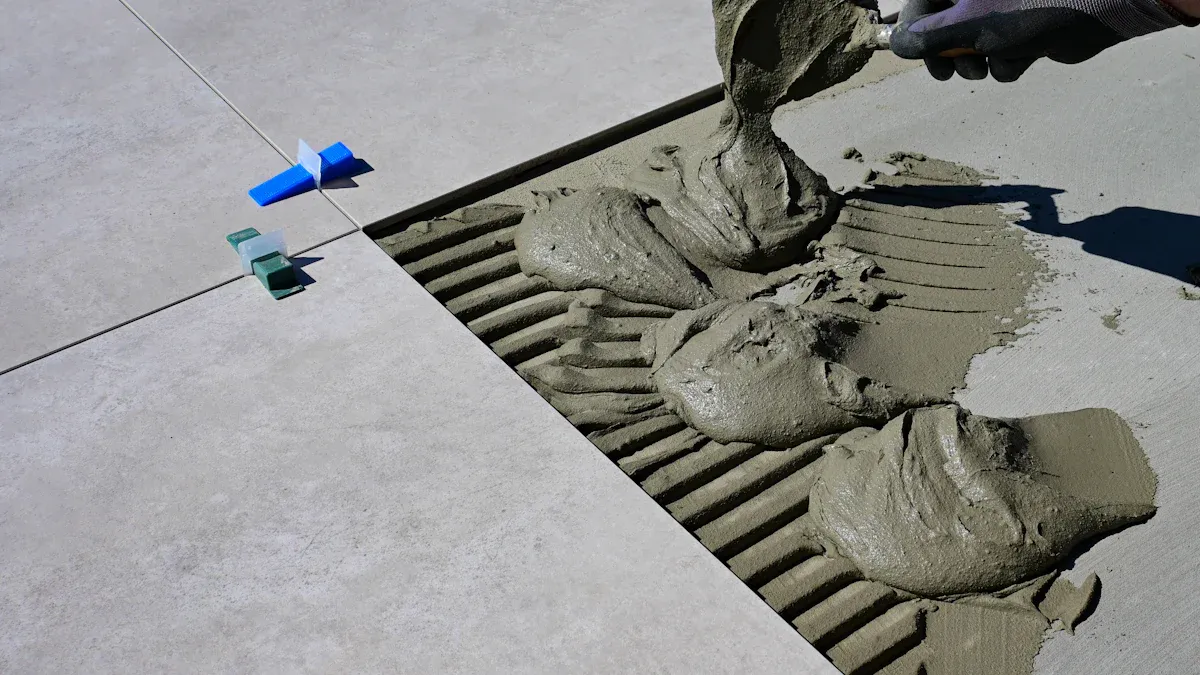
It is important to know what is inside grouting material. Each part has a job to do. These parts help make the mix strong and easy to use. Let’s see what the main parts are and how they change the final mix.
Base Component (Cement or Epoxy)
The base is the first thing you pick. Most grouting material uses cement or epoxy resin. Cement is used a lot because it is cheap and easy to get. It is good for most building jobs, like filling gaps in concrete. Epoxy resin is stronger and dries faster. It is best for places that need extra strength, like factories.
Epoxy resins can be much stronger than cement. They can reach a tensile strength of almost 37 MPa in seven days. Epoxy works fast, but it costs more and does not mix with water. Cement is better for big jobs and simple repairs. But it may not work well in small cracks or loose soil. You should pick your base by thinking about what your project needs.
Tip: Use epoxy if you want high strength and quick drying. For most repairs, cement is the best pick.
Water and Sand
Water and sand help make the right mix. Water starts the hardening process. The amount of water changes how strong the mix will be. Less water makes the mix stronger and last longer. Too much water makes it weak and easy to break.
Here is a table that shows how water-to-cement ratio changes strength and durability:
| Water-to-Cement Ratio | Compressive Strength (PSI) | Durability Characteristics |
|---|---|---|
| 0.40–0.50 | 4,000–6,000 | High resistance to cracking, freeze-thaw cycles, and chemical attacks |
| 0.55–0.70 | 2,500–3,500 | Increased porosity, leading to risks of shrinkage cracks and water infiltration |
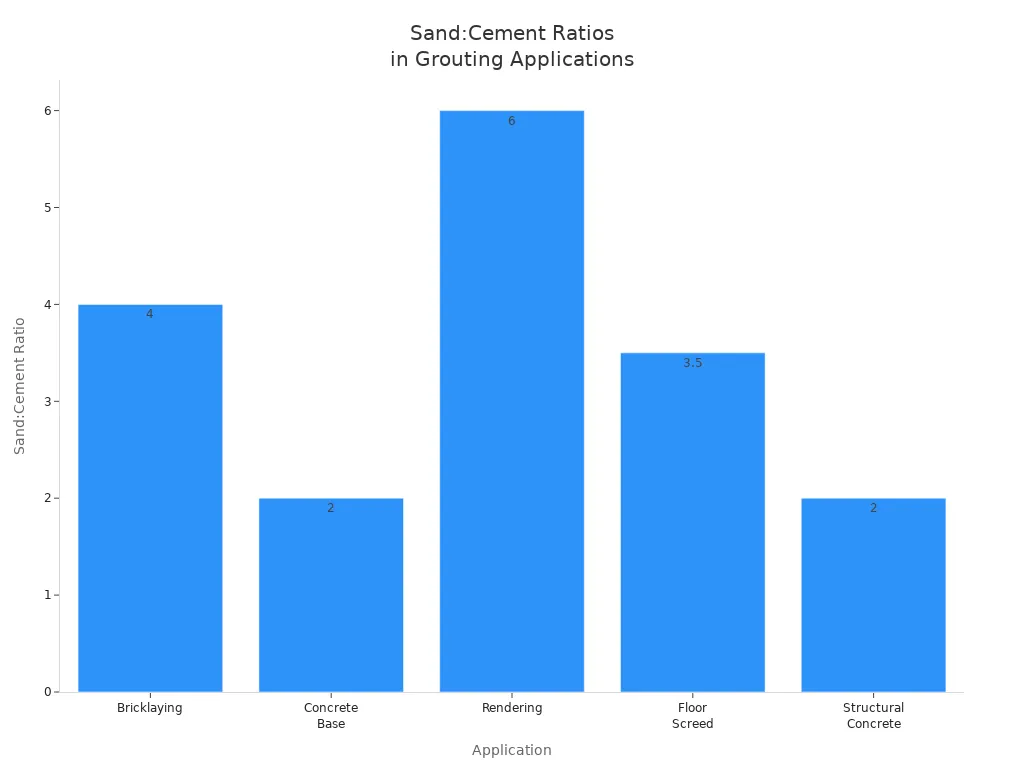
Sand gives the mix more bulk and helps fill spaces. The sand-to-cement ratio is different for each job. Bricklaying uses a 4:1 sand-to-cement ratio. Concrete bases use 2:1 with extra aggregate. You can see the differences in this table:
| Application | Sand:Cement Ratio | Additional Components | Typical Use |
|---|---|---|---|
| Bricklaying | 4:1 | None | General masonry work |
| Concrete Base | 2:1 | 3 parts aggregate | Shed/garage foundations |
| Rendering | 6:1 | 1 part lime | External wall finishing |
| Floor Screed | 3-4:1 | None | Level floor surfaces |
| Structural Concrete | 2:1 | 4 parts aggregate | Beams, columns, slabs |
Aggregates and Hardeners
Aggregates make the mix stronger and last longer. You can use gravel, crushed stone, or special fillers. These help the mix hold heavy loads. Hardeners control how fast the mix dries and how strong it gets.
- Ground granulated blast-furnace slag (GGBFS) helps the mix get stronger over time and slows down drying.
- Sodium silicate hardeners slow down early reactions, so you have more time to work.
- If you add more hardener, the mix dries slower and gets stronger.
The mix gets stronger as it dries. GGBFS helps the mix keep getting stronger. Other cement types dry faster but may not get as strong. Pick your aggregates and hardeners based on how fast you need the area ready and how strong you want it.
Additives and Enhancers
Additives and enhancers help the mix work better. You can use mineral fillers, color pigments, and polymers. These change how the mix looks and works.
| Enhancement Type | Description |
|---|---|
| Adhesive Bond | Polymers help fillers, pigments, and tiles stick together better. |
| Improved Flow and Spread | Rounded organic fillers help the mix flow and spread easily. |
| Crack Resistance | Polymers help stop cracks and make the mix last longer. |
| Water and Stain Resistance | Polymers help the surface resist water and stains. |
| Easier Cleaning | Polymers make the surface smoother and easier to clean. |
Some new additives make the mix smarter and better for the planet. Some mixes use silica fume, fly ash, or nano-materials to make it stronger and less likely to let water in. Others use recycled materials to help the environment. Some smart grouts can fix themselves or have sensors to check conditions.
Note: You can use tests like pressure testing, core sampling, and flow monitoring to check the quality of each part. Non-destructive tests let you check without breaking anything.
Pick additives that fit your project. The right enhancers can give you stronger bonds, better flow, and easier cleaning.
Types of Grouting Material
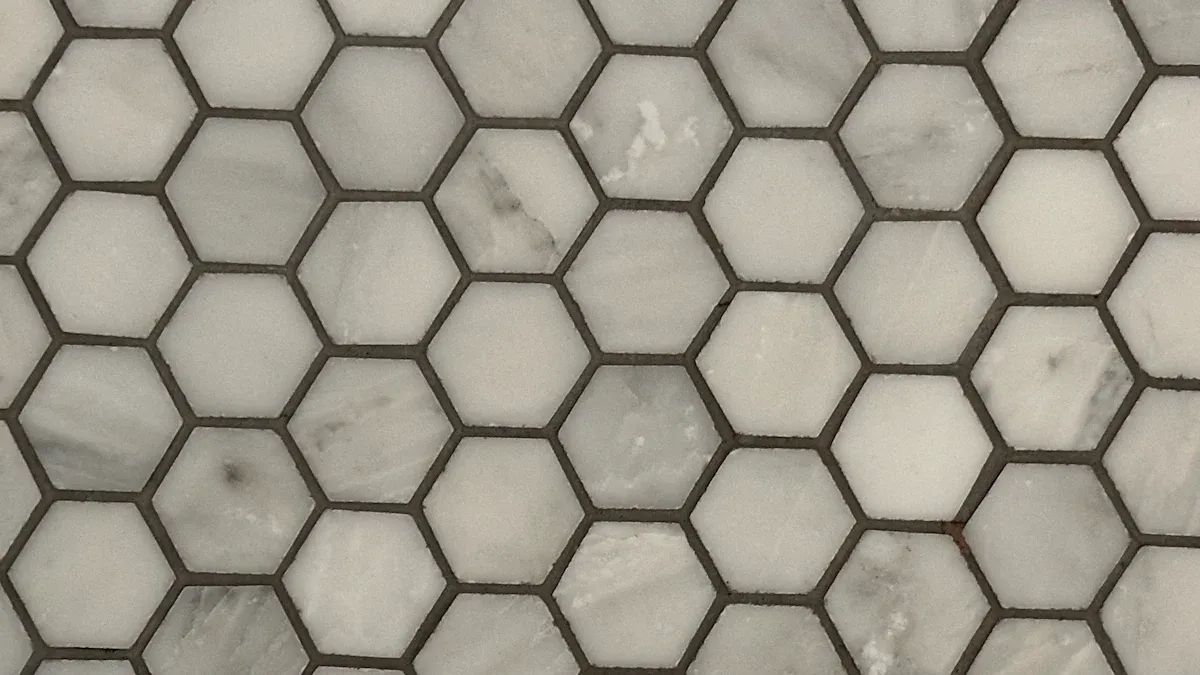
When you pick a grouting material, you should know the main types. Each type has its own base and special features. They also work best in different places. Here is a table to help you see the most common types:
| Type of Grout | Description | Common Uses |
|---|---|---|
| Cementitious Grouts | Made from Portland cement, used in homes and some businesses. | Most popular for tile jobs. |
| Epoxy Grouts | Made with epoxy resin, not very porous, good for places with acids and grease. | Kitchens and places that need stain protection. |
| Furan Resin Grouts | Has alcohol polymers, very strong against chemicals and heat. | Used in factories and labs. |
Cementitious Grout
Cementitious grout is found in most homes and many businesses. It uses Portland cement as the main part. You mix it with water, sand, and sometimes other things. People use it for tile floors, walls, and repairs. Cementitious grout costs less than other types. It is also easy to use.
But it can shrink when it dries and may crack later. It soaks up water, so it is not good for wet or chemical-heavy places. Cement-based grout also makes more carbon emissions because making cement releases carbon.
Epoxy Grout
Epoxy grout uses epoxy resin instead of cement. It gives a strong, non-porous, and stain-proof finish. Epoxy grout is great for kitchens, bathrooms, and busy places. It stands up to acids, grease, and water. You can use it in factories, food plants, and places with big machines.
- Heavy machinery rooms
- Chemical plants
- Warehouses with lots of people or vehicles
- Wet places that need to stop mold
Epoxy grout costs more than cementitious grout. But it lasts longer and needs less fixing. It also has a lower carbon footprint over time, even though it is made from man-made materials. You should know epoxy grout can give off strong smells when you use it.
Here is a table that compares cement grout and epoxy grout:
| Property | Cement Grout | Epoxy Grout |
|---|---|---|
| Shrinkage | Can shrink while drying | Hardly shrinks while drying |
| Bonding and Adhesion | Bonds okay, not great with shaking | Sticks well to many surfaces |
| Moisture Resistance | Soaks up water, can crack | Does not let water in |
| Temperature Resistance | Gets weaker with big temperature changes | Handles hot and cold well |
| Chemical Resistance | Can be hurt by acids, has pores | Stands up to acids, no pores |
| Impact Resistance | Breaks easily if hit | Bends under stress, works better |
Other Specialized Grouts
Some jobs need special grouting material. Furan resin grouts are used where there is a lot of heat or strong chemicals, like in factories and labs. These grouts do not break down from acids or high heat.
For underwater jobs, you can use fast-setting, strong grouts. These grouts stick well in wet places and do not wash away. Underwater anti-washout grouting material does not wash out, is very strong, and fights rust.
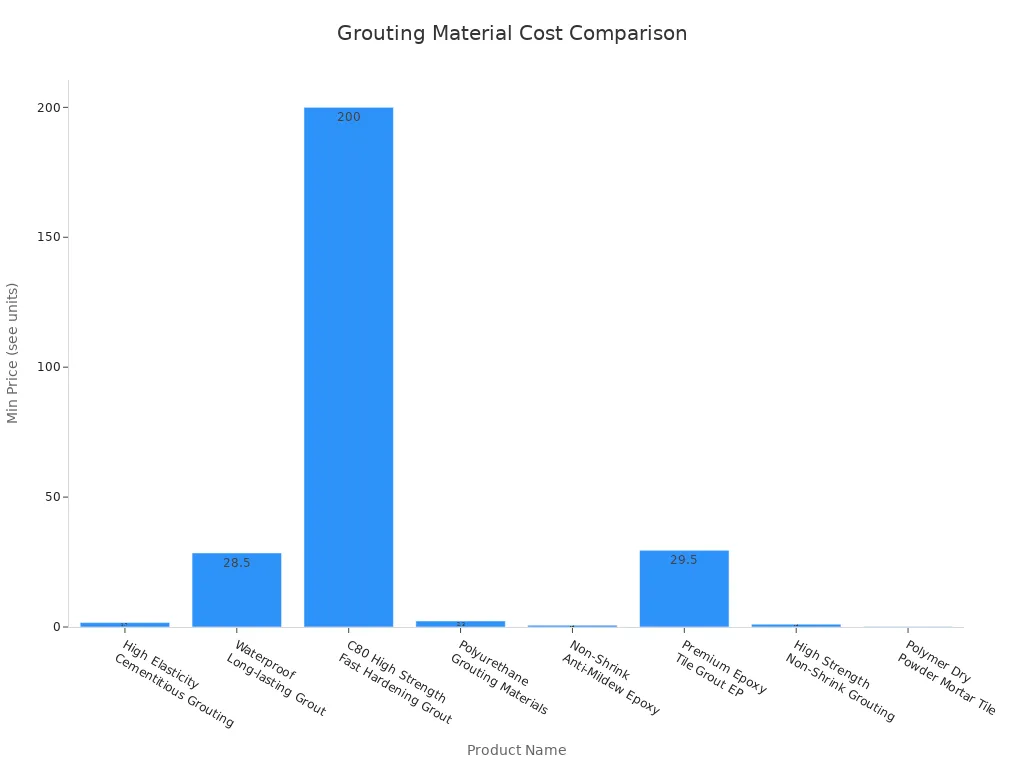
Here is a chart that shows the price range for different grouting materials in big projects:
Tip: Always pick the grout that fits your project. Think about price, strength, water, and chemicals before you choose.
Choosing Grouting Material
Application Factors
You should think about a few things before picking grouting material. The job type, where you are working, and how you will use the grout are all important. Look at this table to see what you need to think about:
| Factor | Considerations |
|---|---|
| Project Requirements | Waterproofing, structural strength, soil stabilization |
| Environmental Conditions | Water table level, soil type |
| Performance Characteristics | Viscosity, curing time, durability |
| Application Method | Ease of use, accessibility |
Grouts can change when it is hot or cold. Cold weather can make grout up to 20% weaker. If the air gets much drier, grout can lose 10% of its strength. Cold hurts grout more than dry air does. Always check the weather before you start your work.
Matching Components to Needs
You need to pick grout parts that fit your project. Big cracks need cement-based grout. Tiny cracks work best with gels or polyurethane. Epoxy is best for fixing things that must hold heavy weight. If you work in wet places, use polyurethane or acrylic gels. Old concrete with lots of holes needs grout that flows easily. If the building moves, use flexible grout like polyurethane or acrylic.
| Criteria | What to Consider |
|---|---|
| Crack Width | Cement for wide cracks, gels for microcracks |
| Structural Role | Epoxy for load-bearing repairs |
| Water Exposure | Polyurethane or acrylic gels for wet environments |
| Substrate Condition | Low-viscosity for old, porous concrete |
| Movement Accommodation | Flexible grouts for shifting structures |
Many cement-based grouts now have polymer additives. These make the grout bend more and keep the color the same. Cement-based grout has tiny holes and needs a seal to stop stains. Epoxy and urethane grouts do not need sealing because they do not let water in.
Common Selection Mistakes
You can stop problems if you know the usual mistakes. Some people forget what their project needs or pick the wrong grout. Others do not match the color or do not learn how to use grout right. Some skip sealing or do not let grout dry long enough. Too much water makes grout weak. Not cleaning well makes grout stick badly. Not letting grout dry enough can cause cracks and shrinking. If you pick the wrong grout, it might break sooner.
Tip: Always clean the area well, use the right amount of water, and let the grout dry as needed. Pick grout that fits your job and where you are working.
Grout joints hold tiles in place and help protect the building. A good joint plan makes your work look better and last longer.
You now know that grouting material fills voids and strengthens structures. Its main parts include cement, water, sand, and chemical admixtures. These components give you options for strength, flow, and durability. When you understand what goes into the mix, you can pick the right type for your project. Grouting material can adapt to many jobs, from filling soil gaps to fixing concrete. Always match the mix to your needs for the best results.
FAQ
What is the main difference between cement grout and epoxy grout?
Cement grout uses cement as its base. Epoxy grout uses epoxy resin. You will find cement grout easier to use and less expensive. Epoxy grout gives you better strength and stain resistance.
Can I use grouting material outdoors?
Yes, you can use grouting material outdoors. Pick a type that resists water and weather. Epoxy grout works well for outdoor spaces because it does not absorb water.
How long does grout take to dry?
Most cement-based grouts dry in 24 to 72 hours. Epoxy grout dries faster, often in less than 24 hours. Always check the product label for exact drying times.
Do I need to seal grout after installation?
You should seal cement-based grout to protect it from stains and water. Epoxy grout does not need sealing because it is already waterproof.
What happens if I add too much water to grout?
Too much water makes grout weak and easy to crack. Always follow the instructions for the right water amount.