
Steel fiber for concrete reinforcement involves adding short, discrete steel wires to a concrete mix to create a three-dimensional reinforcement network. This method significantly enhances the concrete’s tensile strength, ductility, and crack resistance, often replacing traditional welded wire mesh in industrial floors and tunnel linings. By optimizing the dosage and mixing process, contractors can reduce pouring thickness, save labor, and achieve superior long-term durability.
Understanding Steel Fiber Reinforced Concrete (SFRC)
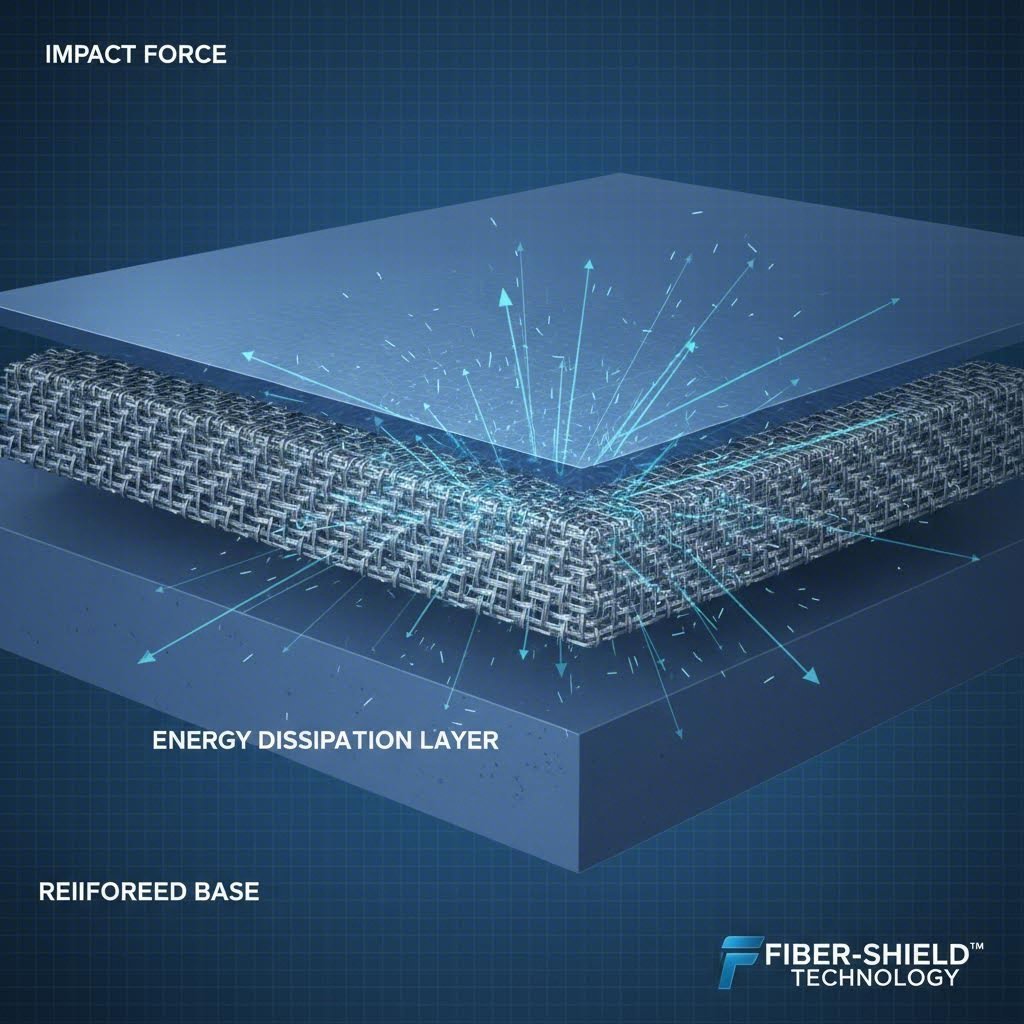
Steel Fiber Reinforced Concrete (SFRC) is a highly engineered composite material that integrates short, discrete steel fibers directly into the concrete matrix. Unlike conventional concrete, which relies entirely on continuous steel rebar to handle tensile stresses, SFRC utilizes a three-dimensional dispersion of fibers. This 3D network actively bridges micro-cracks before they can propagate into larger, structural fractures, fundamentally altering the material’s behavior under stress.
The core mechanical improvement of SFRC lies in its enhanced flexural toughness and energy absorption capacity. While plain concrete is notoriously brittle, the addition of steel fibers—typically constituting between 0.3% and 2.5% of the total concrete volume—transforms it into a ductile material. These fibers, which generally range from 0.25 to 1.1 mm in diameter, intercept internal stresses and redistribute them evenly across the slab.
Contractors frequently choose SFRC as a highly efficient alternative to traditional 2D welded wire mesh, particularly for temperature and shrinkage crack control. By eliminating the need to cut, place, and tie heavy mesh, construction teams can drastically accelerate project timelines. However, it is crucial to understand that steel fibers do not entirely replace structural rebar in scenarios involving massive primary bending moments or heavy flexural loads.
- Enhanced Ductility: Transforms brittle concrete into a resilient, energy-absorbing matrix.
- Superior Crack Control: Intercepts and bridges micro-cracks at the granular level.
- Impact Resistance: Significantly improves the concrete’s ability to withstand dynamic loads and heavy impacts.
- Labor Efficiency: Eliminates the time-consuming installation of traditional welded wire mesh.
Types of Steel Fibers and Their Specifications
The performance of steel fiber reinforced concrete relies heavily on the physical geometry and mechanical anchorage of the fibers used. Because steel fibers act like miniature pieces of rebar, they require specific shapes to anchor securely into the cement paste. Manufacturers have developed various configurations to optimize this mechanical interlock and meet diverse engineering requirements.
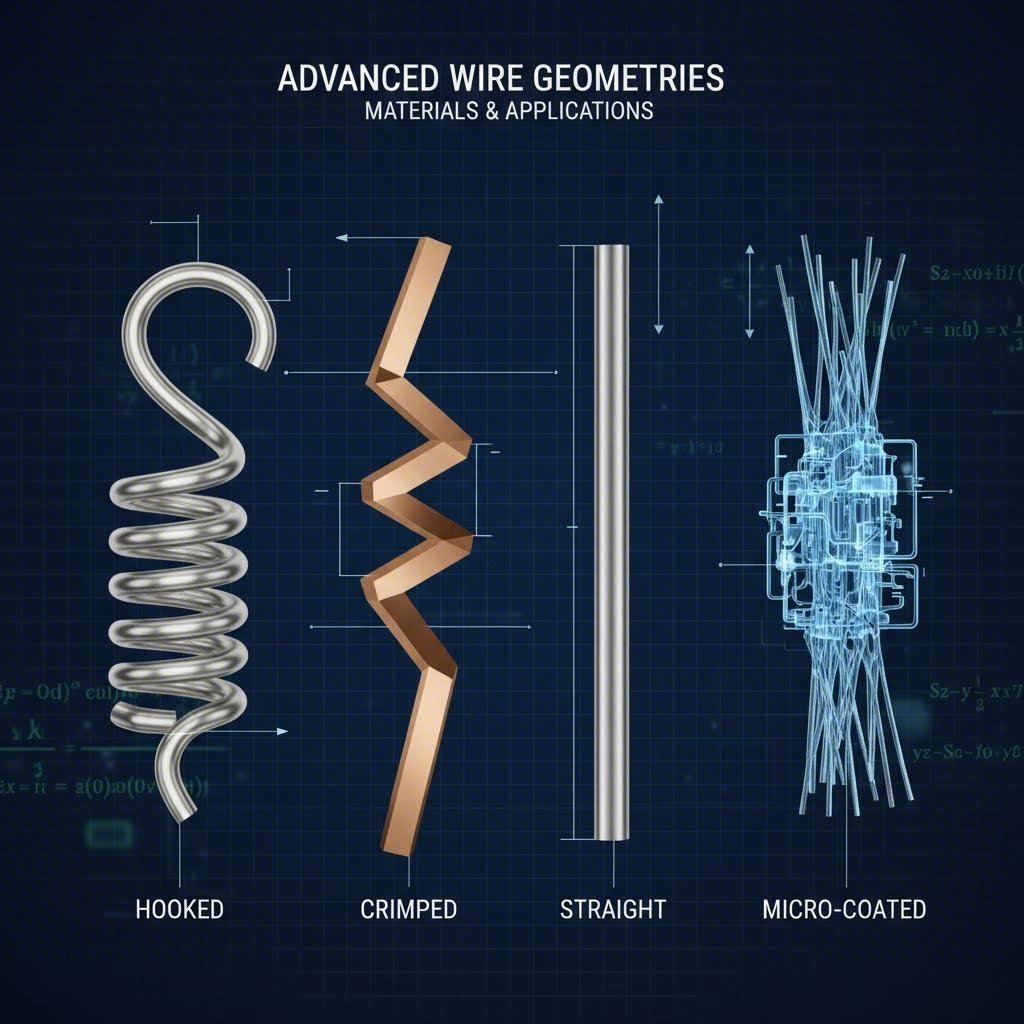
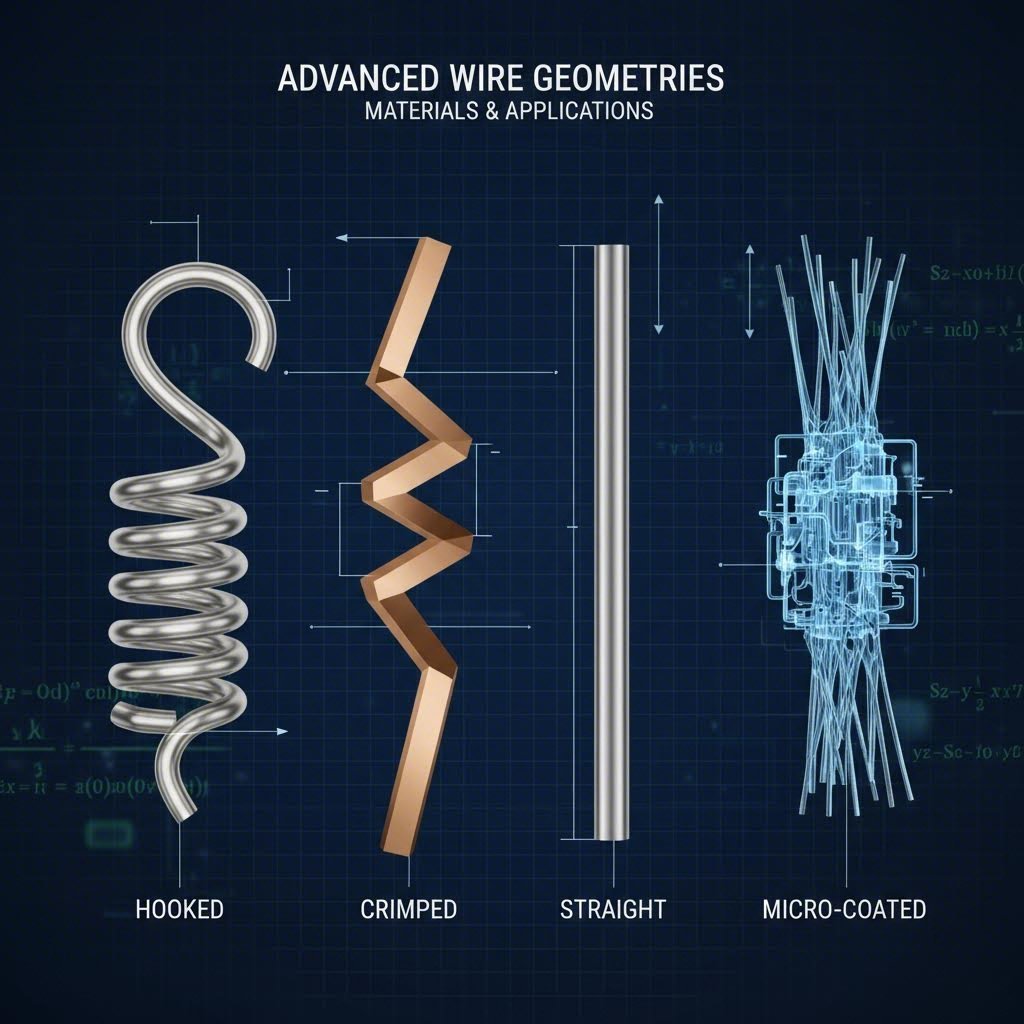
Hooked-end steel fibers are widely considered the industry standard for most structural and flooring applications. The hooked ends provide superior pull-out resistance, meaning the fiber will yield and stretch before completely pulling free from the concrete. This shape is highly favored for industrial flooring and heavy-duty pavements due to its excellent anti-balling properties during the mixing phase.
Alternatively, straight and crimped steel fibers serve specific niche roles. Straight fibers are often utilized in ultra-high-performance concrete (UHPC) where dense packing is required. Crimped fibers feature a continuous wave-like profile that enhances shear strength and impact resistance, making them ideal for blast-resistant structures and heavy industrial applications.
For highly specialized projects, copper-coated micro steel fibers offer exceptional performance. These ultra-fine fibers boast tensile strengths exceeding 2,850 MPa and are coated with copper to improve interfacial bonding and prevent corrosion. They are primarily deployed in advanced precast components and reactive powder concrete.
| Fiber Type | Typical Length (mm) | Diameter (mm) | Best Use Cases |
|---|---|---|---|
| Hooked-End | 30 – 60 | 0.55 – 1.00 | Industrial floors, tunnel shotcrete, jointless slabs |
| Crimped | 25 – 60 | 0.55 – 1.00 | Heavy impact areas, blast-resistant structures |
| Straight | 10 – 25 | 0.20 – 0.50 | Precast shapes, architectural concrete |
| Copper-Coated Micro | 6 – 20 | 0.10 – 0.30 | UHPC, reactive powder concrete, thin overlays |
Advantages and Limitations of Steel Fiber Reinforcement
The decision to utilize steel fiber for concrete reinforcement comes with a distinct set of economic and structural trade-offs. Understanding these pros and cons is essential for project managers and engineers looking to optimize their construction methodologies and material budgets.
The primary advantage of SFRC is its ability to streamline the construction process while enhancing material durability. By replacing traditional welded mesh, contractors eliminate the labor-intensive steps of placing and tying steel. Furthermore, the 3D dispersion of fibers allows engineers to reduce the overall pouring thickness of concrete slabs by 15% to 25%. In specialized applications like subterranean infrastructure, utilizing steel fiber reinforced concrete can cut tunnel liner costs by up to 30%.
Despite these profound benefits, there are notable limitations. The initial material cost of high-tensile steel fibers is significantly higher than standard concrete aggregates. If the labor savings do not offset this material premium, the overall project budget may increase. Additionally, steel fibers can reduce the workability and measured slump of the wet concrete, often necessitating the addition of high-range water reducers or superplasticizers to maintain pumpability.
Another critical risk is the potential for balling or segregation during the mixing process. If fibers are added too quickly or dumped into a zero-slump mix, they can clump together into tight masses that weaken the final structure. Proper batching protocols are mandatory to mitigate this risk.
Pros
- Drastically reduces plastic and drying shrinkage cracking.
- Accelerates construction schedules by replacing wire mesh.
- Allows for thinner concrete slabs, saving on total concrete volume.
- Exceptional fatigue and dynamic load resistance.
Cons
- Higher upfront material costs compared to plain concrete.
- Risk of fiber balling and segregation if mixed improperly.
- Reduces concrete slump, requiring chemical admixtures for workability.
- Cannot replace heavy structural rebar for massive flexural loads.
Key Applications in Modern Construction
Steel fiber reinforced concrete is deployed across a wide spectrum of modern construction projects, particularly where durability, speed, and crack resistance are paramount. One of the most prominent applications is in industrial and commercial flooring. Facilities that utilize heavy machinery, forklifts, and automated robotic systems require jointless floors to minimize maintenance and equipment wear. SFRC provides the necessary toughness to sustain these high-load environments with significantly fewer control joints.
In the realm of infrastructure, tunnel linings and slope stabilization projects heavily rely on steel fiber shotcrete. When sprayed onto tunnel walls, the fiber-reinforced mix adheres tightly and immediately provides structural support. This method is far safer and faster than manually installing steel mesh against uneven, hazardous rock surfaces.
Precast concrete manufacturing also benefits immensely from this technology. Elements such as utility vaults, septic tanks, and architectural panels are subjected to significant stress during transportation and installation. The inclusion of high-quality steel fibers prevents handling damage and improves the overall lifespan of the precast units.
For construction professionals seeking specialized solutions beyond standard concrete mixes, integrating advanced chemical systems is often necessary. For instance, Qiandao New Materials offers a comprehensive line of high-performance grouting materials that complement reinforced structures. Their products deliver key benefits like high strength, non-shrink, and low-bleeding properties, ideal for demanding applications from prefabricated buildings to rebar connection sleeves and prestressing. Discover the right technical specifications for your next project by exploring their offerings at Qiandao New Materials.
Mixing, Dosage, and Application Guidelines
Achieving the structural benefits of steel fiber reinforced concrete requires strict adherence to mixing and dosage protocols. The goal is to achieve a perfectly uniform 3D dispersion of fibers without causing the material to clump or compromise the concrete’s workability. The dosage rate is dictated by the specific engineering demands of the project.
For standard industrial floors and crack control, a dosage of 20 to 40 kg/m³ is typically recommended. To achieve a completely joint-free floor, a minimum dosage of 40 kg/m³ is mandatory. For residential applications, 25 to 50 kg/m³ is standard, while heavy-duty outer constructions and ultra-high-performance concrete can require extreme dosages ranging from 100 up to 150 kg/m³.
The mixing sequence is the most critical factor in preventing fiber balling. Fibers should never be added to the mixing water first, nor should they be added to a zero-slump dry mix. The concrete must have a minimum slump of 80 mm (3 inches) before fiber introduction. Using a forced-action mixer rather than a standard drum mixer yields the best dispersion results.
- Prepare the Base Mix: Load the aggregates (sand, stone), cement, and a portion of the water into the mixer. Mix until a uniform, workable concrete baseline is established.
- Verify Workability: Ensure the plain concrete has a minimum slump of 80 mm. Add superplasticizers if required to improve flow.
- Introduce the Fibers Gradually: With the mixer running at maximum speed, sprinkle the steel fibers into the concrete evenly. Never dump whole bags into one corner.
- Extend Mixing Time: Mix the concrete for an additional 4 to 5 minutes to guarantee complete 3D dispersion and break up any potential clusters.
- Transport and Pour: Keep transit mixers rotating during transport to prevent segregation. Pour and finish using standard vibrating screeds or laser screeding technology.
Final Thoughts on Steel Fiber Implementation
Integrating steel fiber for concrete reinforcement represents a major leap forward in modern construction methodologies. By shifting from traditional, labor-intensive 2D mesh to a highly engineered 3D reinforcement matrix, contractors can deliver structures that are fundamentally more resilient, ductile, and resistant to cracking.
While the upfront material costs require careful budget analysis, the long-term economic advantages—realized through accelerated construction schedules, reduced slab thicknesses, and minimized maintenance—often make SFRC the superior choice. Success ultimately hinges on precise material selection, accurate dosage calculations, and rigorous mixing protocols.
As engineering standards continue to evolve, the reliance on advanced materials like hooked-end and copper-coated micro fibers will only increase. By mastering these application guidelines, construction professionals can confidently specify and deploy steel fiber concrete to meet the demanding requirements of tomorrow’s infrastructure.
Frequently Asked Questions
1. What is the purpose of steel fibers in concrete?
The primary purpose of steel fibers is to intercept and bridge micro-cracks that form in concrete due to shrinkage, temperature changes, or heavy loads. By creating a three-dimensional reinforcement network, the fibers significantly improve the concrete’s tensile strength, flexural toughness, ductility, and impact resistance.
2. What are the different types of steel fibers available?
The most common types include hooked-end fibers (which offer the best mechanical anchorage and pull-out resistance), crimped fibers (ideal for impact and shear strength), straight fibers (used in dense, high-performance mixes), and copper-coated micro fibers (designed for ultra-high-performance concrete and superior corrosion resistance).
3. What construction applications use steel fiber-reinforced concrete?
SFRC is widely used in heavy-duty industrial flooring, jointless warehouse slabs, tunnel linings (via shotcrete), bridge decks, airport runways, and various precast concrete elements like utility vaults and architectural panels.
4. How are steel fibers added to concrete?
Fibers must be added gradually to a fluid concrete mix (minimum 80 mm slump) while the mixer is running at maximum speed. They should never be added directly to the mixing water or dumped all at once, as this causes the fibers to clump together into balls. An additional 4 to 5 minutes of mixing ensures uniform dispersion.
5. What is the recommended dosage of steel fiber for concrete reinforcement?
Dosage varies by application. For basic shrinkage control and industrial floors, 20 to 40 kg/m³ is standard. Jointless floors require at least 40 kg/m³. Residential and commercial slabs typically use 25 to 50 kg/m³, while specialized ultra-high-performance concrete can utilize dosages exceeding 100 kg/m³.