

Answering the core question of what is admixture in concrete, it is defined as a specialized chemical or mineral material added to a batch before or during mixing, distinct from standard cement, water, and aggregates. These critical components act as catalysts to improve workability, precisely control setting times, and enhance the structural durability of the finished product. By utilizing these additives, contractors can prevent costly structural failures, optimize water usage, and ensure the mix performs flawlessly under demanding environmental conditions.
Understanding Concrete Admixtures: Definition and Core Purpose
To grasp the fundamentals of modern construction, one must first understand what an admixture is and how it differs from standard building materials. Traditional concrete relies on a simple, time-tested recipe consisting of Portland cement, water, and coarse or fine aggregates like sand and gravel. While this basic mixture forms the backbone of countless structures, it often falls short when faced with complex architectural demands or severe weather conditions. This is where specialized additives enter the equation, transforming a basic paste into a highly engineered structural material.
Admixtures are auxiliary materials introduced to the concrete batch either immediately before or during the mixing process. They function as chemical or mineral modifiers, altering the properties of the concrete in both its plastic (wet) and hardened states. Rather than replacing the core ingredients, they act as specialized chemical admixtures that enhance concrete’s properties, making it more workable, durable, and efficient without compromising its fundamental structural integrity.
The core purpose of utilizing these additives is to solve specific logistical and environmental challenges on the job site. For instance, high-rise construction projects require concrete that is highly flowable so it can be pumped hundreds of feet into the air without separating. Conversely, winter construction necessitates early-strength modifications that accelerate the curing process before freezing temperatures can damage the internal structure. In large-span commercial structures, the primary goal shifts toward achieving exceptionally high compressive strength and long-term durability.
When evaluating the trade-offs between plain concrete and admixed concrete, the decision often comes down to balancing upfront costs against long-term performance. While incorporating specialized additives increases the initial material cost per cubic yard, it frequently lowers the overall project expense. This cost-efficiency is achieved by reducing the required water and cement ratios, minimizing the labor needed for placement and finishing, and dramatically decreasing the likelihood of future maintenance or structural repairs.
Assessing when a specific construction project requires these enhancements involves analyzing the environmental conditions, the structural load requirements, and the placement methods. Engineers must consider factors such as ambient temperature variations, the density of the steel reinforcement, and the transportation distance from the batch plant to the site. If any of these variables pose a risk to the standard curing process, an admixture is not just recommended—it is an absolute necessity for structural safety.
The primary benefits of incorporating these specialized materials into a concrete mix include:
- Significantly reducing water demand while maintaining optimal workability and flow.
- Accelerating or retarding the initial setting time to accommodate logistical constraints.
- Enhancing resistance to severe freeze-thaw cycles and harsh environmental exposure.
- Improving the bond between existing concrete structures and new poured layers.
- Minimizing the risk of thermal cracking during the critical hydration phase.
Chemical vs. Mineral Admixtures: Key Differences and Applications
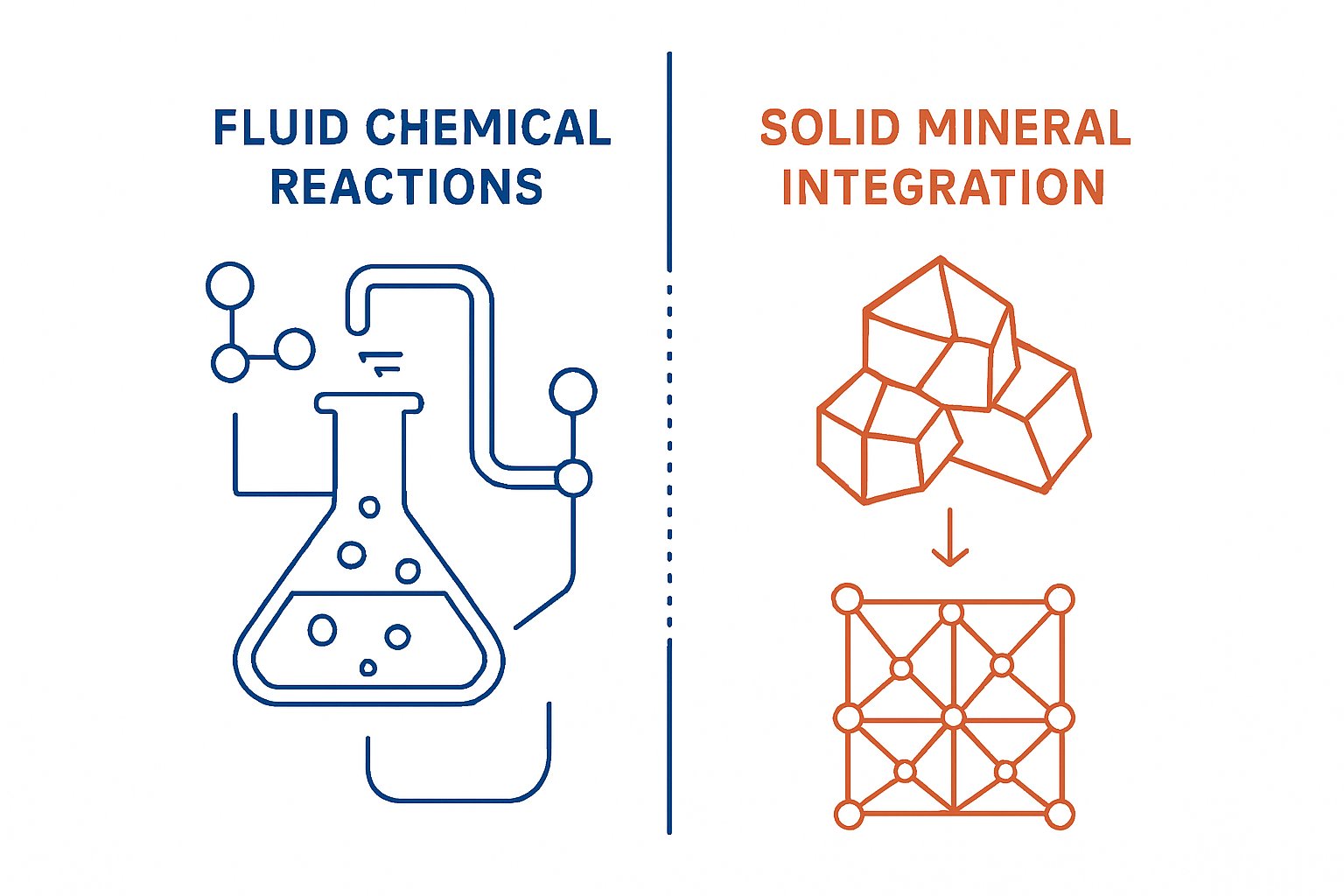
The landscape of concrete modification is broadly divided into two primary categories: chemical and mineral admixtures. While both serve the ultimate goal of improving the final structural integrity, they operate through fundamentally different mechanisms and are introduced for distinct reasons. Understanding the division between these two classifications is critical for contractors and engineers who must engineer precise mixes for demanding environments.
Chemical admixtures are synthesized compounds formulated to regulate the immediate physical properties of the concrete during its plastic state and early curing phases. These liquid or powder additives are typically introduced in very small dosages—often less than five percent of the total cement weight. Their primary function is to manipulate the hydration speed, alter the viscosity of the paste, and control the amount of air entrained within the wet mix, ensuring the material remains manageable during placement.
Within the chemical category, specific agents are deployed to tackle immediate logistical hurdles. Plasticizers and superplasticizers are utilized to make the concrete highly flowable without adding excess water, which would otherwise dilute the strength. Retarders are employed during hot weather pours to slow down the rapid setting time, giving crews adequate time to finish the surface. Conversely, accelerators are used in freezing conditions to rapidly speed up the hydration process, allowing the concrete to achieve early strength before ice crystals can form.
Mineral admixtures, on the other hand, are solid, finely divided materials that are added in much larger quantities, often serving as a partial replacement for Portland cement. These materials are typically derived from natural sources or recycled industrial byproducts. Unlike chemical additives that primarily affect the wet paste, mineral admixtures enhance the strength, durability, and weather resistance of the concrete over its entire lifespan, fundamentally altering its long-term hardened properties.
The most common mineral additives rely on pozzolanic activity—a chemical reaction that occurs alongside cement hydration to create additional binding compounds. Fly ash, a byproduct of coal combustion, is widely used to improve workability and reduce permeability. Silica fume, an extremely fine powder, is essential for high-strength applications like bridges and parking garages. Other notable examples include rice husk ash and metakaolin, both of which significantly densify the internal pore structure, making the concrete highly resistant to chemical attacks.
To clarify the distinctions, the following table contrasts the key characteristics of both categories:
| Characteristic | Chemical Admixtures | Mineral Admixtures |
|---|---|---|
| Primary Origin | Synthesized chemical compounds | Natural resources or industrial byproducts |
| Typical Dosage | Very low (less than 5% of cement weight) | High (often 10% to 30% cement replacement) |
| Main Function | Regulates setting speed and immediate workability | Enhances long-term durability and ultimate strength |
| Active Phase | Plastic (wet) state and early curing | Hardened state and long-term lifespan |
In practical application, high-performance concrete rarely relies on just one category. Contractors frequently combine both types to achieve synergistic effects. For example, a heavy-duty bridge deck might utilize silica fume (a mineral) to ensure long-term impermeability against road salts, while simultaneously incorporating a superplasticizer (a chemical) to ensure the dense, sticky mix can be easily pumped and consolidated around dense steel rebar without creating structural voids.
The 7 ASTM Classifications of Concrete Admixtures
To ensure consistency, safety, and performance across the construction industry, concrete additives are strictly regulated by standardized codes. The most critical of these is the ASTM C494 specification, which outlines the rigorous performance requirements for chemical admixtures. This standardized framework categorizes additives into seven distinct classifications, labeled Type A through Type G, based on their specific functional impact on the concrete mix.
The foundational classifications begin with Type A and Type B. Type A represents standard water-reducing admixtures, which are designed to decrease the required mixing water content by approximately five to twelve percent. This reduction allows for higher compressive strength without sacrificing the flowability of the paste. Type B covers retarding admixtures, which deliberately slow down the chemical hydration process. These are absolutely essential during peak summer months, where high ambient temperatures would otherwise cause the concrete to harden before it could be properly leveled and finished.
Moving up the classification scale, Type C and Type D serve specialized timing functions. Type C accelerating admixtures do the exact opposite of retarders; they rapidly increase the rate of early-stage hydration, making them indispensable for emergency repairs or winter construction where freezing is a severe threat. Type D combines the benefits of water reduction and retardation into a single product, offering a versatile solution for large-scale commercial pours that require both high ultimate strength and extended placement windows.
The highest performance tiers are occupied by Type E, Type F, and Type G. Type E offers water reduction coupled with acceleration. However, it is the high-range water-reducing admixtures—specifically Type F and Type G—that have revolutionized modern architecture. Also known as superplasticizers, Type F additives can reduce water demand by an astonishing thirty percent, enabling the creation of ultra-high-strength concrete that flows almost like a liquid. Type G provides this same massive water reduction but adds a retarding effect to maintain that extreme flowability over longer transport distances.
Analyzing the nuanced differences between these classifications is critical for structural engineering. For instance, choosing between a standard Type A and a high-range Type F water reducer depends entirely on the structural load and reinforcement density. A residential driveway may only require the modest 10% water reduction of a Type A additive to prevent surface cracking. However, a heavily reinforced skyscraper column demands the 30% reduction and extreme flowability of a Type F superplasticizer to ensure the concrete completely encapsulates the rebar without leaving dangerous air pockets.
To simplify the specification process, the seven ASTM C494 classifications map directly to their core functions:
- Type A: Standard Water-Reducing (decreases water demand by 5-12%).
- Type B: Retarding (delays the initial setting time for hot weather pours).
- Type C: Accelerating (speeds up hydration for cold weather or fast repairs).
- Type D: Water-Reducing and Retarding (combines strength gains with extended workability).
- Type E: Water-Reducing and Accelerating (combines strength gains with rapid setting).
- Type F: High-Range Water-Reducing (superplasticizers reducing water up to 30%).
- Type G: High-Range Water-Reducing and Retarding (extreme flowability with delayed setting).
Specifying the right ASTM type requires a comprehensive understanding of the project’s unique constraints. Commercial high-rises rely heavily on Types F and G to pump concrete vertically while maintaining structural integrity. Conversely, standard residential foundations typically utilize Types A and B to manage basic workability and summer heat. By adhering to these seven classifications, contractors guarantee that their chemical modifications meet rigorous safety and performance standards.
Solving Common Concrete Problems with Specialty Admixtures
Despite meticulous planning, real-world construction sites are fraught with unpredictable variables. Sudden temperature plummets, unexpected heavy rainfall, and difficult placement environments can compromise the integrity of a pour in a matter of minutes. In these high-stakes scenarios, specialty admixtures transition from optional enhancements to critical troubleshooting tools, allowing contractors to actively solve environmental challenges and prevent catastrophic structural failures.
One of the most destructive forces acting on cured concrete is the freeze-thaw cycle. When trapped moisture freezes, it expands, causing internal micro-cracks that eventually lead to surface spalling and structural degradation. To combat this, air-entraining admixtures are introduced. Utilizing specific chemicals like rosin resins and fatty alcohol sulfonates, these agents create millions of microscopic, uniform air bubbles within the paste. These bubbles act as internal pressure relief valves, giving freezing water room to expand without fracturing the rigid concrete matrix.
Conversely, while microscopic entrained air is beneficial, large pockets of entrapped air are highly detrimental. During the aggressive mixing and pumping processes, macroscopic air voids can become trapped against formwork, creating unsightly surface blemishes known as “bug holes” and weakening the structural load capacity. To solve this, defoaming agents formulated with polyether or silicone compounds are deployed. These specialty chemicals break the surface tension of the large trapped bubbles, allowing the excess air to escape before the concrete solidifies.
Underwater placement presents an entirely different set of logistical nightmares. When concrete is poured directly into rivers, oceans, or flooded caissons, the surrounding water threatens to wash away the cement paste before it can bind the aggregates together. Anti-washout admixtures solve this precise problem. By dramatically increasing the viscosity and cohesion of the mix using advanced cellulose or synthetic polymers, these additives ensure the concrete remains a unified, sticky mass that displaces the surrounding water without disintegrating.
To assist on-site teams in rapid troubleshooting, the following matrix maps common structural challenges to their highly specific chemical solutions:
| Structural Challenge | Recommended Admixture Solution | Chemical Mechanism & Action |
|---|---|---|
| Freeze-Thaw Damage | Air-Entraining Agents (e.g., Rosin Resins) | Creates microscopic pressure-relief bubbles to absorb ice expansion. |
| Trapped Macroscopic Air | Defoamers (e.g., Polyether/Silicone) | Breaks surface tension to release large, structural-weakening voids. |
| Underwater Washout | Anti-Washout Additives (Cellulose) | Increases paste viscosity to prevent cement separation in water. |
| Steel Rebar Rusting | Corrosion Inhibitors (Calcium Nitrite) | Forms a protective passivating layer around embedded steel reinforcement. |
| Excessive Shrinkage Cracks | Shrinkage-Reducing Agents (SRA) | Reduces capillary tension in pore water as the concrete dries. |
Having a clear on-site troubleshooting guide empowers contractors to adapt to sudden changes. For example, if a sudden cold front moves in during a pour, the immediate introduction of a Type C accelerator can save the batch. If a pump truck breaks down and delays placement, dosing the mix with a Type B retarder prevents the concrete from hardening inside the drum. Understanding admixture specifications for enhancing performance is the ultimate defense against unpredictable job site disasters.

Best Practices: Dosage, Mixing Methods, and Performance Factors
Selecting the correct chemical additive is only half the battle; the precise method of introduction determines whether the mix will succeed or fail. Improper dosage or careless mixing procedures can lead to severe segregation, delayed setting, or a complete loss of compressive strength. As a universal baseline, chemical admixture dosages are meticulously calculated as a percentage of the total cement weight, typically remaining strictly under the five percent threshold to prevent adverse chemical reactions.
In the highly regulated process of concrete production, there are four primary methods for introducing these chemical agents into the batch. These methodologies—Pre-mixing, Simultaneous mixing, Post-mixing, and Incremental addition—each uniquely affect how the chemical molecules disperse and bind to the cement particles. Choosing the correct sequence is vital for maximizing the efficiency of the additive and ensuring uniform structural properties throughout the entire load.
The Pre-mixing method involves blending the chemical directly with the dry cement powder before any water or aggregates are introduced. While this guarantees thorough dispersion, prolonged agitation can cause the chemical molecules to detach from the cement particles, ultimately requiring a higher overall dosage to remain effective. The Simultaneous method, where all ingredients including the pre-measured additive are dumped into the mixer at once, is common but can result in uneven hydration if the mixing action is not aggressive enough.
The Post-mixing method is widely considered the most ideal and is the industry standard for high-performance applications. In this sequence, the cement, aggregates, and water are thoroughly blended first. The chemical additive is then introduced approximately one to two minutes after the initial water contact. This delayed introduction ensures a peak concentration of the admixture in the liquid phase, minimizing chemical loss and maximizing slump retention. The Incremental method, which involves adding small doses at fixed intervals during transport, is highly effective but often too logistically complex for standard on-site operations.
Several external factors can drastically alter the performance of an admixture, regardless of how perfectly it is mixed. Temperature variations play a massive role; high heat accelerates chemical reactions, often requiring a higher dosage of retarders to achieve the desired effect. Furthermore, the specific chemical composition of the Portland cement itself—such as its alkali content and fineness—can dictate compatibility. An admixture that performs flawlessly with a Type I cement might cause rapid stiffening when paired with a Type III high-early-strength cement.
To prevent costly construction errors, batch plant operators and site supervisors must adhere to strict step-by-step mixing protocols. First, always conduct small-scale trial mixes using the exact local aggregates and cement planned for the job to verify compatibility. Second, strictly calibrate automated dosing equipment to prevent accidental overdosing, which can permanently suppress the hydration process. Finally, ensure that the mixer drum revolves at the manufacturer’s specified speed for an adequate duration after the final chemical introduction, guaranteeing a homogenous, structurally sound pour.
Mastering Concrete Mixes for Structural Integrity
The modern construction landscape demands materials that can withstand extreme environmental pressures, complex architectural designs, and tight logistical schedules. Chemical and mineral additives have evolved from optional enhancements to absolute necessities, providing the precise chemical control required to manipulate concrete from a rigid, unpredictable paste into a highly engineered, adaptable building material.
By understanding the fundamental differences between the seven ASTM C494 classifications and mastering the precise mixing methodologies, contractors can actively prevent structural failures before they occur. Whether deploying superplasticizers to pump concrete up a skyscraper or utilizing air-entraining agents to defend against harsh winter freezes, these specialized compounds are the invisible backbone of durable infrastructure.
Ultimately, the successful application of these materials relies on rigorous testing, precise dosage calculations, and a deep understanding of the specific environmental challenges facing each unique project. When utilized correctly, they ensure that every pour achieves its maximum potential strength, longevity, and safety.
Frequently Asked Questions
1. What is the standard ratio of admixture in concrete?
The ratio of admixture in concrete typically ranges from 0.1% to 5% by weight of the total cementitious material. The exact dosage depends heavily on the specific type of chemical being used, the ambient temperature, and the desired structural properties. It is crucial to conduct trial mixes and follow the manufacturer’s precise technical specifications to avoid overdosing, which can severely delay setting times or compromise ultimate compressive strength.
2. Can multiple concrete admixtures be used together?
Yes, multiple chemical and mineral additives are frequently combined to achieve synergistic effects in high-performance concrete. For example, a mix might utilize a water-reducing agent alongside an air-entraining chemical to achieve both high strength and freeze-thaw resistance. However, extreme care must be taken to ensure chemical compatibility; incompatible agents can cause rapid stiffening or severe segregation. They should always be added to the mixer separately rather than blended together beforehand.
3. Do admixtures expire or degrade over time?
Like all specialized chemicals, these products have a definitive shelf life, typically ranging from six months to one year when stored properly. Exposure to extreme temperatures, direct sunlight, or freezing conditions can permanently degrade their chemical efficacy. It is essential to store liquid additives in climate-controlled environments and rigorously agitate them before use if any settling or separation has occurred during storage.