
When determining exactly what type of admixtures used in concrete operations will yield the best results, the answer breaks down into two primary categories: chemical and mineral additives. These specialized ingredients are combined with cement, water, and aggregates during the mixing phase to modify the concrete’s fresh or hardened properties. Ultimately, admixtures are essential for improving workability, controlling setting times, increasing structural strength, and enhancing long-term durability against harsh environmental conditions.
The Core Categories: Chemical vs. Mineral Admixtures
Admixtures are widely considered the essential “fourth ingredient” in modern concrete production, alongside cement, water, and aggregates. While basic concrete can serve simple purposes, achieving high-performance results requires precise chemical and physical modifications. Understanding the fundamental distinction between chemical and mineral admixtures is the first step in engineering a successful mix that meets strict structural specifications.
Chemical admixtures are typically formulated as liquids and are added to the concrete batch in very small doses. Their primary function is to alter the properties of the fresh concrete immediately before or during the pour. By adjusting the chemical reactions during hydration, these additives can make the concrete flow more easily, set faster in freezing temperatures, or delay hardening to accommodate long transit times to the job site.
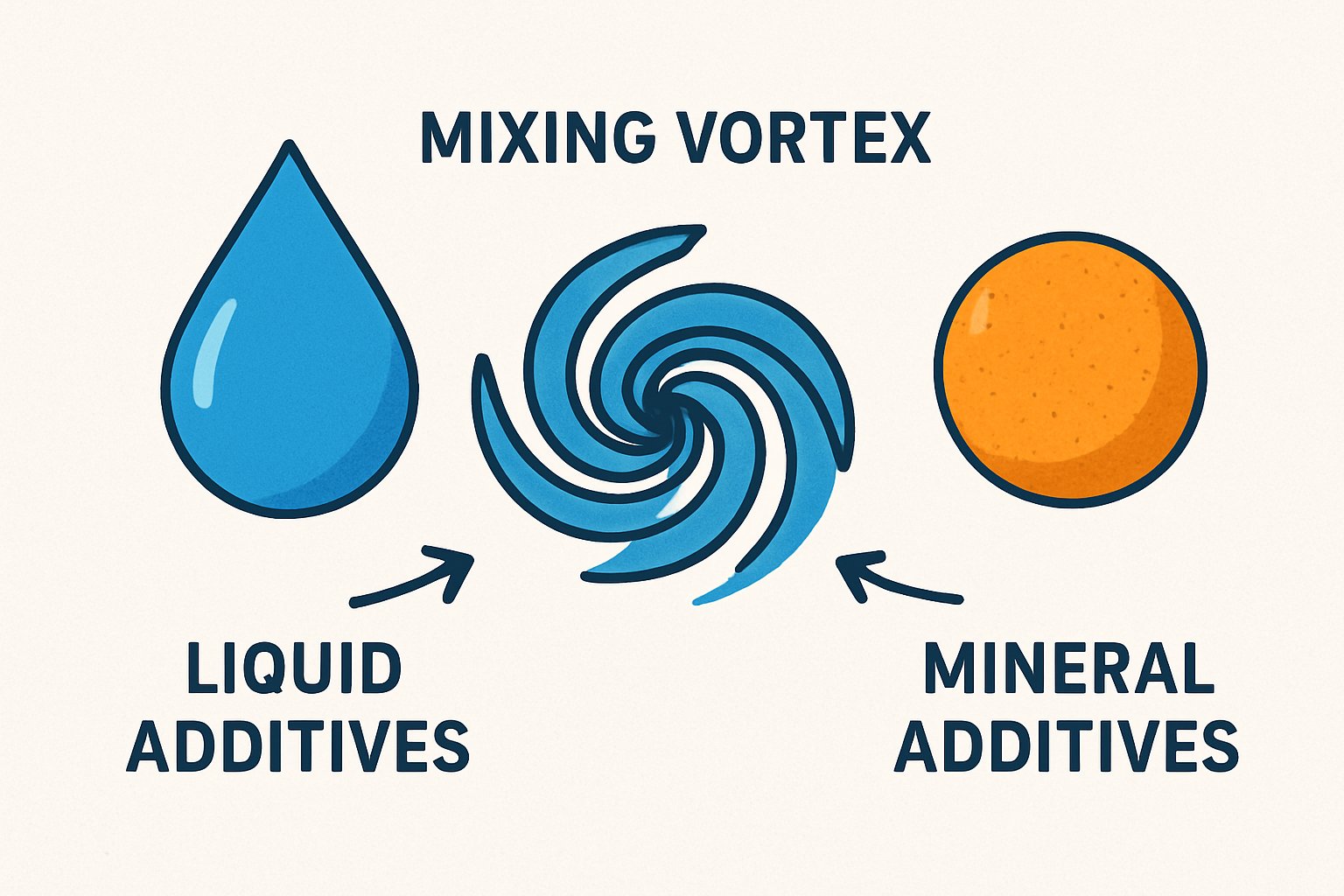
In contrast, mineral admixtures—frequently referred to as Supplementary Cementitious Materials (SCMs)—are solid powders added in significantly larger quantities. Instead of measuring them in fluid ounces per hundred pounds of cement, mineral admixtures often replace 10% to 30% or more of the total cement weight. Their primary objective is to improve the long-term durability, density, and ultimate compressive strength of the hardened concrete over decades of service.
The economic and structural drivers behind these two categories differ completely. Chemical additives are primarily utilized to save labor time, reduce water requirements, and facilitate easier placement and finishing by the crew. Mineral additives, however, are deployed to save material costs by replacing expensive Portland cement, lower the overall carbon footprint of the construction project, and drastically reduce the permeability of the final structure to prevent chemical attacks.
At the batch plant, the sequencing of these materials is highly controlled to ensure optimal performance. Mineral admixtures are typically batched along with the dry cementitious materials, ensuring they are thoroughly and evenly blended before any water is introduced. Chemical admixtures are usually injected directly into the water line or added to the wet mix at specific intervals to ensure even dispersion without causing localized flash setting.
| Characteristic | Chemical Admixtures | Mineral Admixtures (SCMs) |
|---|---|---|
| Physical State | Liquid | Solid (Fine Powder) |
| Dosage Size | Small (ounces per 100 lbs of cement) | Large (10% to 30%+ cement replacement) |
| Primary Function | Modifies fresh concrete properties (setting, flow) | Enhances hardened concrete properties (durability, strength) |
| Economic Driver | Saves labor time and improves placement | Reduces material costs and carbon footprint |
Chemical Admixtures & ASTM C494 Classifications
When structural engineers specify chemical additives for a commercial or residential project, they rely on standardized classifications to ensure predictable performance and safety. The ASTM C494 specification categorizes these liquid chemicals based on their exact function and their specific impact on the hydration process. Understanding these standardized classifications is critical for maintaining strict quality control on the job site.
Water-reducing admixtures are among the most common chemical additives used in the global construction industry. By lowering the required water-cement ratio without sacrificing slump or workability, these chemicals allow the concrete to achieve a higher compressive strength. Standard water reducers typically cut the water demand by 5% to 10%, making the mix easier to pump and finish while simultaneously reducing the risk of shrinkage cracks as the slab cures.
For more extreme workability requirements, high-range water reducers—commonly known as superplasticizers—are deployed into the mix. These powerful chemicals can reduce the water content by an impressive 12% to 30%. They are capable of transforming a stiff, low-slump mix into highly flowing, self-consolidating concrete that requires little to no mechanical vibration. However, the effects of superplasticizers are temporary, usually lasting only 30 to 60 minutes, meaning they are often dosed directly from the back of the ready-mix truck at the job site.
Temperature control is another major reason for utilizing chemical additives in concrete operations. Accelerators (ASTM Type C) are used extensively in cold weather pouring to speed up the hydration process, preventing the water inside the concrete from freezing before the mix sets. Conversely, retarders (ASTM Type B) slow down the hydration reaction, which is absolutely essential during hot weather pours or when the concrete must endure a long transit time through heavy traffic.
Air-entraining admixtures, which are governed separately by the ASTM C260 standard, serve a slightly different but equally vital purpose. They induce microscopic air bubbles into the concrete, typically targeting a 5% to 8% total air content by volume. These microscopic voids act as internal pressure relief valves, allowing trapped water to expand safely when the concrete freezes, thereby preventing catastrophic freeze-thaw cracking in cold winter climates.
- Type A: Water-reducing admixtures (standard 5-10% water reduction).
- Type B: Retarding admixtures (delays setting time for hot weather operations).
- Type C: Accelerating admixtures (speeds up setting time for cold weather operations).
- Type D: Water-reducing and retarding admixtures.
- Type E: Water-reducing and accelerating admixtures.
- Type F: Water-reducing, high-range admixtures (superplasticizers).
- Type G: Water-reducing, high-range, and retarding admixtures.
- Type S: Specific performance admixtures (viscosity modifiers, shrinkage reducers).
Mineral Admixtures (Supplementary Cementitious Materials)
While chemical additives expertly manage the short-term behavior of the wet mix, mineral admixtures are engineered to dictate the long-term lifespan and structural integrity of the concrete. These insoluble materials are added in bulk quantities to enhance durability, lower permeability, and improve the overall economy of the concrete batch by replacing a portion of the energy-intensive Portland cement.
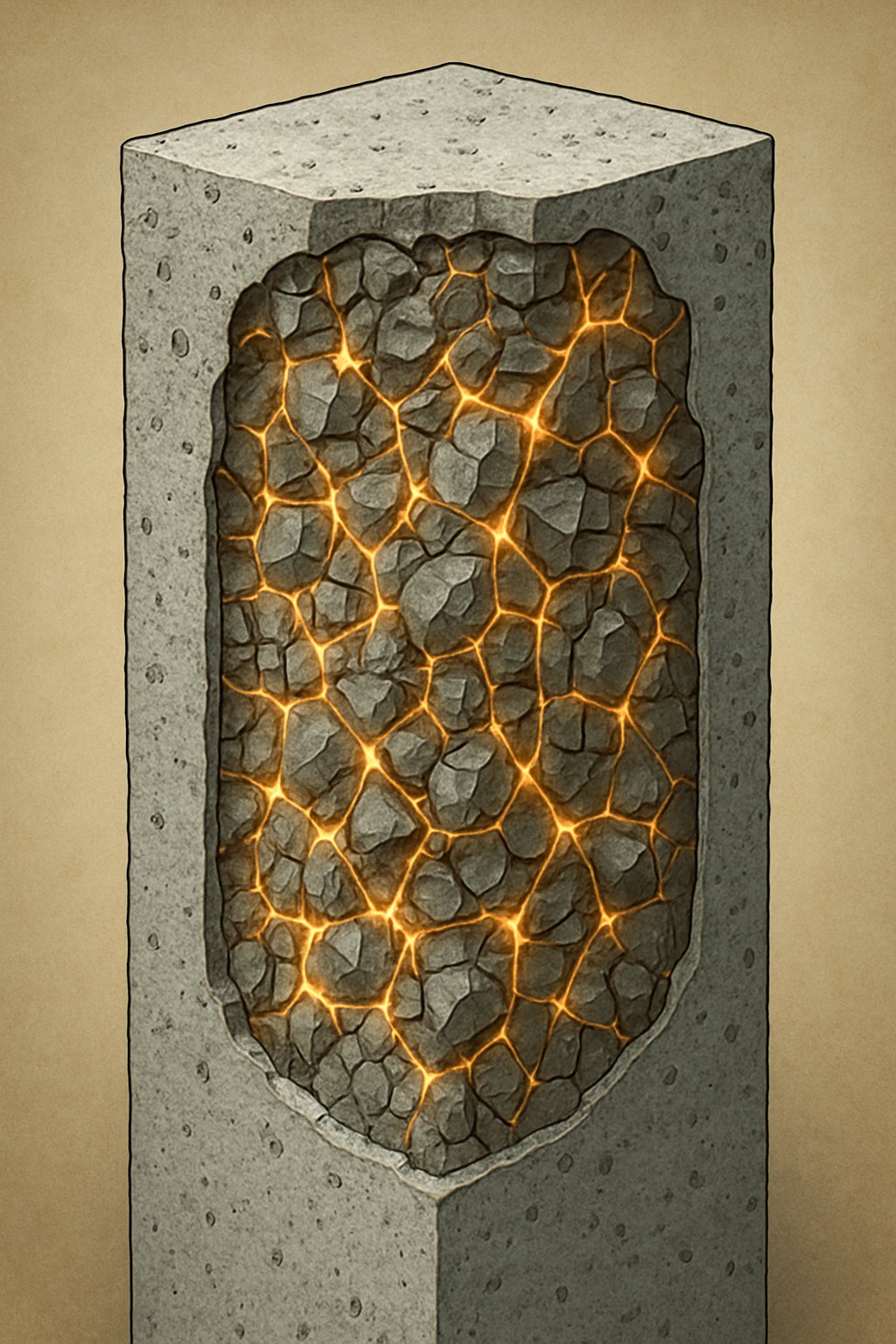
The scientific magic behind mineral admixtures lies in their pozzolanic activity. A pozzolan is a siliceous or aluminosiliceous material that, on its own, possesses little to no binding power. However, when combined with water and the calcium hydroxide released during standard cement hydration, it chemically reacts to form additional calcium silicate hydrate (C-S-H) gel. This secondary reaction fills the microscopic capillary pores within the concrete, creating a dramatically denser and stronger internal matrix.
Fly ash is currently the most widely utilized mineral admixture in the world. As a fine particulate byproduct of coal combustion in electric power plants, fly ash is categorized primarily into Class F and Class C based on its calcium content. Replacing a portion of Portland cement with fly ash significantly lowers the heat of hydration—a critical factor in massive pours like dams or thick mat foundations—while also improving the pumpability of the fresh mix due to the smooth, spherical shape of its particles.
Silica fume takes concrete density to an entirely different level. Created as a byproduct of silicon metal and ferrosilicon alloy production, silica fume particles are roughly 100 times smaller than standard cement grains. When added to a mix, they provide an extreme micro-filling effect, drastically reducing nanoscopic permeability. This makes silica fume the go-to mineral additive for high-strength applications like skyscrapers, parking garages, and bridges exposed to harsh de-icing chemicals.
Ground Granulated Blast-Furnace Slag (GGBFS) is another highly effective supplementary cementitious material. Derived from the rapid cooling of slag from iron production, GGBFS can safely replace up to 50% of the cement in a given mix. It is particularly valued by engineers for its exceptional resistance to sulfate attack and chloride penetration, making it an indispensable ingredient for marine environments, coastal structures, and wastewater treatment facilities.
- Fly Ash: Sourced from coal power plants; significantly lowers heat of hydration and improves workability.
- Silica Fume: Sourced from silicon metal production; provides extreme high strength and ultra-low permeability.
- GGBFS: Sourced from iron blast furnaces; offers excellent chemical, chloride, and sulfate resistance.
- Metakaolin: Sourced from calcined clay; brightens concrete color while boosting early compressive strength.
Specialty Admixtures for Advanced Applications
Beyond the standard chemical and mineral classifications, modern construction often encounters unique structural or environmental challenges that require highly specialized chemical solutions. Specialty admixtures are carefully formulated to address these specific, complex problems that traditional mix designs simply cannot overcome through proportioning alone.
Shrinkage-reducing admixtures (SRAs) are a prime example of targeted chemical engineering in the concrete industry. As concrete cures and drying occurs, the capillary tension of evaporating water can cause the concrete slab to shrink, curl, and crack. SRAs work by chemically reducing the surface tension of the water within the microscopic pores, significantly minimizing drying shrinkage and the resulting micro-cracks. This is especially valuable in large flatwork projects, such as warehouse floors, where joint spacing needs to be maximized.
Corrosion is the natural enemy of reinforced concrete, particularly in coastal regions or areas heavily reliant on winter de-icing salts. Corrosion inhibitors are introduced directly into the wet mix to protect the internal steel rebar from oxidation. These specialized chemicals migrate through the concrete matrix to form a protective passivating layer around the steel reinforcement, delaying the onset of rust even in highly chloride-rich environments.
Damp-proofing admixtures represent another crucial specialty category. These additives contain hydrophobic materials—such as long-chain fatty acids or specialized resins—that actively repel water. They are frequently utilized in below-grade foundations, retaining walls, and basements to prevent capillary action from drawing groundwater up into the porous concrete structure, thereby maintaining a dry interior environment.
Grouting admixtures are utilized in highly specific industrial applications where precision is paramount. Unlike standard concrete which shrinks slightly as it cures, grouting admixtures contain gas-forming agents that cause the mixture to expand slightly upon setting. This ensures a tight, void-free fit, making them perfect for anchoring heavy industrial machinery, setting bridge bearing plates, or filling post-tensioning ducts.
While specialty admixtures undeniably increase the upfront cost per cubic yard of concrete, the long-term economic benefits are substantial. By preventing structural degradation, mitigating the need for expensive crack repairs, and extending the lifespan of the steel reinforcement, these advanced additives drastically reduce the lifetime maintenance costs of the concrete structure.
Crucial Factors Affecting Admixture Performance
Specifying the correct admixture is only half the battle; ensuring it performs as intended requires strict quality control and a deep understanding of material science. The success of any concrete additive is never guaranteed simply by pouring it into the mixer. Its performance is highly dependent on a complex interplay of environmental conditions, material chemistry, and batching procedures.
Dosage accuracy is arguably the most critical variable in admixture performance. Because chemical admixtures are highly concentrated, even a slight overdose can cause catastrophic mix failures on the job site. For example, excessive water reducers can lead to severe segregation—where the heavy aggregate stones sink to the bottom and the water bleeds to the top surface. Conversely, overdosing a retarder can result in a mix that takes days to set, completely halting construction progress and compromising formwork.
Cement compatibility also plays a massive role in admixture efficiency. Every batch of Portland cement has a slightly different chemical composition and fineness depending on its manufacturing source. An admixture that works perfectly with a standard Type I cement might cause flash setting, severe slump loss, or excessive air entrainment when combined with a heavily blended cement containing high levels of alkali or specific mineral SCMs.
Ambient temperature cannot be ignored when batching and placing concrete. High temperatures accelerate the hydration reaction, meaning the concrete will require a higher saturation dosage of retarding admixtures to maintain the same open time for the finishing crew. In contrast, cold weather drastically slows hydration, requiring precise, calculated adjustments to accelerating admixtures to prevent the fresh concrete from freezing before it achieves its initial set.
Finally, the overall mix design—specifically the water-cement ratio and the aggregate gradation—dictates how the admixture will disperse and react. A mix with a high fines content will have a significantly larger internal surface area, requiring a higher dosage of air-entraining or water-reducing chemicals to achieve the desired physical effect. Conducting trial batches before full-scale pouring is the only definitive way to verify how all these variables will interact.
- Precise Dosage Calculation: Strictly adhere to manufacturer guidelines and utilize automated batching systems to avoid segregation or delayed setting.
- Cement Chemistry Compatibility: Test the specific admixture against the exact cement source and brand being used on the job to ensure predictable hydration.
- Ambient Temperature Adjustments: Scale retarder or accelerator dosages dynamically based on the forecasted weather conditions at the pour site.
- Mix Design Proportions: Account for aggregate fineness, shape, and total water content when determining the saturation point of the chemical additive.
- Trial Batching: Always conduct small-scale test mixes to verify setting time, slump retention, and air content before moving to full-scale production.
Mastering the Mix: Final Thoughts on Concrete Additives
The evolution of concrete from a basic mixture of cement, water, and rock into a highly engineered, high-performance building material is almost entirely due to the continuous advancement of admixtures. Whether you are pouring a simple residential driveway or engineering a deep-water marine foundation, the strategic selection and application of these additives dictate the ultimate success and longevity of the project.
By understanding the distinct roles of chemical modifiers and mineral supplementary cementitious materials, builders and engineers can tailor their concrete to overcome virtually any environmental or structural challenge. Chemical admixtures offer the agility and control needed for efficient placement and setting, while mineral admixtures provide the dense, impermeable backbone required for century-long durability.
Ultimately, the key to mastering concrete operations lies in rigorous testing, precise dosage control, and an understanding of material compatibility. Always conduct trial batches, account for shifting ambient weather conditions, and ensure harmony between your chosen cement and admixtures to guarantee a flawless, high-strength pour every single time.
Frequently Asked Questions
1. Do admixtures affect the final compressive strength of concrete?
Yes, many admixtures directly improve the final compressive strength of concrete. Water-reducing admixtures and superplasticizers increase strength by allowing the concrete to achieve proper workability with a significantly lower water-cement ratio. Mineral admixtures, such as silica fume and fly ash, increase strength through pozzolanic reactions that create a denser, more robust internal matrix over time.
2. What is the difference between a standard plasticizer and a superplasticizer?
A standard plasticizer (water reducer) typically reduces the water demand of a concrete mix by 5% to 10%, which is sufficient for standard flatwork and foundations. A superplasticizer, or high-range water reducer (ASTM Type F), is much more powerful and can reduce water content by 12% to 30%. Superplasticizers are used to create highly flowable, self-consolidating concrete, though their effects are temporary and usually wear off within 30 to 60 minutes.
3. Can chemical and mineral admixtures be used in the same concrete mix?
Absolutely. In fact, modern high-performance concrete almost always utilizes a strategic combination of both. For example, a mix might contain fly ash (a mineral admixture) to lower the heat of hydration and improve long-term durability, alongside a superplasticizer (a chemical admixture) to ensure the mix remains workable despite a very low water-cement ratio. Trial batching is always required to ensure chemical compatibility between all the ingredients.