
When you stand before a civil engineering project in the 21st century, you aren’t just choosing a building material; you are choosing the lifespan of your legacy. For over a hundred years, Traditional Concrete (TC) has been the undisputed king of construction. It is predictable, cheap, and familiar. However, as your projects move into more corrosive environments and demand slimmer, more complex geometries, the limitations of traditional concrete become a liability.
Enter Ultra-High Performance Concrete (UHPC). This is not just “stronger concrete.” It is a fundamental shift in material science that bridges the gap between masonry and steel. This guide provides a deep-dive comparison to help you navigate the technical, financial, and logistical nuances of these two materials.
1. The Microstructural Revolution: Why They Differ
To understand the macro-scale performance, you must first look at the microscopic level.
Traditional Concrete: The Macro-Composite
Traditional concrete is essentially a mixture of Portland cement, water, and large mineral aggregates (stones/gravel).
- The Weak Link: The “Interfacial Transition Zone” (ITZ). This is the thin layer of cement paste surrounding each large stone. In traditional concrete, this zone is porous and prone to micro-cracking.
- Porosity: Because TC requires more water than is needed for hydration (to make it flow), that excess water eventually evaporates, leaving behind a network of interconnected capillary pores. These pores are highways for water and salt to enter your structure.
UHPC: The Dense Matrix
UHPC eliminates the “weak link” by removing large aggregates entirely. Its composition relies on:
- Fine Aggregate: Specially graded quartz sand (typically <600 microns).
- Pozzolanic Materials: High concentrations of silica fume that react chemically to create additional binding strength.
- Superplasticizers: These allow the mix to flow with an extremely low water-to-cement ratio (often below 0.20).
- Fiber Reinforcement: High-strength steel or organic fibers (up to 2%–3% by volume) that provide internal “stitching.”
By optimizing the “packing density,” UHPC creates a matrix so tight that it is virtually impermeable. When you specify UHPC, you are specifying a material that functions more like a solid stone than a porous sponge.
2. Mechanical Performance: Strength vs. Ductility
In engineering, strength is the ability to resist a load. Ductility is the ability to deform without catastrophic failure. UHPC offers you both.
Compressive Strength
In a standard cylinder test, you will see a massive disparity:
- Traditional Concrete: 3,000 to 7,000 psi (21–48 MPa). High-strength mixes might hit 10,000 psi.
- UHPC: 17,000 to 30,000 psi (120–200+ MPa).
Tensile and Flexural Strength (The “Game Changer”)
Traditional concrete is notoriously brittle. Once it hits its tensile limit (usually only 10% of its compressive strength), it snaps. This is why you must use heavy, cumbersome rebar.
UHPC displays Strain Hardening. Thanks to the internal fibers, when the first micro-crack appears, the fibers bridge the gap and redistribute the stress. The material continues to carry increasing loads after cracking.
- Practical Benefit: You can design thinner bridge decks or cantilevered balconies that would be impossible with traditional concrete because UHPC can handle the tension internally.
3. Durability: The 100-Year Mandate
If you are building in a “splash zone” near the ocean or in a northern climate where road salt is used heavily, durability is your primary metric.
Chloride Permeability
Chlorides are the primary cause of “concrete cancer” (rebar corrosion).
- TC: Over time, salt-laden water migrates through the pores to the steel.
- UHPC: Tests show chloride ion penetration is negligible. In many cases, UHPC is so dense that it protects the steel reinforcement for decades longer than traditional cover would.
Freeze-Thaw Resilience
When water freezes, it expands by 9%. In traditional concrete, this expansion shatters the internal pore walls.
- ASTM C666 Testing: UHPC typically maintains 95% to 100% of its relative dynamic modulus after 300 cycles. Traditional concrete, even with air-entrainment, often begins to scale and lose mass in the same conditions.
4. Cost Analysis: The “Sticker Shock” vs. The Reality
The most common reason you might hesitate to use UHPC is the initial price. Let’s look at the hard numbers.
| Feature | Traditional Concrete | UHPC |
| Material Cost (per yd³) | $125 – $175 | $2,000 – $3,500 |
| Section Depth | Standard (Thick) | Reduced (Thin/Elegant) |
| Rebar Requirement | High (Dense Cages) | Minimal (Fibers do the work) |
| Maintenance Cost | Recurring every 10–15 yrs | Minimal for 75+ yrs |
| Construction Speed | Slower (Curing/Forming) | Faster (Precast/Small joints) |
Why the Material Cost is Deceptive
- Volume Reduction: Because UHPC is 4x stronger, you don’t need 4x the material. Often, you can reduce the total volume of concrete by 30% to 50%.
- Weight Savings: Lighter components mean smaller cranes, lower transportation costs, and reduced foundation loads.
- Life Cycle Cost Analysis (LCCA): If you are building a bridge for a municipality, the cost of closing that bridge for repairs in 20 years is often higher than the original construction cost. UHPC eliminates that first and second repair cycle.
5. Logistical Challenges: Handling a “Sensitive” Material
You cannot treat UHPC like a standard pour. It requires a different set of skills from your contractor.
- Mixing Energy: Because of the low water content and fine powders, UHPC has high internal friction. You need High-Shear Mixers. A standard rotating drum truck often cannot get the mix to the proper consistency.
- Heat of Hydration: Because UHPC has so much cementitious material, it generates heat as it cures. You must monitor temperature gradients in mass pours to prevent thermal cracking.
- Fiber Alignment: The way you pour the UHPC dictates how the fibers align. If your crew pours “against the flow,” the fibers may not bridge the cracks effectively.
FAQ: Addressing Practical Concerns
Q: Is UHPC just a brand name?
A: No. UHPC is a class of material. While there are proprietary brands like Ductal®, many engineers now use “non-proprietary” UHPC mixes developed by universities and local departments of transportation to lower costs.
Q: Can I use UHPC to repair my current crumbling concrete?
A: Yes. This is one of its best uses. Because UHPC has an incredibly high bond strength to old concrete, it is used for “link slabs” and “joint headers” to create a seamless, waterproof repair that lasts longer than the original structure.
Q: Does it look different?
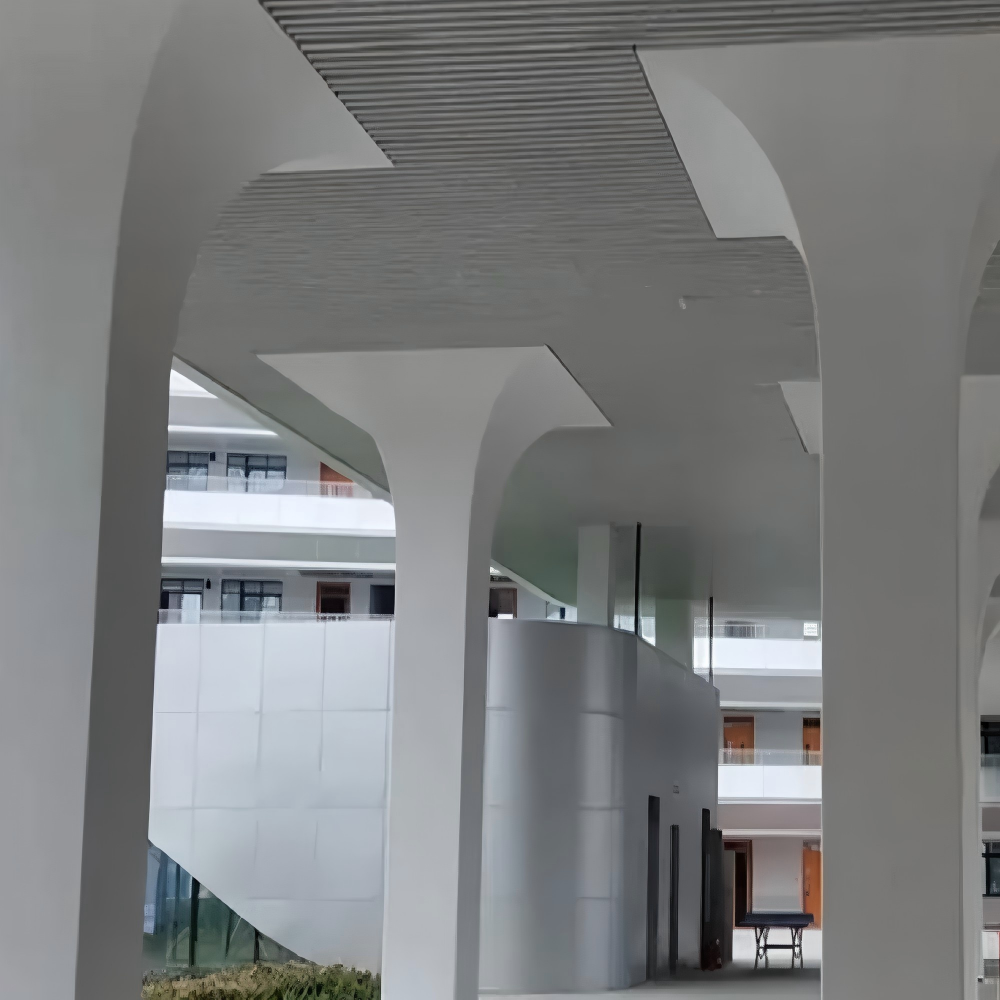
A: To the naked eye, UHPC looks smoother and more “stone-like” than traditional concrete. It takes architectural finishes exceptionally well and can be cast into incredibly intricate shapes with sharp edges.
CAT (Critical Action Task)
Before you commit to a traditional concrete specification for a high-value asset, perform a 3-Point Durability Check:
- Environmental Severity: Is the structure within 5 miles of a coastline or in a freeze-thaw zone?
- Weight Constraints: Would a 40% reduction in structural weight allow for a more efficient foundation or easier transport?
- Closure Costs: What is the daily economic loss if this structure needs to be closed for maintenance in year 25?
If the answer to any of these suggests a high risk, request a UHPC alternative bid for the most vulnerable structural joints or surfaces.
Conclusion
Your choice between Traditional Concrete and UHPC isn’t about which material is “better”—it’s about which material is right for the timeframe.
Traditional concrete remains the logical choice for residential foundations, low-rise buildings, and standard pavements where initial capital is limited. However, for infrastructure intended to serve three generations, UHPC is the only choice that survives the test of time. By moving beyond the “cost per yard” mindset and adopting a “cost per century” perspective, you ensure that your projects remain structural icons rather than maintenance burdens.