
When searching for the best grout for high-traffic floors, epoxy grout stands out as the industry standard due to its unmatched durability, stain resistance, and non-porous nature that requires no sealing. For budget-conscious residential projects, high-performance sanded cement grout serves as a reliable alternative, though it demands regular maintenance. Ultimately, matching your grout choice to the specific mechanical wear and moisture levels of your space will save you significant time and money in the long run.
The Demands of High-Traffic Floors: Why Grout Matters
To understand why standard materials fail, you must first define what constitutes a high-traffic environment. Commercial spaces, busy residential entryways, and bustling kitchens subject flooring to relentless mechanical wear. The grout lines between your tiles act as the structural framework, absorbing the brunt of heavy footfall, constant moisture, dirt infiltration, and inevitable chemical spills. When this framework is compromised, the entire flooring system is at risk of failure.
The fundamental difference in performance comes down to how porous versus non-porous materials react to these daily stresses. Traditional grouts are inherently porous, acting like a rigid sponge that absorbs liquids and traps microscopic debris. According to experts at Area Flooring & Tile, upgrading to non-porous options prevents this absorption, stopping bacteria growth and structural degradation before it begins. This technical distinction is what separates a floor that lasts a decade from one that looks dingy within months.
Consider the specific demands of different zones. Hospitals and commercial kitchens require strict hygiene and resistance to harsh cleaning chemicals. Meanwhile, a busy household hallway faces a constant barrage of abrasive dirt, pet claws, and wet shoes. In both scenarios, the grout must maintain its structural stability while resisting aesthetic deterioration. Failing to account for these environmental factors leads to cracked joints, loose tiles, and costly repairs.
When evaluating your options, it is crucial to look beyond the initial purchase price and consider the long-term total cost of ownership. A premium grout might cost more upfront, but it dramatically reduces maintenance expenses over time. Industry leaders like Rubi emphasize that investing in high-quality installation materials and proper preparation tools ultimately protects your flooring investment, turning a potential ongoing expense into a durable, fit-and-forget solution.
Before selecting a product, assess your floor’s specific traffic level by reviewing this checklist of common high-traffic stressors:
Abrasive Debris: Sand, gravel, and dirt tracked in from the outdoors that slowly grind away at the grout surface.
Moisture Exposure: Frequent mopping, tracked-in rain, or ambient humidity that can penetrate porous joints.
Chemical Spills: Acidic foods, industrial cleaners, or oils that degrade standard cementitious binders over time.
Heavy Impact: Dropped objects, rolling carts, or concentrated foot traffic that tests the flexibility and compressive strength of the installation.
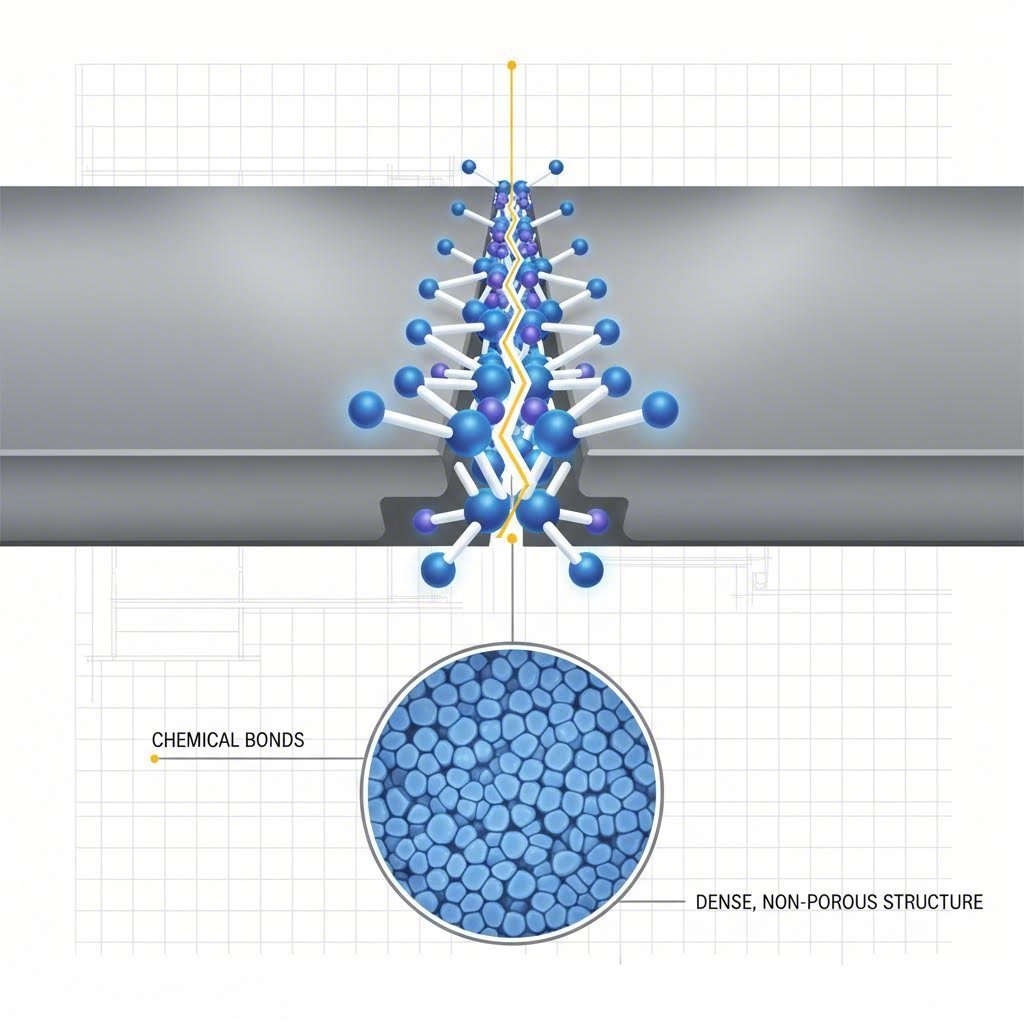
Technical cross section diagram showing the structural density of premium flooring joints
Epoxy Grout: The Ultimate Heavy-Duty Solution
When evaluating the most resilient options on the market, epoxy grout consistently ranks as the superior choice for demanding environments. Unlike traditional mixtures that rely on water and cement, this advanced material is formulated from a two-part system consisting of epoxy resin and a hardener. This unique chemical composition fundamentally changes how the grout cures and performs under stress, making it virtually indestructible once fully set.
The chemical curing process of epoxy creates a completely non-porous surface. This means it naturally repels water, resists deep-set stains, and prevents the growth of mold or mildew without ever needing a topical sealer. Restoration professionals at GroutPro frequently recommend epoxy for commercial kitchens, bathrooms, and high-traffic public areas precisely because its structural stability remains uncompromised even when exposed to harsh cleaning chemicals and standing water.
Beyond its physical durability, modern epoxy offers incredible design versatility. Available in over 150 colors, it can seamlessly match or boldly contrast with your chosen tile. Because the color comes from the aggregate rather than a dye, it will not fade, wash out, or discolor over time. This colorfastness ensures that your high-traffic floors maintain their aesthetic appeal year after year, regardless of how many times they are scrubbed or exposed to UV light.
However, achieving these exceptional results requires navigating a more complex installation process. Epoxy cures rapidly, leaving a very short working window before the material hardens in the bucket. Furthermore, any residue left on the tile surface can create a stubborn epoxy haze that is incredibly difficult to remove once dry. For these reasons, hiring a seasoned professional is often recommended over attempting a DIY application, especially for large or intricate spaces.
Here is a breakdown of the advantages and disadvantages to help you decide if this premium material fits your project parameters:
Pros
Unmatched stain, water, and chemical resistance with zero sealing required.
Exceptional compressive strength that prevents cracking under heavy loads.
Colorfast properties ensure the joints will not fade or darken over time.
Cons
Significantly higher upfront material cost compared to traditional options.
Difficult and time-sensitive installation process that demands professional expertise.
Potential for permanent haze on tiles if not cleaned meticulously during application.
Cement Grout: High-Performance and Sanded Options
For many residential projects, premium epoxy may exceed both the budget and the structural requirements of the space. In these scenarios, high-performance cement grout remains a highly effective and popular alternative. Composed of a carefully calibrated mixture of Portland cement, water, and color pigments, modern cementitious grouts are often enhanced with advanced polymers to improve flexibility, reduce water absorption, and increase overall bond strength.
When dealing with floor installations, the choice between sanded and unsanded variations is critical. Sanded cement grout incorporates fine silica sand into the dry mix, which acts as a structural aggregate to prevent shrinkage as the material cures. Sourcing materials from reputable suppliers like Floor & Decor ensures you get high-quality sanded options specifically designed to provide the necessary bulk and strength for floor joints wider than 1/8 inch, which are standard in most high-traffic tile layouts.
While unsanded grout is perfectly suitable for vertical applications or tight joints, it lacks the compressive strength required to survive heavy footfall. Using unsanded mixtures on a busy floor will almost certainly lead to cracking, crumbling, and premature failure. Therefore, sanded polymer-modified cement is the mandatory baseline for any floor expected to endure regular use.
The primary trade-off when choosing cement over epoxy is maintenance. Because cementitious materials are inherently porous, they act as a sponge for dirty mop water, spilled wine, and tracked-in mud. To mitigate this vulnerability, the joints must be treated with a high-quality penetrating sealer immediately after curing, and this seal must be reapplied every one to three years depending on the traffic volume.
To clearly understand how these two cement-based options compare, review the differences in their application and performance:
Feature Sanded Cement Grout Unsanded Cement Grout
Primary Composition Portland cement, polymers, fine sand Portland cement, polymers, no sand
Joint Width Compatibility 1/8 inch to 1/2 inch (ideal for floors) 1/16 inch to 1/8 inch (ideal for walls)
Durability & Strength High compressive strength; resists cracking Lower strength; prone to shrinking in wide joints
Maintenance Needs Requires regular sealing to prevent stains Requires regular sealing to prevent stains
Specialty Alternatives: Urethane and Furan Grouts
While epoxy and cement dominate the broader market, certain extreme environments demand highly specialized chemical formulations. Urethane and Furan grouts fill these niche requirements, offering unique performance characteristics tailored to specific commercial or industrial challenges. Understanding these alternatives is essential for architects, facility managers, and homeowners dealing with unconventional subfloor conditions or extreme chemical exposure.
Urethane grout is a pre-mixed, water-based formulation that utilizes urethane resins to achieve exceptional flexibility and color consistency. Unlike cement, which is rigid and prone to cracking when the subfloor shifts, urethane can absorb slight movements. This makes it an outstanding choice for installations over wood subfloors, in areas subject to significant temperature fluctuations, or when working with delicate glass tiles that might scratch if exposed to sanded mixtures.
Furan grout, on the other hand, is an industrial-grade material composed of polymers of furfuryl alcohol. It is a two-component system that cures through a thermosetting chemical reaction, resulting in a surface that is virtually impervious to harsh acids, solvents, and extreme heat. Due to its toxic installation process and the fact that it is typically only available in black, Furan is strictly reserved for specialized industrial applications and is never recommended for residential use.
Knowing when to upgrade to these specialty materials can prevent catastrophic flooring failures. Consider these specific use cases where standard options fall short:
Commercial Meat Packing or Dairy Plants: Furan grout is required to withstand the daily onslaught of organic acids, heavy machinery, and high-pressure steam cleaning.
Vibrating Substrates: Urethane grout is ideal for upper-level floors or commercial spaces near heavy transit lines, where subtle structural vibrations would quickly crack rigid cement joints.
Large-Scale Glass Tile Installations: Urethane provides the necessary stain resistance without the abrasive sand particles that could permanently damage high-end decorative glass.
Final Verdict: Choosing the Right Grout for Your Project
Selecting the ideal material ultimately requires balancing your budget against the specific mechanical wear and moisture levels your floor will face. The golden rule of tile installation is to match the chemical and structural properties of the grout to the environmental realities of the room. Over-engineering a low-traffic guest bathroom wastes money, while under-engineering a commercial kitchen guarantees a costly failure.
For those prioritizing a fit-and-forget solution, the higher upfront cost of premium materials is easily justified. Products manufactured by specialized brands like Gresbond by Kajaria offer advanced epoxy formulations that eliminate the need for ongoing maintenance. By investing in these top-tier materials, you bypass the labor-intensive cycle of scrubbing, repairing, and resealing, ultimately achieving a lower total cost of ownership over the lifespan of the floor.
Conversely, the budget-friendly mindset is perfectly valid for residential spaces with moderate traffic. A high-quality, polymer-modified sanded cement grout will perform admirably in living rooms, hallways, and dining areas, provided you commit to a strict maintenance schedule. If you choose this route, factor the ongoing cost of premium sealers and professional deep cleaning into your long-term budget calculations.
To simplify your decision-making process, consult this final matrix to align your specific scenario with the most appropriate material:
Floor Scenario Recommended Grout Why It Works Best
Commercial Kitchens & Hospitals Epoxy Grout Provides total chemical resistance, requires zero sealing, and withstands extreme hygiene protocols.
Busy Residential Hallways & Mudrooms Polymer-Modified Sanded Cement Offers a cost-effective balance of structural strength and durability, though it requires routine sealing.
Industrial Plants & Acid Exposure Furan Grout Delivers unmatched resistance to harsh solvents, industrial acids, and extreme heat conditions.
Floors with Slight Structural Movement Urethane Grout Maintains superior flexibility to prevent cracking while offering excellent color consistency and stain resistance.
Visual representation of choosing the right structural materials based on environmental demands
Frequently Asked Questions
- What is the main difference between epoxy and cement-based grout?
The primary difference lies in their chemical composition and porosity. Epoxy is made from a two-part resin and hardener system that cures into a completely non-porous, highly durable plastic-like state. Cement-based options use a mixture of Portland cement, water, and sand, resulting in a rigid but porous joint that requires regular sealing to prevent moisture absorption and staining. - What’s the best grout for high-traffic floors?
Epoxy grout is widely considered the best choice for high-traffic floors. Its unmatched compressive strength, total resistance to chemical spills, and non-porous nature make it capable of withstanding heavy mechanical wear without cracking or discoloring. While it is more expensive upfront, it offers the lowest long-term maintenance costs. - Do I need to seal the grout after repair?
If you are repairing or replacing traditional cementitious grout, yes, you absolutely must apply a high-quality penetrating sealer once the new material has fully cured. This protects the porous surface from absorbing dirt and liquids. However, if you are repairing the floor using epoxy or urethane, sealing is completely unnecessary due to their inherently non-porous chemical structures. - Is epoxy grout better than normal grout?
In terms of durability, stain resistance, and longevity, epoxy is objectively superior to normal cement mixtures. It does not shrink, crack, or require sealing. However, better depends on the project context. Normal cement is much easier to install, significantly more budget-friendly, and perfectly adequate for low-traffic residential areas where the extreme durability of epoxy is not required. - What causes grout to crack?
Cracking is typically caused by one of three factors: structural movement in the subfloor beneath the tiles, using an unsanded mixture in joints wider than 1/8 inch, or an improper initial mixture with too much water. High-traffic areas exacerbate these issues by applying constant compressive stress, which is why choosing flexible, high-strength sanded or epoxy formulations is critical for floor stability.