
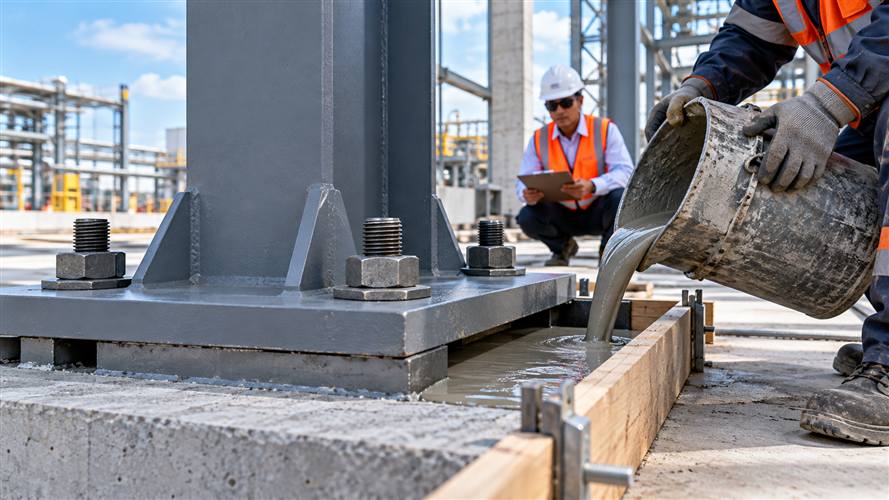
Construction teams are being asked to rehabilitate older assets, install heavier equipment and assemble precast structures on shorter schedules. These demands expose a small but critical weakness: the interface between structural elements. Voids beneath a base plate, poor contact around an anchor or an incompletely filled rebar sleeve can interrupt the intended load path and create future maintenance problems.non-shrink grout
Non-shrink grout is designed to fill these confined spaces, maintain contact under defined test conditions and develop engineered strength. When the right material is selected and installed correctly, it can improve bearing, stabilize equipment, secure anchors and complete precast connections without the variability of site-batched mortar.
Quick answer: Use QD-60 for equipment foundations, base plates, anchors and secondary grouting where flow, early strength and stable bearing are required. Use QD-85 or QD-100 for high-strength rebar sleeve connections in precast construction. Final selection must follow the project specification and the current Technical Data Sheet.
The Construction Problems Behind the Grout Joint
1. Aging infrastructure needs targeted rehabilitation
The 2025 ASCE Infrastructure Report Card gave U.S. infrastructure an overall C and highlighted the growing risk created by aging systems and extreme weather. It also projected a large gap between planned investment and the funding required to keep infrastructure in good working order. This is a U.S. indicator rather than a global specification, but it reflects a wider reality: owners need practical ways to repair and strengthen existing assets while controlling downtime.
Grout is not a substitute for structural repair design. However, it can restore continuous support beneath replacement plates, fill prepared cavities, re-seat approved bearing zones and anchor new components into sound concrete. This makes it useful in focused rehabilitation where the surrounding substrate remains suitable.
2. Base plates often sit on imperfect concrete
Even a carefully finished foundation is not perfectly flat. Steel plates may also have fabrication tolerances or minor distortion. If the plate bears only on isolated high points or temporary shims, loads are concentrated instead of being distributed across the intended area.
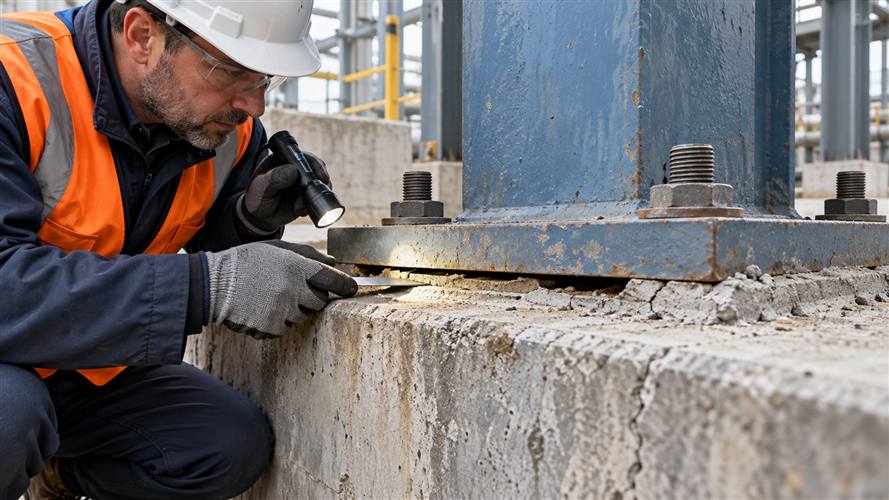
A flowable, shrinkage-compensated grout can fill the irregular gap between the plate and concrete. Once hardened and accepted for loading, it creates a more continuous bearing surface and a clearer load path into the foundation.
3. Machinery must remain aligned under vibration
Pumps, compressors, turbines and production equipment depend on alignment. Unsupported areas beneath a machine base can contribute to movement, vibration and repeated maintenance. Grouting guidance for industrial applications emphasizes effective bearing and load transfer because these directly affect equipment reliability.
The solution is not simply to specify the highest 28-day strength. The grout must also reach the full cavity, remain stable, suit the placement thickness and develop sufficient strength before the machine is released for service.
4. Precast construction depends on complete connections
Precast construction can reduce work at height and speed up assembly, but it transfers quality control to the joints. Rebar sleeve connections have narrow internal passages and limited visual access. Low flow, premature stiffening or poor pumping can leave hidden voids around the reinforcement.
High-flow sleeve grout is formulated to move through the connection, bond to the steel and develop high strength. Installation still requires controlled water, suitable equipment, a defined injection sequence and verification that grout has reached the outlet.
5. Faster schedules reduce the margin for rework
Industrial shutdowns, transport projects and modular construction often have strict handover dates. Waiting for an unsuitable grout to reach loading strength—or removing a defective placement—can cost far more than the material itself.
Factory-blended grout reduces on-site proportioning variables. Early strength can support faster progress, but loading must be based on the required verified strength, not on elapsed time or surface appearance.
How Non-Shrink Grout Addresses These Problems
Non-shrink cementitious grout combines hydraulic binder, graded aggregate and performance additives in a prebatched material. The installer adds a measured amount of clean water. Depending on the formulation, the grout may provide controlled expansion or shrinkage compensation in the plastic and hardened stages.
Its practical functions include:
- Filling confined gaps: Flowable grout reaches irregular spaces that conventional concrete cannot reliably enter.
- Improving load transfer: Full contact helps distribute compressive loads from steel or precast elements into the foundation.
- Reducing settlement and bleeding risk: A designed grout remains more stable than improvised sand-cement mortar when mixed within its stated water range.
- Developing useful early strength: The selected grade can help shorten the time before approved loading or the next construction stage.
- Anchoring and connection: Grout surrounds bolts, dowels or reinforcement inside prepared cavities and sleeves.
- Simplifying field control: Factory batching improves consistency, while measured water, flow checks and batch records provide traceability.
“Non-shrink” is a tested performance description, not a promise that field installation can never change dimension. Excess water, a dry substrate, leaking formwork, interrupted placement or poor curing can still produce defects.
QD-60 for Equipment Foundations and General Precision Grouting
QD-60 is a high-performance, polymer-modified cementitious grout designed for equipment installation and structural grouting. Its performance focus is early strength, micro-expansion, self-leveling flow and stable support.

Typical applications include:
- Heavy equipment and machinery base plates
- Structural steel column bases
- Anchor bolts and prepared recesses
- Secondary grouting between foundations and installed components
- Approved void filling and local concrete repair details
The supplied QD technical reference lists an initial flow of at least 290 mm, a one-day compressive strength of at least 20 MPa and a 28-day compressive strength of at least 60 MPa for QD-60. These values should be treated as model-selection indicators. Confirm the current data sheet, test method, water range, placement thickness and temperature limits for the destination market before specification.
QD-60 is the logical choice when the central problem is bearing beneath a plate or support around an anchor. It should not be automatically substituted for a dedicated rebar sleeve grout where connection geometry and higher strength grades govern.
QD-85 and QD-100 for Precast Rebar Sleeve Connections
QD-85 and QD-100 are high-strength, flowable, micro-expansive grouts intended for rebar sleeve connections in precast construction. The two grades allow the engineer or precast system supplier to match the grout to the connection design.

The supplied QD technical reference lists:
| Model | Primary use | Initial flow | 28-day compressive strength |
|---|---|---|---|
| QD-85 | Precast rebar sleeve connections | ≥300 mm | ≥85 MPa |
| QD-100 | Higher-strength precast sleeve connections | ≥300 mm | ≥100 MPa |
These grades are intended to combine pumpability with strong bonding to reinforcement and steel sleeves. Mixed grout should be placed within the working time stated in the current technical documentation; the supplied reference identifies a 30-minute use window. Actual site temperature can shorten or extend working behavior, so a trial and approved method statement are important.
Select QD-85 or QD-100 from the structural design, sleeve-system requirements, required strength age and applicable regional standard. Do not choose QD-100 solely because the number is higher if the approved connection system specifies another grade.
QD-60 vs. QD-85/QD-100: Which Grout Should You Choose?
| Selection question | QD-60 | QD-85 / QD-100 |
|---|---|---|
| Main engineering problem | Gaps beneath plates, incomplete bearing, equipment or anchor support | Confined rebar sleeve connection in precast concrete |
| Typical placement | Pouring or pumping into formed gaps and recesses | Controlled injection into sleeve inlets until verified outlet flow |
| Performance focus | Self-leveling flow, early strength, non-shrink support | High flow, high strength and reinforcement-to-sleeve bond |
| Published model strength | ≥60 MPa at 28 days | ≥85 MPa or ≥100 MPa at 28 days |
| Key selection inputs | Gap depth, flow distance, loading age, vibration and exposure | Sleeve system, bar size, connection design, strength grade and temperature |
If the application falls outside these categories—such as severe chemical exposure, very deep placement, bridge bearing work or wind turbine foundations—request a project-specific recommendation rather than forcing a general-purpose product into the detail.
Installation Controls That Determine Field Performance
Prepare the substrate
Remove laitance, weak concrete, oil, dust and debris. For cementitious grout, bring the concrete to saturated-surface-dry condition unless the current product instructions require a different condition. Remove standing water before placement.
Control the water
Measure water for each full bag. Extra water may create temporary flow, but it can reduce strength and alter segregation, bleeding and volume stability. Never retemper stiffened grout unless the manufacturer expressly permits it.
Plan a continuous flow path
For base plates, use rigid, leak-tight forms and place continuously from one side so air moves toward the outlet. For sleeves, follow the approved bottom-inlet and outlet-verification sequence. Do not improvise once mixing begins.
Cure and load by acceptance criteria
Protect exposed grout from rapid drying, rain, frost and thermal shock. Start curing as required by the product data sheet. Release equipment or structural loads only after the specified strength and inspection criteria have been met.
Record the work
A grout log should capture product and lot numbers, water per batch, temperatures, mixing and placement times, flow results, specimen IDs, curing and photos. This record is especially valuable when work is hidden after installation.
Frequently Asked Questions
What problem does non-shrink grout solve?
It fills confined gaps and helps maintain contact between components so that loads can transfer through a continuous bearing interface. It is commonly used beneath base plates, around anchors and in engineered precast connections.
Is QD-60 suitable for machinery base plates?
Yes. QD-60 is intended for equipment foundations, base plates, anchor bolts and secondary grouting. Confirm gap geometry, working time, loading age, service exposure and the current technical data before use.
What is the difference between QD-85 and QD-100?
Both are high-flow sleeve grouts for precast rebar connections. Their key model distinction is the published 28-day compressive-strength grade: at least 85 MPa for QD-85 and at least 100 MPa for QD-100. The approved connection design should determine the grade.
Can ordinary concrete replace non-shrink grout beneath a base plate?
Usually not for a narrow precision gap. Conventional concrete may not flow through the cavity or provide the required volume stability and bearing contact. The engineer should specify a material tested for the application.
Can extra water be added to make grout easier to pump?
No. Stay within the water range in the current product data sheet. If the grout cannot reach the required location, review temperature, mixing equipment, hose arrangement, gap geometry and product selection rather than adding water.
Does higher compressive strength always mean better grout?
No. Strength is only one selection factor. Flow, volume stability, working time, thickness, bond, exposure, curing and the applicable test method are equally important.
Conclusion: Solve the Interface, Not Just the Symptom
Many modern construction failures begin at an interface that is difficult to see: beneath a base plate, around an anchor or inside a precast sleeve. Correctly selected non-shrink grout turns that vulnerable gap into a controlled load-transfer zone.
Use QD-60 for equipment foundations and general precision grouting. Use QD-85 or QD-100 where the precast connection design requires a high-strength sleeve grout. For a project-specific recommendation, send Qiandao New Materials the drawings, grout dimensions, required strength ages, placement method, temperature range and applicable standard. The technical team can then confirm the appropriate model and current documentation.
Technical note: This article provides general product-selection guidance. Project drawings, the engineer’s specification, the connection or equipment supplier’s requirements, and the current Technical Data Sheet take precedence.
- American Society of Civil Engineers, 2025 Infrastructure Report Card overview.
- Sika, Grouting solutions for industrial applications.
- Sika Canada, SikaGrout-428 FS CA applications and performance.
- Qiandao New Materials, supplied QD grout technical reference for QD-60, QD-85 and QD-100 model data.