
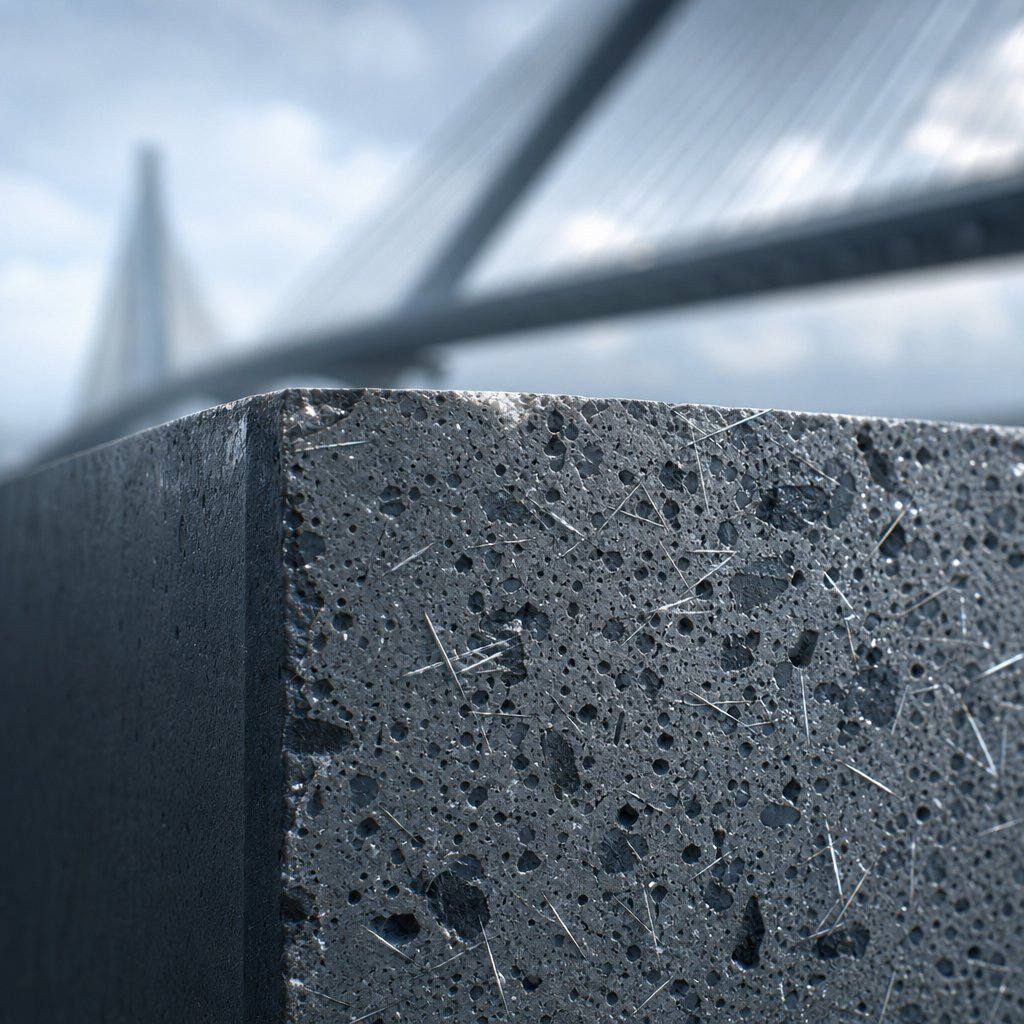
What Is Ultra-High Performance Concrete and Why It Matters
Imagine a concrete so dense that water and chlorides simply cannot penetrate it, so strong that it outperforms conventional mixes by a factor of five to ten. That material exists, and it is reshaping how engineers and project owners think about structural longevity. So, what is UHPC exactly?
Defining Ultra-High Performance Concrete
Ultra-high performance concrete (UHPC) is an advanced cementitious composite material characterized by compressive strengths exceeding 150 MPa (approximately 22,000 psi), significant post-cracking tensile ductility, near-zero permeability, and exceptional durability — achieved through optimized particle packing, a very low water-to-binder ratio (typically 0.15–0.25), and discontinuous fiber reinforcement.
That definition of high performance concrete at its highest tier separates UHPC from everything else on the spectrum. Conventional concrete — the material used in most foundations, slabs, and columns — typically reaches compressive strengths in the range of 20–40 MPa (roughly 4,000–6,000 psi). Standard high performance concrete pushes into the 60–120 MPa range. UHPC starts where those materials reach their ceiling.
The numbers alone are striking: a minimum of 17,000 psi and often exceeding 30,000 psi in optimized formulations, according to research published by Wiss, Janney, Elstner Associates (WJE). But reducing ultra-high performance concrete to a strength figure misses the bigger picture.
How UHPC Differs From Conventional Concrete
Here is the critical distinction: UHPC is not simply a stronger version of the concrete you already know. It is a fundamentally different composite material. Where conventional concrete relies on coarse aggregates as a structural skeleton, UHPC eliminates them entirely. Where standard mixes tolerate internal voids and capillary pore networks, UHPC achieves particle packing densities around 85%, leaving almost no void space between particles.
You’ll notice three core shifts in how UHPC behaves compared to its conventional counterpart:
- Post-cracking performance — Steel or synthetic fibers bridge micro-cracks, allowing the material to carry tensile loads even after initial cracking. Post-cracking tensile strengths above 5 MPa (over 1,000 psi) are typical.
- Near-zero permeability — The discontinuous pore structure blocks water and chloride ingress at rates more than ten times lower than conventional concrete, virtually eliminating freeze-thaw susceptibility.
- Self-consolidating placement — The fresh mix flows and compacts without vibration, reducing placement defects and labor on site.
For project decision-makers, this translates into thinner structural cross-sections, reduced conventional reinforcement, longer spans between supports, and service lives measured in generations rather than decades. For engineers, it opens design possibilities that conventional concrete simply cannot deliver.
These performance characteristics raise an obvious question: what happens at the material science level to produce such a dramatic leap in behavior?
The Material Science Behind UHPC Performance
The leap from conventional concrete to UHPC is not the result of a single ingredient upgrade. It emerges from a deliberate engineering strategy at the particle level, where every component is selected and sized to eliminate internal voids, accelerate hydration chemistry, and resist cracking through fiber reinforcement. Understanding these mechanisms reveals why this uhpc material behaves more like a ceramic composite than a traditional concrete.
Particle Packing Density and Porosity Reduction
Picture a jar filled with tennis balls. Plenty of air gaps remain between them. Add marbles, and they settle into those gaps. Pour in fine sand, and even smaller voids disappear. That layered filling principle is exactly how a high performance concrete mix achieves its density.
In UHPC, the gradation is engineered across multiple orders of magnitude. High performance cement particles (typically 10-50 micrometers) form the coarsest fraction. Silica fume spheres, roughly 0.1-0.15 micrometers in diameter, nestle between cement grains. Quartz powder and fine silica sand fill the remaining interstitial spaces. Research from the Universidad Politecnica de Madrid demonstrated that combining silica fume and metakaolin with nano silica reduced total porosity by up to 34% compared to a control UHPC mix already containing 1,100 kg/m3 of binder. Mathematical packing models, including the modified Andreasen and Andersen model and De Larrard’s Solid Suspension Model, guide these particle size distributions to approach theoretical maximum density.
The extremely low water-to-binder ratio, typically between 0.15 and 0.25, further limits porosity. Less water means fewer capillary pores after hydration. Polycarboxylate-ether superplasticizers disperse particles and provide workability despite this minimal water content, allowing the mix to flow and self-consolidate without excess moisture that would later become void space.
Pozzolanic Reactions and Hydration Chemistry
Density alone does not explain the full picture. Chemical reactions within the matrix generate additional binding phases that strengthen the microstructure over time.
When Portland cement hydrates, it produces calcium silicate hydrate (C-S-H gel), the primary strength-giving phase, along with calcium hydroxide (portlandite). In conventional concrete, portlandite remains largely inert. In performance concrete formulations like UHPC, pozzolanic additions consume that portlandite through a secondary reaction:
- Silica fume + calcium hydroxide produces additional C-S-H gel, densifying the interfacial transition zones between particles.
- Metakaolin reacts similarly, contributing to pore refinement and shifting the pore network toward smaller capillary diameters.
- Nano silica accelerates cement hydration through a seeding effect, where C-S-H nucleates on the surface of nano-sized particles, speeding early strength gain.
The same PMC-published study found that mixes combining 4% metakaolin, 4% silica fume, and 2% nano silica achieved the highest ratio of C-S-H gel to portlandite, the lowest total porosity, and electrical resistivity values up to 54% higher than mixes using traditional additions alone. These chemical transformations convert a weak byproduct into structural glue, filling pores at the nanometer scale.
The Role of Discontinuous Fiber Reinforcement
Even with near-zero porosity and optimized hydration, a cementitious matrix remains brittle. Fibers transform that brittleness into ductility by bridging micro-cracks before they propagate into structural failures.
Steel micro-fibers are the most common reinforcement in UHPC. Typical geometries include straight fibers 13 mm long with diameters around 0.2 mm, providing high tensile strength (approximately 2,850 MPa) and a modulus of elasticity around 200 GPa. Their stiffness allows them to carry significant load across a crack face, absorbing energy through plastic deformation and frictional pull-out rather than sudden fracture.
PVA (polyvinyl alcohol) fibers offer a complementary mechanism. With lower tensile strength (around 1,500 MPa) and modulus (38 GPa), they rely on their own ductility and strong chemical bond with the cementitious matrix to delay crack propagation. Research published in Polymers showed that optimized 12 mm PVA fibers at 0.5% volume fraction increased compressive strength by 12% and flexural strength by 6% compared to unreinforced UHPC, while SEM imaging confirmed strong hydration product adhesion on fiber surfaces.
Hybrid systems, combining steel and synthetic fibers, target multiple crack scales simultaneously. Steel fibers handle macro-cracks and energy absorption, while finer PVA or polypropylene fibers control micro-cracking at earlier load stages. Fiber geometry, length, dosage, and surface treatment all influence the balance between pull-out resistance and crack-bridging capacity.
Together, these three pillars, optimized packing, pozzolanic chemistry, and fiber reinforcement, produce a composite whose mechanical properties far exceed what any single improvement could deliver. The question that follows naturally: just how far do those properties extend across compressive, flexural, and tensile performance?
Mechanical Properties That Set UHPC Apart
Compressive strength grabs the headlines, but it represents only one dimension of a material’s structural capability. When you specify high strength concrete for a project, you need to know how it performs under bending, how it deforms over time under sustained load, and whether it can resist cracking under tension. UHPC delivers across every one of these metrics at levels that redefine what engineers can expect from a cementitious material.
Compressive and Flexural Strength Ranges
Before diving into numbers, a quick clarification on units. What does PSI mean in concrete? PSI stands for pounds per square inch, the standard unit of pressure used in the United States to express concrete compressive strength. When a lab crushes a cylinder and reports 4,000 psi, that means the specimen resisted 4,000 pounds of force on every square inch of its cross-section before failure. The metric equivalent is megapascals (MPa), where 1 MPa equals approximately 145 psi.
With that context, the meaning of psi in concrete becomes a useful lens for comparing material classes. Conventional concrete typically falls between 3,000 and 5,000 psi (20-35 MPa). High performance concrete (HPC) pushes into the 8,000-14,000 psi range (55-100 MPa). A mix reaching 10000 psi concrete is considered high-strength by most building codes. UHPC starts well beyond that threshold.
Research compiled by the Federal Highway Administration (FHWA) documents UHPC compressive strengths ranging from 20,000 to 30,000 psi (140-200 MPa) depending on curing conditions. Steam curing at 194 degrees F (90 degrees C) for 48 hours produced average strengths of 28.0 ksi (193 MPa), while ambient laboratory curing reached 18.3 ksi (126 MPa) at 28 days. Some optimized formulations with heat treatment and pressure have achieved compressive strengths as high as 80 ksi (550 MPa). That places 20000 psi concrete at the lower boundary of what UHPC routinely delivers, a figure that is five to ten times stronger than traditional concrete.
Flexural performance follows a similar pattern. FHWA testing using ASTM C1018 prism flexure tests recorded modulus of rupture values at first cracking between 1.3 and 1.5 ksi (9.0-10.3 MPa) for steam-cured specimens. Untreated specimens averaged 1.3 ksi (9.0 MPa). These specimens exhibited large deflections before reaching post-cracking peak loads, a behavior impossible in conventional concrete, which fractures abruptly in flexure. Research published in Materials found elastic tensile strengths of 9.32 MPa in optimized UHPC mixes with hybrid steel and PVA fibers, confirming that values above 7 MPa are achievable with proper fiber dosage.
Modulus of Elasticity and Creep Behavior
Stiffness matters as much as strength in structural design. A material that is strong but excessively flexible will deflect too much under service loads. UHPC strikes a favorable balance.
The modulus of elasticity, which measures resistance to elastic deformation, ranges from 6,000 to 10,000 ksi (40-70 GPa) for UHPC. FHWA research reported values of approximately 7,250 ksi (50 GPa) after steam curing and 6,200 ksi (42.7 GPa) at 28 days under ambient conditions. Experimental work by Jacintho et al. (2024) measured elastic modulus values between 38.23 and 48.24 GPa across eleven UHPC mixes with varying fiber contents. Conventional concrete typically falls between 3,600 and 5,000 ksi (25-35 GPa), meaning UHPC is roughly 40-100% stiffer.
An important finding from that same study: standard equations used to estimate modulus of elasticity for conventional and high-strength concrete (ACI 318, Eurocode 2, FIB Model Code) overestimate UHPC modulus by approximately 11-28%. Only equations developed specifically for UHPC, such as those proposed by Graybeal (2019) and Sritharan (2003), produced values close to experimental results. This highlights that UHPC behaves differently enough to require its own predictive models.
Creep, the gradual deformation under sustained load, is dramatically lower in UHPC. FHWA data shows creep coefficients between 0.2 and 0.8 and specific creep values of 0.04 to 0.30 millionths/psi (6-45 millionths/MPa). For comparison, conventional concrete exhibits specific creep in the range of 0.25 to 1.0 millionths/psi. This reduced creep translates directly into lower prestress losses in post-tensioned applications and less long-term deflection in beams and slabs.
Shrinkage follows a similar pattern. Total shrinkage (combining autogenous and drying components) reaches up to 900 millionths, with most of that occurring as autogenous shrinkage during early hydration. After steam curing, further shrinkage is virtually eliminated, a significant advantage for precast elements where dimensional stability is critical.
Tensile Performance and Strain Hardening
Conventional concrete is assumed to have zero tensile strength in reinforced concrete design. UHPC overturns that assumption entirely.
Direct tension tests documented by FHWA show first cracking tensile strengths of approximately 1.3 ksi (9.0 MPa) for steam-cured UHPC and 0.9 ksi (6.2 MPa) for untreated specimens. More importantly, UHPC sustains tensile load after cracking. Graybeal’s research demonstrated that UHPC containing 2% steel fibers by volume could maintain more than 1.3 ksi (9 MPa) of uniaxial tensile stress through strains of at least 4,000 millionths. Research on polyethylene fiber-reinforced UHPC achieved ultimate tensile strains of 1.155% with optimized fiber geometry, demonstrating true strain-hardening behavior where the material actually gains load-carrying capacity after initial cracking.
This strain-hardening response unfolds in four distinct phases: elastic behavior, multi-cracking (where tightly spaced cracks form throughout the matrix), crack straining (where individual cracks widen while stress continues to increase), and finally localization (where fibers begin pulling out at a single dominant crack). The result is a material that warns before it fails, absorbing enormous energy in the process.
| Property | Conventional Concrete | High Performance Concrete (HPC) | UHPC |
| Compressive Strength | 3,000-5,000 psi (20-35 MPa) | 8,000-14,000 psi (55-100 MPa) | 20,000-30,000 psi (140-200 MPa) |
| Tensile Cracking Strength | 300-500 psi (2-3.5 MPa) | 500-700 psi (3.5-5 MPa) | 900-1,500 psi (6-10 MPa) |
| Flexural Strength | 400-700 psi (3-5 MPa) | 700-1,200 psi (5-8 MPa) | 1,300-2,200 psi (9-15 MPa) |
| Modulus of Elasticity | 3,600-5,000 ksi (25-35 GPa) | 4,500-6,500 ksi (31-45 GPa) | 6,000-10,000 ksi (40-70 GPa) |
| Creep Coefficient (1 year) | 1.5-3.0 | 1.0-2.0 | 0.2-0.8 |
| Post-Cracking Tensile Ductility | None (brittle failure) | Minimal | Strain hardening up to 4,000+ microstrain |
The high psi concrete values in this table tell only part of the story. What truly separates UHPC from every other concrete class is the combination of extreme compressive capacity with genuine tensile ductility and minimal time-dependent deformation. A material that resists crushing, bending, and cracking while barely creeping under sustained load opens structural possibilities that neither conventional nor high performance concrete can match.
These mechanical advantages, however, only deliver real-world value if the material can withstand decades of environmental exposure without degradation. The same dense microstructure responsible for UHPC’s strength also governs how it resists chlorides, freeze-thaw cycles, and chemical attack over its service life.
Durability Properties and Long-Term Performance
Strength gets a structure built. Durability keeps it standing. A bridge deck might handle its design loads on day one, but if chlorides from deicing salts penetrate the matrix and corrode embedded reinforcement within 20 years, that initial strength becomes irrelevant. This is where UHPC’s near-zero porosity transforms from a laboratory curiosity into a measurable economic advantage.
Chloride Penetration and Corrosion Resistance
Corrosion of steel reinforcement driven by chloride ingress is the single largest cause of bridge deterioration in the United States. The American Society of Civil Engineers reports that 42 percent of the nation’s 617,000 bridges are at least 50 years old, with 46,154 classified as structurally deficient, largely due to corrosion-related damage.
UHPC resists this mechanism at its source. Testing conducted in accordance with ASTM C1202 (Rapid Chloride Ion Penetrability) consistently produces results classified as “negligible” — the lowest possible rating. FHWA research by Graybeal recorded values below 40 coulombs for steam-cured specimens at 28 days, while other researchers reported values as low as 6 to 19 coulombs. For context, any value below 100 coulombs is considered negligible penetrability. Conventional concrete typically registers between 2,000 and 4,000 coulombs.
Even under aggressive exposure, the results hold. Specimens placed at the Treat Island marine exposure site in Maine — subjected to 20-foot tides and more than 100 freeze-thaw cycles per year — showed no evidence of deterioration after 5 to 15 years and over 1,500 freeze-thaw cycles. Chloride penetration depth remained far below levels observed in typical HPC exposed to the same environment. When you consider cement’s role in road and bridge durability, this impermeability is what separates structures that last 30 years from those that last 100.
Freeze-Thaw and Abrasion Performance
Water expands roughly 9 percent when it freezes. In conventional concrete, that expansion generates hydraulic pressure inside capillary pores, progressively cracking the matrix from within. UHPC sidesteps this entirely because its pore structure is so refined that moisture simply cannot saturate the material.
Freeze-thaw testing per ASTM C666 Procedure A confirms this. Graybeal’s specimens showed virtually no deterioration through 690 cycles of freezing and thawing. Bonneau et al. reported durability factors equal to or greater than 100 across three different mixes. Magureanu et al. found that UHPC samples actually displayed higher compressive strength and modulus of elasticity after 1,098 freeze-thaw cycles compared to control specimens. Scaling resistance is equally impressive — after 215 cycles of exposure to deicing chemicals per ASTM C672, no surface scaling occurred on UHPC specimens.
Abrasion resistance follows the same pattern. UHPC solutions for heavy duty concrete pavement and industrial flooring benefit from the material’s extreme surface hardness. Steam-cured UHPC tested per ASTM C944 showed weight loss per abrading cycle as low as 0.07 to 0.08 grams, compared to 1.18 to 2.10 grams for ambient-cured specimens. That difference underscores how curing method affects surface durability, but even the lower-performing UHPC dramatically outperforms conventional concrete under abrasive traffic loads.
Extended Service Life and Reduced Maintenance
Each durability property connects directly to reduced lifecycle costs in specific construction scenarios. Here are the practical implications:
- Chloride impermeability — Bridges in northern climates exposed to deicing salts and coastal structures in marine environments gain decades of additional service life without cathodic protection or corrosion inhibitors.
- Freeze-thaw immunity — Infrastructure in regions experiencing 100+ annual freeze-thaw cycles requires no air entrainment and suffers no scaling, eliminating a primary maintenance trigger for deck overlays and surface repairs.
- Abrasion resistance — Industrial floors, heavy-traffic bridge decks, and hydraulic structures resist surface wear from vehicular loads, tire chains, and waterborne debris without protective coatings or frequent resurfacing.
- Chemical resistance — UHPC shows no deterioration after 500 days of sodium sulfate immersion and negligible carbonation depth, protecting reinforcement in chemically aggressive environments such as wastewater facilities and industrial plants.
- Crack control — Steel fibers maintain crack widths below thresholds that permit moisture ingress, even under sustained loading. Aarup’s research demonstrated zero corrosion over 4 years of cyclic salt exposure on loaded reinforced UHPC beams with only 10 mm of cover.
The cumulative effect is a projected service life exceeding 100 years for UHPC structural elements, compared to 30-50 years for conventional concrete in aggressive environments. For bridge owners facing a $42 billion repair backlog, that extended performance window changes the entire economic calculation.
Achieving these durability outcomes, however, depends on getting the mix design and curing protocol right. The specific proportions of cement, silica fume, fibers, and water — along with the thermal treatment applied after casting — determine whether a given UHPC formulation reaches its full potential.
Mix Design Composition and Curing Requirements for UHPC Concrete
Every property discussed so far — the compressive strength, the tensile ductility, the chloride impermeability — traces back to a carefully engineered recipe. A typical uhpc concrete mix eliminates the coarse aggregates found in conventional formulations and replaces them with a tightly graded blend of fine powders, reactive binders, and discontinuous fibers. Specific ratios vary by manufacturer and target application, but the general framework remains consistent across commercially available uhpc ultra high performance concrete systems.
Key Components and Their Functional Roles
Imagine building a wall with bricks of five different sizes, each chosen to fill the gaps left by the one before it. That is essentially what happens at the particle level in uhpc concrete. Here are the primary components listed in approximate order of proportion by weight:
- Portland cement (700-1,000 kg/m³) — The primary binder. UHPC uses significantly more cement per cubic meter than conventional concrete (typically 300-400 kg/m³) to maximize the volume of hydration products and reduce the paste-to-void ratio.
- Fine silica sand (800-1,200 kg/m³) — Replaces coarse aggregate entirely. Particle sizes generally range from 150 to 600 micrometers, providing the structural skeleton without introducing weak interfacial transition zones around large stones.
- Silica fume (15-30% by weight of cement) — Ultra-fine pozzolanic particles that fill gaps between cement grains and react with calcium hydroxide to produce additional C-S-H gel. This dual role — physical filler and chemical reactant — makes silica fume indispensable.
- Quartz powder or ground quartz (0-400 kg/m³) — An inert or semi-reactive filler that completes the particle size distribution between silica fume and sand, pushing packing density toward its theoretical maximum.
- Water (W/C ratio of 0.15-0.25) — Just enough to hydrate the cement and activate pozzolanic reactions. Research published in Polymers studied W/C values from 0.16 to 0.24 and found that shrinkage and creep behavior shift significantly across this narrow range, confirming how sensitive UHPC is to water content.
- Superplasticizer (1-3% by weight of cement) — Polycarboxylate-ether admixtures disperse particles and provide the flowability needed for self-consolidating placement despite the extremely low water content. Without them, the mix would be unworkable.
- Steel or synthetic fibers (1-3% by volume) — The reinforcement phase that converts a brittle matrix into a ductile composite capable of strain hardening under tension.
The yield stress of concrete in its fresh state is a critical parameter for UHPC placement. Because the mix must flow into thin sections and around dense reinforcement without vibration, the balance between superplasticizer dosage and particle packing directly governs workability. Too little admixture and the mix stalls; too much and segregation occurs.
Fiber Types and Dosage Considerations
Fiber selection is not one-size-fits-all. Steel micro-fibers (typically 13 mm long, 0.2 mm diameter) at 2% volume fraction represent the most common configuration for structural applications. Their high modulus of elasticity (approximately 200 GPa) provides effective crack bridging and energy absorption.
PVA and polypropylene fibers offer alternatives where corrosion sensitivity or weight reduction matters. Research from the same Polymers study found that steel fibers had a significant inhibiting effect on creep, while polypropylene fibers actually increased creep due to their low elastic modulus (less than 3.5 GPa). Carbon fibers and PVA showed mixed results depending on dosage — effective at low volumes (around 1 per mille) but counterproductive at higher concentrations due to dispersion and agglomeration issues.
The takeaway: fiber type must match the performance priority. Steel for maximum structural ductility and creep resistance. Synthetics for specific durability or aesthetic requirements where lower fiber stiffness is acceptable.
Curing Methods and Strength Development
Curing is where UHPC diverges most dramatically from conventional practice. Standard concrete gains strength gradually over 28 days at ambient temperature. UHPC offers a choice: wait longer at room temperature, or accelerate dramatically with heat.
FHWA research by Graybeal documented the impact of four curing regimes on compressive strength at 28 days:
| Curing Method | Temperature | 28-Day Compressive Strength |
| Steam curing (high) | 194°F (90°C) for 48 hours | 28.0 ksi (193 MPa) |
| Steam curing (moderate) | 140°F (60°C) for 48 hours | 24.8 ksi (171 MPa) |
| Delayed steam curing | 194°F (90°C) starting at 15 days | 24.8 ksi (171 MPa) |
| Ambient laboratory curing | 73°F (23°C) | 18.3 ksi (126 MPa) |
The difference is substantial — steam curing at 90°C boosts final strength by more than 50% compared to ambient conditions. Beyond strength, heat treatment virtually eliminates subsequent shrinkage and significantly reduces creep, making it the preferred approach for precast elements where dimensional stability is critical.
For field-cast applications like bridge deck connections, ambient curing is often the only practical option. Graybeal’s follow-on research showed that curing temperature governs when strength gain initiates: at 41°C, rapid strength development begins within about 0.44 days; at 23°C, it takes roughly 0.58 days; and at 10°C, the delay extends to about 0.89 days. Even without heat treatment, field-cast UHPC reaches 24 ksi (165 MPa) at 28 days under moderate ambient conditions — still far exceeding conventional concrete.
This sensitivity to curing protocol means that specifying uhpc concrete requires more than selecting a mix design. The curing plan must align with the project’s structural timeline, element type, and site constraints. A precast plant with steam chambers can unlock maximum performance; a field pour in winter demands adjusted expectations and potentially extended formwork durations.
With the material composition and curing science established, the practical question becomes: where does all this performance actually get deployed? The answer spans bridge infrastructure, architectural facades, and a growing list of specialty applications that exploit UHPC’s unique combination of strength, ductility, and durability.
Real-World Applications Across Construction Sectors
Laboratory data and mix design theory only matter if the material performs where it counts — on actual structures exposed to real loads, weather, and time. UHPC has been proving itself in the field for nearly three decades, starting with a milestone that marked the transition from research curiosity to construction material.
In 1997, UHPC was first used on a pedestrian bridge in Quebec, Canada. Three years later, it became commercially available in the United States. Since then, adoption has accelerated across infrastructure rehabilitation, architectural design, and specialty construction — each sector leveraging a different combination of UHPC’s properties to solve problems that conventional concrete cannot.
Bridge and Infrastructure Applications
Bridge engineering remains the dominant use case for UHPC in North America, and for good reason. The combination of extreme compressive strength, chloride impermeability, and tensile ductility addresses the exact failure modes that plague aging bridge infrastructure.
- Bridge deck overlays — Thin UHPC overlays (25-50 mm) bond to existing decks and seal them against chloride penetration from deicing salts. The material’s abrasion resistance handles direct tire contact without protective membranes.
- Field-cast connections — Joints between precast deck panels, shear connector pockets, and superstructure module connections use UHPC to create monolithic load paths. Its self-consolidating flow fills tight geometries without vibration.
- Pier jacketing and rehabilitation — Wrapping deteriorated columns with thin UHPC shells restores structural capacity and seals the original concrete against further ingress.
- Precast, post-tensioned girders — UHPC’s high compressive strength and low creep allow longer spans with shallower cross-sections, reducing dead load on substructures.
Performance verification for these applications follows specific protocols. ASTM C1856 is the industry standard for UHPC testing, applicable to mixes with compressive strength of at least 120 MPa (17,000 psi). It requires unique laboratory accreditation, modified specimen preparation (no tamping or internal vibration), and adjusted curing procedures that account for steel fibers and low water content. FHWA guidelines provide additional project-level checklists covering mixing, placement, and quality assurance — essentially serving as guide specifications for structural design with ultra high performance concrete in federally funded projects.
Architectural Facades and Cladding Systems
Where infrastructure exploits UHPC’s durability, architecture exploits its formability and strength-to-weight ratio. Because the material achieves structural capacity at a fraction of conventional thickness, designers can create ultra high performance concrete panels as thin as 15-25 mm — elements that would crumble if cast in ordinary concrete.
UHPC cladding and facade systems are gaining traction in commercial and institutional uhpc building projects for several reasons:
- Reduced dead load — High performance concrete panels at 20-30 mm thickness weigh a fraction of equivalent precast panels, simplifying connection hardware and reducing demands on the primary structure.
- Design freedom — The self-consolidating mix replicates intricate textures, curves, and perforations that would be impossible with conventional precast. UHPC facade elements can mimic natural stone, incorporate complex geometric patterns, or achieve smooth monolithic surfaces.
- Weathering resistance — Near-zero porosity means no efflorescence, no freeze-thaw spalling, and no staining from moisture absorption. Facades maintain their appearance for decades without sealers or coatings.
- Curtain wall integration — UHPC panels mount to standard curtain wall framing systems, offering architects a concrete alternative to glass, metal, or stone with superior impact resistance.
These high performance panels deliver structural and aesthetic performance simultaneously — a combination that conventional precast concrete cannot match at equivalent thicknesses.
Emerging Applications and Industry Growth
Beyond bridges and facades, UHPC is expanding into applications where its unique property combination solves previously intractable problems:
- Industrial flooring — Seamless, abrasion-resistant surfaces for warehouses and manufacturing facilities that resist forklift traffic and chemical exposure without topical coatings.
- Security and blast resistance — The U.S. Army Corps of Engineers first used UHPC in the 1980s for protective structures. Its energy absorption capacity and fragment containment make it suitable for blast-resistant walls and barriers.
- Countertops and furniture — The material’s ability to form thin, complex shapes has opened a market for interior design elements that combine concrete aesthetics with structural slenderness.
- Hydraulic structures — Spillways, stilling basins, and dam faces benefit from UHPC’s combined abrasion and erosion resistance under high-velocity water flow.
Each application traces back to a specific property advantage. Bridge overlays rely on impermeability and bond strength. Uhpc panels exploit the strength-to-thickness ratio. Blast-resistant elements depend on fiber-reinforced ductility. The material does not offer a single benefit — it offers a menu of capabilities that designers match to project-specific demands.
With applications multiplying and adoption growing, the inevitable next question is how UHPC stacks up quantitatively against the materials it aims to replace — and under what conditions it represents the right choice versus conventional or high performance alternatives.
UHPC Compared to HPC and Conventional Concrete
How strong is concrete, really? The answer depends entirely on which class of concrete you are specifying. A residential foundation slab and a bridge deck overlay occupy the same material family but sit at opposite ends of the performance spectrum. To make informed material selection decisions, you need side-by-side numbers — not marketing language.
Quantitative Performance Comparison Table
The table below compares ultra high performance concrete UHPC against high performance concrete and conventional mixes across the metrics that matter most for structural longevity and maintenance planning. Values draw from published research and FHWA documentation referenced in earlier sections.
| Property | Conventional Concrete | High Performance Concrete (HPC) | UHPC |
| Compressive Strength | 3,000-5,000 psi (20-35 MPa) | 8,000-14,000 psi (55-100 MPa) | 20,000-30,000 psi (140-200+ MPa) |
| Tensile Strength | 300-500 psi (2-3.5 MPa) | 500-700 psi (3.5-5 MPa) | 900-1,500 psi (6-10 MPa) |
| Water Permeability | High (interconnected capillary pores) | Low (refined pore structure) | Near zero (discontinuous pore network) |
| Chloride Diffusion (ASTM C1202) | 2,000-4,000 coulombs (moderate to high) | 500-2,000 coulombs (low to very low) | Less than 100 coulombs (negligible) |
| Abrasion Resistance (relative) | 1x (baseline) | 2-3x baseline | 5-10x baseline |
| Typical Service Life (aggressive exposure) | 30-50 years | 50-75 years | 100+ years |
| Post-Cracking Ductility | None (brittle fracture) | Minimal | Strain hardening (4,000+ microstrain) |
| Fiber Reinforcement | Optional, typically none | Optional | Integral (1-3% by volume) |
When someone asks how hard is concrete, the answer spans a factor of ten from the weakest conventional mix to the strongest concrete available commercially. UHPC represents the current maximum concrete strength achievable in a cementitious system without exotic processing — the hardest concrete you can specify for a real construction project. Its chloride resistance alone is 20 to 40 times better than conventional mixes, which explains why structures built with it require virtually no maintenance over their design life.
Material Selection Decision Framework
Raw performance numbers do not automatically mean UHPC is the right choice for every project. Material selection should match the structural demand and exposure condition to the appropriate concrete class:
- Conventional concrete (20-35 MPa) — Appropriate for foundations, interior slabs, residential construction, and any element with mild exposure and standard load requirements. Cost-effective and widely available with no specialized equipment needed.
- High performance concrete (55-100 MPa) — Suited for high-rise columns, prestressed girders, parking structures, and moderately aggressive environments. Offers improved durability over conventional mixes without the cost premium or specialized mixing requirements of UHPC.
- UHPC (140-200+ MPa) — Justified when one or more of the following conditions apply: extreme exposure to chlorides or freeze-thaw cycling, need for reduced cross-sections to lower dead load, requirement for tensile load-carrying capacity without conventional reinforcement, or a lifecycle cost analysis showing that extended service life offsets higher initial material cost.
Think of it as a decision tree. If the structure faces mild loads and benign exposure, conventional concrete delivers adequate performance at the lowest cost. If loads are high but exposure is moderate, HPC fills the gap efficiently. UHPC becomes the rational choice when the combination of structural demand, environmental severity, and lifecycle expectations pushes beyond what the other two classes can reliably deliver.
The performance gap is clear. The remaining question — and the one most project owners ask first — is whether that gap justifies the cost difference, and how sustainability factors shift the equation when viewed over a structure’s full lifespan.
Cost Considerations and Sustainability Impact
The uhpc concrete price per cubic meter is significantly higher than conventional or even high performance mixes — often three to five times the material cost alone. That number stops many project owners in their tracks. But evaluating UHPC on unit price alone is like comparing a 30-year roof to a 10-year roof based solely on installation cost. The real economics only emerge when you zoom out to the full service life.
Lifecycle Cost Analysis and ROI Considerations
A lifecycle cost analysis (LCCA) published by the Federal Highway Administration compared UHPC overlays at several thicknesses against conventional concrete overlays and complete deck replacement for a signature bridge. The findings demonstrated that when you factor in reduced maintenance interventions, fewer lane closures, lower user delay costs, and extended time between rehabilitations, UHPC overlays achieved a lower net present cost than conventional alternatives over the structure’s full analysis period.
Several factors shift the equation in UHPC’s favor beyond raw material price:
- Reduced material volume — Because UHPC achieves structural capacity at a fraction of conventional thickness, a 25 mm overlay replaces what might otherwise require 75-100 mm of conventional concrete. Less volume means less total material cost, less dead load on the structure, and less transportation expense.
- Extended service intervals — A conventional overlay might need replacement every 15-25 years. UHPC’s chloride impermeability and abrasion resistance push that interval beyond 75 years in aggressive environments, eliminating one or two full rehabilitation cycles over a bridge’s life.
- Lower indirect costs — Every rehabilitation event carries traffic disruption, detour costs, and safety risks. Fewer interventions mean fewer closures and lower cumulative user costs.
For bridge owners managing tight budgets, the break-even point depends on discount rate, traffic volume, and exposure severity. Projects with high traffic counts and aggressive chloride exposure reach payback fastest.
Sustainability and Environmental Impact
UHPC’s high cement content — roughly 700 to 1,000 kg/m³ compared to 300-400 kg/m³ for conventional concrete — raises legitimate environmental concerns. Cement production accounts for approximately 8% of global CO₂ emissions, so tripling the cement dosage per cubic meter increases the carbon footprint of each batch.
However, lifecycle assessment (LCA) research tells a more nuanced story. A study from Iowa State University evaluated the environmental performance of UHPC mixtures and found that substituting ordinary Portland cement with Portland limestone cement and incorporating recycled glass powder reduced global warming potential by up to 17%. Partially replacing steel fibers with polyester fibers further reduced GWP by 29% — all without compromising compressive strength class.
When you normalize carbon footprint per unit of structural performance delivered over the full service life, UHPC can outperform conventional concrete. Less material volume, fewer replacement cycles, and reduced maintenance activities all contribute to a lower cumulative environmental burden. The ultra-high performance concrete market is responding to these findings, with multiple uhpc manufacturer operations now offering formulations that incorporate supplementary cementitious materials and recycled constituents to reduce embodied carbon.
Limitations and Practical Challenges
An honest assessment requires acknowledging where UHPC falls short of being a universal solution:
Advantages
- Service life exceeding 100 years in aggressive environments
- Reduced structural cross-sections and dead load
- Elimination of conventional reinforcement in many applications
- Near-zero maintenance over design life
- Superior lifecycle cost performance on high-exposure structures
Limitations
- Higher initial cost — Material price and specialized labor create budget barriers, particularly for projects evaluated on first cost alone rather than lifecycle value.
- Specialized mixing equipment — Conventional drum mixers cannot achieve the shear energy needed to disperse silica fume and superplasticizer at UHPC’s low water content. High-energy pan mixers or intensive mixers are required.
- Limited supplier availability — Finding uhpc concrete for sale remains challenging outside major metropolitan areas. The supply chain is growing but not yet comparable to conventional ready-mix networks.
- Quality control sensitivity — Small deviations in water content, fiber distribution, or curing temperature produce disproportionate effects on final properties. Field placement demands trained crews and rigorous QA protocols.
- Design code gaps — While FHWA guidelines and ASTM C1856 exist, many local building codes have not yet incorporated UHPC-specific provisions, requiring project-by-project approvals.
UHPC is not the right answer for a residential slab or a lightly loaded interior column. It earns its place where exposure is severe, where maintenance access is difficult or expensive, where reduced weight enables longer spans, or where a lifecycle cost analysis confirms that paying more upfront saves substantially over decades. For those projects, the combination of mechanical performance, durability, and long-term economy makes it not just a premium material — but a rational one.
Frequently Asked Questions About Ultra-High Performance Concrete
1. What makes UHPC different from regular concrete?
UHPC is a fundamentally different cementitious composite rather than just a stronger version of conventional concrete. It eliminates coarse aggregates entirely, uses optimized particle packing with silica fume and quartz powder to achieve near-zero porosity, incorporates steel or synthetic fiber reinforcement at 1-3% by volume, and maintains a water-to-binder ratio of just 0.15-0.25. These design choices produce a material with compressive strengths five to ten times higher than conventional mixes, genuine tensile ductility through strain hardening, and chloride penetration resistance 20-40 times better than standard concrete.
2. How strong is UHPC in PSI compared to normal concrete?
Conventional concrete typically reaches 3,000-5,000 psi, while UHPC routinely achieves 20,000-30,000 psi under standard curing conditions. Steam curing at 90 degrees C can push compressive strength to 28,000 psi (193 MPa), and some optimized formulations with heat treatment have reached 80,000 psi. Beyond compressive strength, UHPC also delivers tensile cracking strengths of 900-1,500 psi and flexural strengths of 1,300-2,200 psi, values that conventional concrete cannot approach.
3. Is UHPC worth the higher cost?
UHPC costs three to five times more per cubic meter than conventional concrete in material price alone. However, lifecycle cost analyses by FHWA show that UHPC overlays achieve lower net present cost than conventional alternatives when factoring in reduced maintenance, fewer lane closures, and extended service intervals. Because UHPC achieves structural capacity at reduced thicknesses (25 mm vs. 75-100 mm), total material volume drops significantly. Projects with high traffic, aggressive chloride exposure, or difficult maintenance access reach payback fastest.
4. What are the main applications of UHPC in construction?
Bridge infrastructure dominates current UHPC use, including deck overlays, field-cast connections between precast elements, pier jacketing, and prestressed girders. Architectural applications are growing rapidly, with UHPC facade panels as thin as 15-25 mm replacing heavier precast cladding. Additional applications include blast-resistant security structures, industrial flooring resistant to heavy traffic and chemicals, hydraulic structures like spillways, and even interior design elements like countertops that exploit the material’s ability to form thin complex shapes.
5. How long does UHPC last compared to conventional concrete?
UHPC structural elements are projected to exceed 100 years of service life in aggressive environments where conventional concrete typically lasts 30-50 years. This extended lifespan results from near-zero chloride penetration (below 100 coulombs vs. 2,000-4,000 for conventional mixes), immunity to freeze-thaw damage even after 1,500+ cycles, and fiber-controlled crack widths that prevent moisture ingress. Specimens at the Treat Island marine exposure site showed no deterioration after 15 years of tidal and freeze-thaw cycling.