
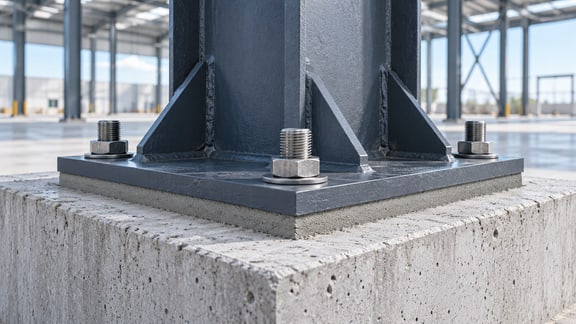
Choosing non shrink grout starts with the connection you need to support. A steel column base, an equipment foundation, and a precast bearing detail can require different placement methods and performance checks. A high strength value on a product brochure does not, by itself, establish that a material will work in the available gap or reach the required loading condition on schedule.
This guide explains how to translate structural and construction requirements into a practical selection process. It focuses on packaged cementitious grout used beneath plates and around structural details. The aim is to help engineers and buyers compare proposals on a consistent basis, then confirm a suitable material with its current technical data sheet and the project specification.
What Does Non Shrink Grout Do?
Structural grout fills the space between a support element and its foundation. In a base plate detail, its role is to provide the designed bearing interface beneath the steel. Successful performance depends on both material properties and the quality of the installed contact area.
The term “nonshrink” should be read in the context of a stated specification and test conditions. ASTM C1107/C1107M addresses packaged dry hydraulic-cement grout described as nonshrink. That designation is not a promise that an installed grout will experience no movement under every temperature, moisture condition, or restraint arrangement. Check the edition required by the contract rather than relying on a generic standards reference.
A selection review should therefore distinguish three questions: Does the material meet the specified requirements? Can the contractor place it successfully? Will the installation be protected until the engineer permits loading?
How to Select Non Shrink Grout for the Actual Detail
Define the Load Transfer Requirement
Start with the engineer’s drawings and loading sequence. Establish which parts of the detail provide bearing, anchorage, shear transfer, or temporary support. The grout selection should follow that design rather than change it.
Ask for the required strength at the relevant loading age. A specified final strength and a release requirement for an early construction activity are different acceptance points. Record both when they apply, along with the evidence needed to demonstrate compliance.
Check Geometry Before Comparing Strength
Measure the minimum and maximum grout gap, the plate footprint, access points, obstructions, and the longest flow path. A material may be suitable for an open placement but difficult to install beneath a large plate with limited access.
Compare these dimensions with the manufacturer’s permitted depth and placement method. If a deeper section requires aggregate extension, obtain the approved instructions and confirm the resulting properties. Adding aggregate without an approved procedure changes the material being evaluated.
Match Flow to Placement Conditions
Dry-pack, plastic, and flowable consistencies solve different construction problems. Do not assume that a strength result obtained at one water addition describes every consistency shown in a brochure.
Review how flow is measured and how long the stated behavior is maintained. The contractor needs enough usable time to mix, transfer, and place the batch. A single initial flow measurement may not answer whether the final batch can complete a long installation.

A Practical Supplier Comparison Table
| Selection item | Information to request | Why it matters |
|---|---|---|
| Intended application | Approved structural uses and limitations | Confirms that the material suits the detail |
| Placement range | Minimum and maximum depth for the proposed method | Identifies gaps requiring another solution |
| Water addition | Permitted quantity for the selected consistency | Connects field mixing with published results |
| Flow and retention | Method, conditions, and usable period | Supports the placement plan |
| Strength development | Results at required ages with test conditions | Supports the loading schedule |
| Volume stability | Stated test method and relevant performance | Makes the nonshrink description meaningful |
| Exposure | Moisture, temperature, and chemical limitations | Flags service conditions requiring review |
| Curing | Approved protection and curing procedure | Defines work needed after placement |
| Yield | Mixed yield at the specified water addition | Enables consistent quantity and cost estimates |
Treat missing information as a technical query. A quotation should not receive an automatic preference simply because it contains the highest reported strength or the lowest price per bag.
Cementitious Grout or Epoxy Grout?
Begin with the specified material family. Cementitious and epoxy grouts should not be treated as interchangeable procurement options. Their installation requirements, temperature response, chemical resistance, and other properties depend on the individual system.
For a machine foundation exposed to chemicals or operating vibration, ask the designer to define the relevant service criteria. For a structural column base, focus on the approved connection detail and installation conditions. If a supplier proposes another material family, submit that proposal for technical review before ordering.
The useful comparison is between documented systems that meet the same project requirements. Comparing an epoxy product’s selected headline property with an unrelated cementitious product’s final strength does not provide a complete selection basis.
Prepare a Placement Plan Before Ordering
Material selection and installation planning should happen together. Confirm how the concrete will be prepared, how forms will contain the grout, and how air will escape. Also decide where mixed material enters the detail and how workers will maintain access during the pour.
Use the chosen manufacturer’s application procedure to determine substrate moisture condition, mixing equipment, placement technique, and curing. Manufacturer instructions can vary. A method used successfully with one product should not automatically become the method for another.
The published Sika cementitious grouting method statement illustrates why installation instructions address effective bearing and consistency alongside material selection. Use that type of document as a planning reference, while following the approved instructions for the product actually supplied.
Estimate Quantity Using Mixed Yield
Calculate the actual cavity volume from the drawings and site measurements. Allow separately for grout pockets, approved shoulders, form geometry, and an appropriate project allowance for handling losses. Do not assume that the nominal plate area alone represents the entire placement.
Then divide the required mixed volume by the published yield per bag at the selected consistency. Round up to whole bags. Verify whether the quoted yield includes any aggregate extension, because that affects both quantity and comparability.
Our non shrink grout quantity guide provides a related planning reference. Keep purchasing quantities separate from structural acceptance: having enough bags does not establish that the proposed material is technically suitable.
Common Selection Errors
One frequent error is approving a material solely from a final-age strength value. This leaves placement depth, early loading, flow retention, and curing unresolved. Another is comparing prices without checking mixed yield or whether the quotations include the same components.
A third error is allowing site crews to choose water addition by appearance. If the agreed consistency requires a measured quantity, provide a clear batch instruction and suitable measuring equipment. The procurement specification should preserve the connection between the approved material and its field use.
Finally, avoid using broad terms such as “structural grout” as complete purchase descriptions. Include the application, acceptance criteria, documentation, and delivery requirements in the order.
Technical Submittal and Receiving Checks
Before placing an order, build a short submittal package containing the proposed product designation, current data sheet, safety information, installation procedure, and relevant supporting test records. Identify which documents demonstrate compliance and which provide general guidance. A company management-system certificate does not replace product performance evidence.
At delivery, match the product and batch identification to the approved submission. Check packaging condition, storage instructions, and the remaining shelf life needed for the planned work. Keep damaged or unidentified bags out of the accepted stock until the supplier resolves their status.
Where placement is critical or access is difficult, consider a representative trial agreed with the engineer. Its purpose is to confirm the mixing and placement process under realistic conditions. Define what the team will observe, how results will be recorded, and what would require a revised method before the trial begins.
Frequently Asked Questions
Is Non Shrink Grout the Same as Concrete?
No. A grout and a concrete mixture can have different constituents, placement behavior, and intended uses. Select the material specified for the detail. Our grout, concrete, and repair mortar comparison discusses the application differences.
Can More Water Improve Flow?
Only use the water range permitted for the required consistency. If the approved mixture cannot fill the detail, review the material and placement plan. Uncontrolled water addition is not an acceptable substitute for selection and planning.
When Can the Supported Structure Be Loaded?
Use the engineer’s release criteria and agreed verification process. Setting, surface hardness, final published strength, and readiness for the planned load are different matters.
What Should a Non Shrink Grout Supplier Receive With an Inquiry?
Provide drawings, gap dimensions, quantity, exposure, placement temperature, intended loading schedule, and the applicable specification. Request a product-specific proposal supported by current technical information.
Turn the Selection Into a Clear Purchase Specification
The appropriate non shrink grout is the material that meets the structural requirements and can be installed reliably in the actual detail. Compare strength, flow, depth, exposure, yield, and curing as a connected set of requirements. Document the approved water addition and loading acceptance process before work starts.
For a technical inquiry to Hubei Qiandao New Materials Co., Ltd., include the base detail, proposed installation method, project specification, and delivery destination. Request current product information and a quotation tied to those requirements so that purchasing, construction, and engineering teams evaluate the same proposed solution.