
 BLOG
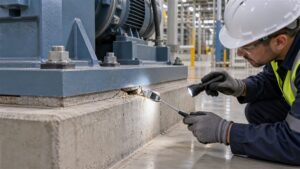
BLOG A visible crack does not by itself prove structural non-shrink grout failure, and an intact grout shoulder does not prove full bearing beneath a baseplate. Reliable diagnosis connects observations to
 BLOG
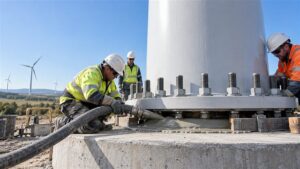
BLOG Wind turbine grout forms a small but critical part of the structural load path between a tower or support structure and its foundation. It must fill the designed space, develop
 BLOG
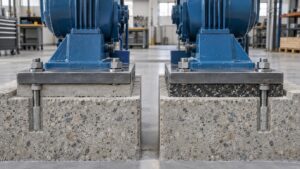
BLOG Choosing cementitious grout vs epoxy grout is an engineering decision, not a simple strength comparison. Cementitious grout is usually the practical choice for many static base plates and general structural
 BLOG
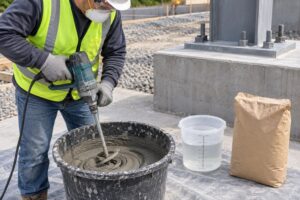
BLOG Non-shrink grout is a factory-blended hydraulic-cement material designed to fill a confined gap without dropping below its initial placement height under the specified test conditions. It creates continuous contact between
 BLOG
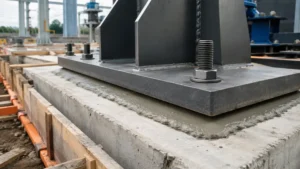
BLOG Non-shrink grout is a flowable, high-strength material used to fill confined spaces where ordinary concrete or mortar cannot provide reliable, continuous support. It is commonly placed beneath machine baseplates, steel
 BLOG
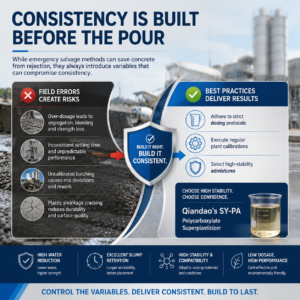
BLOG What happens if you overdose concrete water reducers and how is it resolved in an emergency? Overdosaging concrete water reducers (superplasticizers) causes severe segregation, bleeding, excessively prolonged setting times (extreme
 BLOG
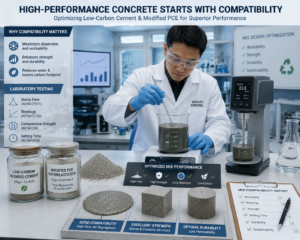
BLOG What is cement-admixture incompatibility and how is it resolved? Cement-admixture incompatibility is a chemical mismatch between cement mineral phases (specifically C3A and gypsum) and concrete admixtures, leading to rapid slump
 BLOG
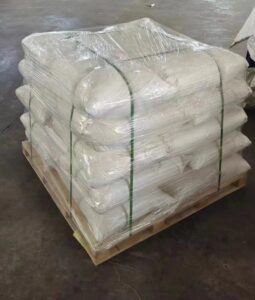
BLOG What is the main difference between Aliphatic and Sulfamate water reducers? The primary difference between Aliphatic and Sulfamate water reducers lies in their chemical composition, water-reducing efficiency, and slump retention
 BLOG
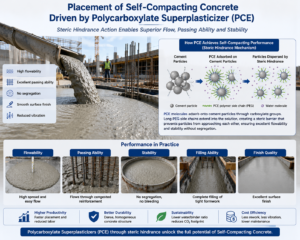
BLOG Introduction: The Evolution of Modern Concrete Technology Concrete is the most consumed man-made material on Earth. However, the traditional dilemma of concrete mix design has always been the balance between
 BLOG
BLOG Polycarboxylate Superplasticizer (PCE) is a third-generation, high-performance concrete water reducer synthesized from copolymerized carboxylic acid monomers. Featuring a unique comb-like molecular structure, PCE operates through a powerful steric hindrance effect